





























从与原作比例一致的预设尺寸中进行选择。

您可以输入自定义尺寸,以适配特定的画框或空间。如果所选尺寸与原图比例不符,我们将通过裁剪作品或添加手绘元素来扩展画面。数字样稿将在制作开始前发送给您确认。
请注意,屏幕预览无法准确反映实际的裁剪或扩展效果,只有样稿才能真实呈现最终的构图。
虽然我们提供定制尺寸服务,但为了保留原作比例,建议您从预设列表中选择尺寸。

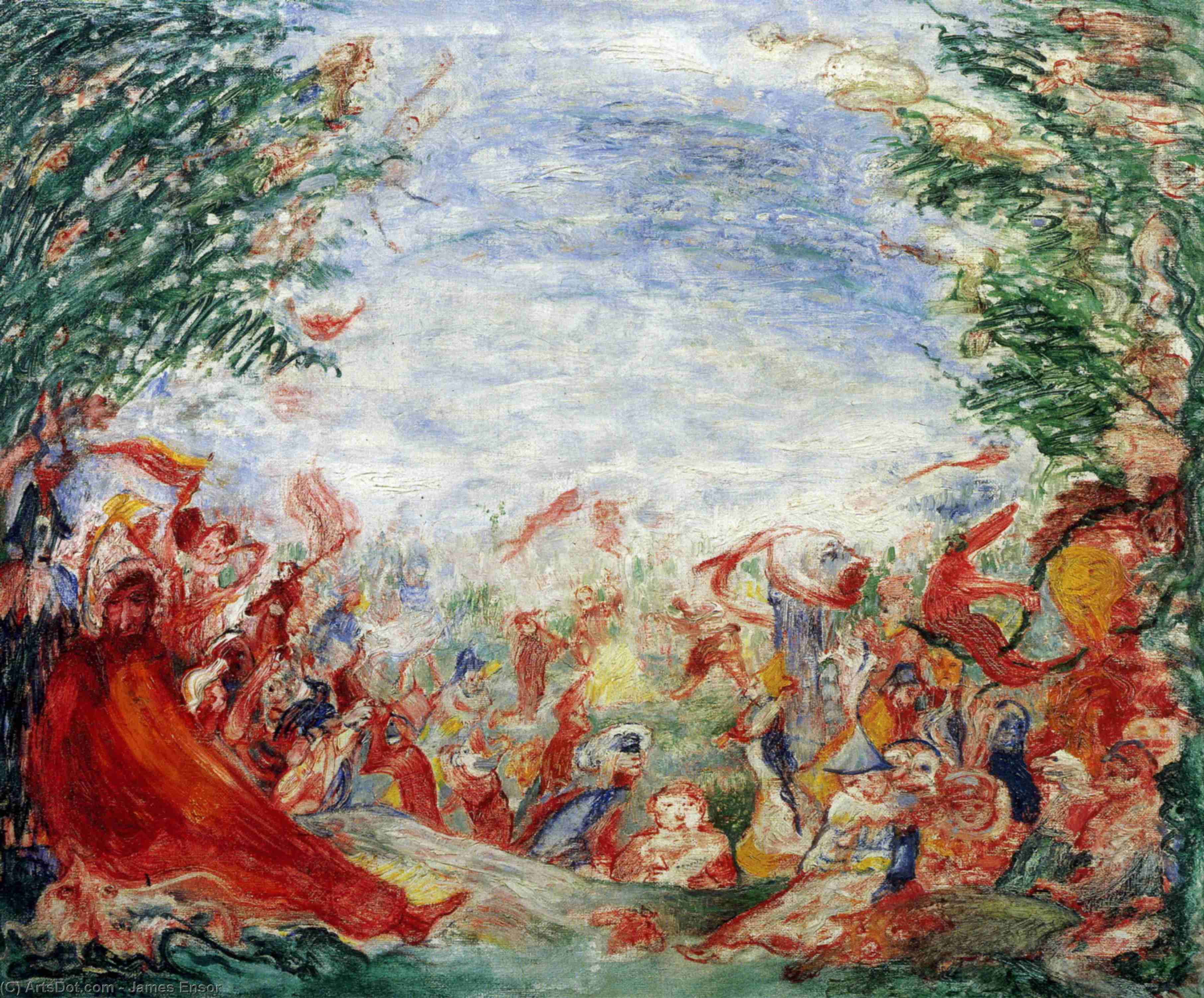
Saint Antoine Turlupine
复制品尺寸
James Ensor’s “Saint Antoine Turlupine” stands as a monumental achievement in late 19th-century Symbolist art, offering much more than a mere depiction of a seaside gathering. Painted around 1886, this evocative oil on canvas captures the profound anxieties and social contradictions inherent in Belgian life during a period of transition. At first glance, the viewer is met with a densely populated outdoor scene, a bustling crowd gathered under the open sky, yet beneath this surface of leisure lies an unsettling psychological depth. Ensor masterfully orchestrates a composition where architectural elements—such as a wall adorned with a clock—and objects like umbrellas serve as potent symbols for the relentless passage of time and the weight of societal pressures.
The painting’s atmosphere is thick with a sense of mystery and hidden truths. As an expert in the Symbolist movement, Ensor moved away from the fleeting light of Impressionism to explore the darker, more permanent inner states of the human psyche. This is achieved through his use of masks, a recurring motif in his oeuvre that represents the duality of identity and the concealment of true emotions behind social facades. For collectors and enthusiasts of fine art, this piece offers a window into the artist's ability to transform a public promenade into a stage for contemplating mortality, isolation, and the inherent hypocrisy of the human condition.
Technically, “Saint Antoine Turlupine” is a triumph of expressive texture. Ensor utilized thick impasto brushstrokes to create a surface that feels physically alive, lending a visceral intensity to the crowded scene. This tactile quality ensures that the painting commands attention in any space, providing a rich, sculptural dimension that catches the light and invites close inspection. The palette is a sophisticated study in contrast; Ensor employs muted, earthy tones that ground the composition, only to puncturing them with sudden, dramatic splashes of crimson and ochre.
This deliberate use of color mirrors the psychological landscape of the work—the tension between the mundane reality of a seaside day and the underlying emotional turbulence. For interior designers seeking to introduce a focal point of profound character, this painting provides an unparalleled sense of drama. The interplay of light and shadow within the heavy paint layers creates a dynamic energy that can anchor a room, offering both a historical narrative and a sophisticated aesthetic presence.
To possess or display a reproduction of such a significant work is to invite a dialogue between the past and the present. Ensor’s ability to evoke profound emotional responses—ranging from curiosity to a haunting sense of unease—makes this piece an extraordinary choice for those who value art that challenges and inspires. It is not merely a decorative object but a narrative journey through the shadows of the Belgian soul.
Whether you are an art historian drawn to its Symbolist roots, a collector seeking a masterpiece of psychological realism, or a designer looking for a piece with deep emotional resonance, “Saint Antoine Turlupine” offers a timeless allure. It remains a captivating testament to Ensor's genius, reminding us that even in the most crowded spaces, the most profound truths are often found beneath the surface.
詹姆斯·埃诺斯(1860年4月13日出生于奥斯坦德,比利时),是英国父亲和比利时母亲的儿子。这种文化双重可能预示着艺术家毕生对面具和伪装的热爱,这些主题将成为他令人震惊但又迷人的艺术作品的主导力量。在热闹的海滨小镇周围长大,年轻的詹姆斯深受卡尼农节气氛的影响,他的父母经营着一家充满贝壳、面具和异国情趣物品的纪念品店——一个真正的奇迹宝库,点燃了他的想象力并为他未来的艺术创作提供了丰富的视觉词汇。
埃诺斯早期的绘画反映了更传统的风格,描绘了日常生活场景,采用阴郁的色彩。例如,《俄罗斯音乐》(1881年)和《醉酒者》(1883年),展现了他对现实主义的初步天赋,但即使在这些早期作品中,也存在着令人不安图像的萌芽。一个关键转变发生在埃诺斯的色彩变得鲜艳和主题日益怪诞的过程中。他开始在画布上填充卡尼农节、骷髅、木偶和象征人物——一个充满幻想的世界,经常边缘于疯狂之间。这不仅仅是一种风格上的变化;它是对人类存在黑暗面的有意识的探索,是对社会规范的拒绝以及对非理性拥抱。
埃诺斯对艺术的态度并非传统审美主义者所追求的纯粹形式主义。他承认了来自大师们的影响,例如皮特·布鲁格尔长老,他的拥挤场景和道德说教风格与自己的愿景产生共鸣;此外,弗朗西斯科·戈雅对人类痛苦的不畏惧描绘也给埃诺斯艺术审美带来了深刻的印象。威斯斯勒强调了美学主义的重要性,这也在塑造埃诺斯的艺术感觉中发挥了一定的作用。
尽管埃诺斯拒绝简单分类,但他的艺术渊源复杂而迷人。他承认了来自大师们的影响,例如皮特·布鲁格尔长老,他的拥挤场景和道德说教风格与自己的愿景产生共鸣;此外,弗朗西斯科·戈雅对人类痛苦的不畏惧描绘也给埃诺斯艺术审美带来了深刻的印象。威斯斯勒强调了美学主义的重要性,这也在塑造埃诺斯的艺术感觉中发挥了一定的作用。
埃诺斯是一位开创性的艺术家,他大胆地挑战了艺术规范,为后人打开了道路。他的作品继续吸引着观众的目光,并探讨了人类状况的深度和黑暗面。尽管最初面临阻力,埃诺斯最终在晚年获得了认可,被国王阿尔伯特一世封为贵族,并在1933年获得荣誉军团勋章。他于1949年在奥斯坦德去世,留下了一系列作品,这些作品继续激发人们的想象力和热情。

1860 - 1949 , 比利时

Discover the enchanting alchemy of Impressionism. Explore how the mastery of oil on canvas, through glazing and impasto, captures eternal light and emotion. Perfect for lovers of Monet and Van Gogh seeking the profound depth of hand-painted fine art.


第一时间获取最新的艺术新闻、独家优惠及装饰灵感。
向我们介绍您的项目需求,我们的艺术专家将为您提供 3 个个性化的艺术品推荐。
由我们的专家为您精选 3 款心仪之作 —— 完全免费!

 效果预览
效果预览
 购买印刷品
购买印刷品 分享
分享 分享
分享
 详情
详情

 下载
下载
 相似作品
相似作品 X射线
X射线 幻灯片播放
幻灯片播放

 展开详情
展开详情









 玻璃选项仅适用于110厘米以下的尺寸。


