

 OilWallArtNorthern Renaissance
 1520Renaissance
 112.0 x 131.0 cm
 普拉多博物馆
博物馆级艺术微喷或帆布版画,制作高效,并提供多种饰面选择。 ( Switch to hand made Painting Switch to Image)





























从与原作比例一致的预设尺寸中进行选择。

您可以输入自定义尺寸,以适配特定的画框或空间。如果您选择的尺寸与原图比例不符,我们将对作品进行裁剪,或通过镜像填充/纯色填充边缘的方式来扩展图像。在开始制作之前,我们会向您发送一份数字效果图供您确认。
请注意,屏幕上的预览并不能反映实际的裁剪或扩展效果。只有效果图才能准确展示最终的构图。
虽然我们提供定制尺寸,但为了保持原图比例,我们建议您从预设列表中选择尺寸。

Annunciation
复制品尺寸
In the quiet, luminous atmosphere of the early sixteenth century, Jan de Beer captured a moment of profound spiritual intersection in his masterpiece, Annunciation. This painting serves as more than just a religious depiction; it is a window into a world where the celestial and the terrestrial breathe the same air. The scene unfolds with a breathtaking intimacy, centering on the Virgin Mary as she receives the divine message. An angel hovers gracefully above her, clutching a sacred scroll that signifies the unfolding of a divine prophecy. There is a palpable sense of weightlessness in the angel's presence, contrasted sharply by the grounded, domestic reality of the room, creating a tension between the eternal and the ephemeral that draws the viewer into a state of quiet contemplation.
The composition is a masterclass in Northern Renaissance storytelling, where every object placed within the frame serves as a silent witness to the miracle. As your eyes wander through the scene, you encounter a meticulously rendered interior that feels lived-in and authentic. A dining table sits in the foreground, adorned with the humble yet symbolic remnants of daily life: scattered books, a delicate wine glass, and a solitary cup. These elements are not merely decorative; they represent the intellectual and spiritual nourishment of the era. The presence of two observers in the background—figures watching from the periphery—adds a layer of human witness to the event, reminding us that even the most profound miracles occur within the fabric of human society.
Technically, de Beer employs a level of detail that is nothing short of hypnotic. The way light interacts with the various surfaces—the sheen on the glassware, the texture of the parchment, and the soft folds of the Virgin's garments—demonstrates an extraordinary command over oil painting techniques. For the discerning collector or interior designer, this piece offers a sophisticated focal point that brings a sense of historical depth and serene elegance to any space. The muted yet rich palette allows the artwork to integrate seamlessly into classical or contemporary settings, providing a conversation piece that evokes feelings of peace, reverence, and timeless beauty.
To possess a reproduction of this Annunciation is to invite a sense of historical continuity into one's home. It is an invitation to slow down and appreciate the intricate details of the human experience and the divine mysteries that surround us. Whether placed in a sunlit study or a grand formal hall, the painting radiates an emotional warmth that transcends its age, offering a sanctuary of stillness in a modern, hurried world.
Michelangelo di Lodovico Buonarroti Simoni, born in Caprese in 1475 and dying in Rome in 1564, remains one of the most profoundly influential figures in Western art history. More than simply a sculptor, painter, architect, or poet—he was, as his contemporaries declared, the greatest artist of his era, a true “divine” creator who redefined the boundaries of artistic expression. His career spanned over seven decades, marked by an unparalleled mastery of technique and a deeply personal vision that continues to resonate with audiences today. Michelangelo’s life was one of intense dedication to his craft, often at the expense of personal comfort and social graces, yet he left behind a legacy of works that are universally recognized as masterpieces.
Michelangelo's early years were shaped by a complex family dynamic. His father, Lodovico Buonarroti, a notary and member of the Florentine gentry, initially resisted his son’s ambition to pursue an artistic career, believing it unsuitable for a man of noble birth. However, Michelangelo’s prodigious talent quickly became undeniable, leading him to apprentice under the renowned sculptor Bertoldo di Giovanni in Florence around 1483. This early training instilled in him a deep understanding of classical sculpture and anatomy—a foundation that would inform his entire artistic practice. Following Bertoldo's dismissal from the Medici court, Michelangelo spent several years working as a stonemason, honing his skills and developing his own distinctive style. He also studied the vast collection of Roman sculptures housed in Florence, which profoundly influenced his aesthetic sensibilities, inspiring him to emulate the idealized forms and heroic narratives of antiquity.
Michelangelo’s sculptural achievements are arguably the most celebrated aspects of his oeuvre. His early works, such as the *Pietà* (1498-9), a breathtakingly realistic depiction of Mary cradling the dead Christ, demonstrated an astonishing command of marble and a profound understanding of human emotion. The *Pietà* is not merely a technical marvel; it’s imbued with a palpable sense of grief and tenderness—a testament to Michelangelo's ability to imbue inanimate stone with life. The *David* (1501-4), originally intended for the Florence Cathedral, quickly became a symbol of Florentine civic pride and republican ideals. This colossal statue embodies youthful strength, determination, and moral courage, capturing the essence of the biblical hero in a remarkably dynamic pose. Later works like *Moses* (1513-15) showcase his increasing mastery of dramatic composition and expressive power, while the unfinished *Rondanini Marcher*, a monumental bronze figure commissioned for the tomb of Cardinal Jean de Medici, reveals his ambition to create truly grand narratives in three dimensions.
While Michelangelo considered himself primarily a sculptor, he made an indelible mark on the world of painting. His most iconic contribution is undoubtedly the ceiling frescoes of the Sistine Chapel in Rome (1508-1512). Commissioned by Pope Julius II, this monumental undertaking demanded immense physical and artistic effort—Michelangelo spent four years lying on his back to paint hundreds of figures depicting scenes from Genesis. The *Creation of Adam*, arguably the most famous image within the cycle, captures a moment of divine inspiration with breathtaking power and dynamism. Beyond the Sistine Chapel, Michelangelo painted several other significant works, including *The Last Judgment* (1536-1541) on the altar wall of the same chapel—a powerful and emotionally charged depiction of the apocalypse. His *Doni Tondo*, a circular painting depicting the Virgin Mary with infant Jesus and John the Baptist, is another notable example of his artistic versatility.
Michelangelo’s influence extended beyond sculpture and painting into the realm of architecture. He served as the architect for several significant projects in Rome, including the Laurentian Library (1520-1524) and the redesign of St. Peter's Basilica, where he oversaw the construction of the dome—a monumental achievement that transformed the skyline of the city. Throughout his career, Michelangelo’s work was characterized by a profound understanding of proportion, harmony, and classical ideals. His innovative use of space, dramatic lighting, and expressive figures set new standards for artistic excellence. He died in Rome in 1564, leaving behind a vast body of work that continues to inspire awe and admiration centuries later. Michelangelo’s legacy as one of the greatest artists of all time is secure, his works serving as enduring symbols of human creativity and spiritual aspiration.

1475 - 1528 , Netherlands

探索佛罗伦萨文艺复兴大师安杰利科的25幅传世名作!深入了解其宗教绘画、壁画艺术与天使般的风格。TopImpressionists.com提供高清复制品及精选装饰画,为您的室内空间增添永恒之美。立即在线探索完整系列!

Explore the captivating history of angels in painting! Discover symbolism, iconic Renaissance & Byzantine masterpieces, and renowned artists. Expert insights for art lovers & collectors at TopImpressionists.

Explore the captivating history of angels in art! Discover symbolism, iconic Renaissance masterpieces & renowned artists. Expert insights for art lovers & collectors at TopImpressionists.
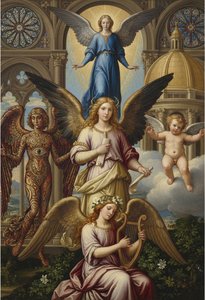
Explore the profound beauty of angelic figures in art history. From Renaissance masterpieces to celestial symbolism, our expert guide offers a sophisticated journey through the divine imagery of the Old Masters for discerning collectors and art enthusiasts.

Explore the captivating world of Jacob Henricus Maris, a leading figure of the Dutch Hague School. Discover his atmospheric landscapes, signature brushstrokes & lasting influence on 19th-century art. Learn more at TopImpressionists.


第一时间获取最新的艺术新闻、独家优惠及装饰灵感。
向我们介绍您的项目需求,我们的艺术专家将为您提供 3 个个性化的艺术品推荐。
由我们的专家为您精选 3 款心仪之作 —— 完全免费!

 Preview
 分享
分享 分享
分享
 详情
详情

 下载
下载
 相似作品
相似作品 X射线
X射线 幻灯片播放
幻灯片播放 展开详情
展开详情









 玻璃选项仅适用于110厘米以下的尺寸。


