

 实景预览
实景预览
 分享
分享 分享
分享
 详情
详情 指南
指南

 下载作品
下载作品
 相似作品
相似作品 X射线
X射线 幻灯片播放
幻灯片播放 问答
问答 统计数据
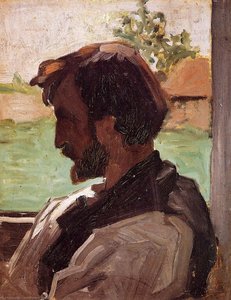
统计数据Self Portrait with Palette


Admire Frédéric Bazille's 'Self-Portrait with Palette' (1865). A poignant glimpse into the life of an Impressionist painter, capturing his dedication and artistic spirit in a striking self-portrait.
 展开全文
展开全文
Jean Frédéric Bazille (1841-1870) 是印象派运动的关键人物,以其充满光影的风景画和肖像画而闻名。他与莫奈、雷诺阿等艺术家的密切合作,对现代绘画的发展产生了深远影响。探索《粉色连衣裙》、《家庭聚会》等代表作,感受早期印象派的魅力!
艺术微喷/版画
博物馆级艺术微喷或帆布版画,制作高效,并提供多种饰面选择。 ( 订购纯手工绘制画作 切换至数字图像销售渠道)




P118B ¥10

P118H ¥10

P118W ¥10

P438Z ¥10

P508JH ¥12

P508YH ¥12

P805H ¥10

P805Z ¥10

P919BZ ¥10

P919G ¥10

P919XJ ¥10

P959ZH ¥10

P968JZ ¥12

W106C ¥8

W218G ¥10

W218JH ¥8

W218Y ¥10

W307PJ ¥10

W316G ¥10

W316PJ ¥8

W316Y ¥10

W398PJ ¥8

W4111J ¥10

W500HY ¥15

W500JH ¥15

W692G ¥12

W849H ¥8

W940BG ¥15

W953PJ ¥8




标准尺寸
定制
CM
INCH
您可以从与原作比例一致的预设尺寸中进行选择。
Loading sizes...

宽度
高度
请输入您所需的宽度和高度,以适配您的画框或墙面。由于印刷品只能进行裁剪,无法超出原图尺寸,因此若比例不一致,画面的一部分将会被裁切。在正式印刷之前,我们会为您发送一份数字效果图供您确认。本页面显示的图片并非最终裁剪后的效果——只有效果图才能展示真实的裁剪情况。


 玻璃选项仅适用于110厘米以下的尺寸。

Self Portrait with Palette
艺术微喷/版画
复刻品尺寸
-


最终结算价
¥ 470
A Moment Frozen in Time: Jean Frédéric Bazille’s “Self Portrait with Palette”
Jean Frédéric Bazille's "Self Portrait with Palette," painted in 1865, is more than just a depiction of an artist; it’s a poignant snapshot of ambition, vulnerability, and the burgeoning spirit of Impressionism. Created during a remarkably brief but intensely productive period in his career, this oil-on-canvas work offers a rare glimpse into the mind of a young man grappling with his artistic aspirations amidst the vibrant, transformative atmosphere of Paris. The painting resides within the esteemed collection of the Art Institute of Chicago, a testament to its enduring quality and significance.
The composition is strikingly direct and unadorned. Bazille, dressed in a dark suit and tie – attire indicative of his medical studies before embracing art full-time – stands before a simple, dark background. His gaze meets the viewer head-on, an almost disconcerting level of intimacy that immediately draws us into the scene. In his hand, he holds a palette brimming with vibrant pigments, hinting at the creative energy simmering beneath the surface. The subtle inclusion of brushes further emphasizes his profession and the tools of his trade. The painting’s stark simplicity—a deliberate choice by Bazille—forces us to confront the artist himself, stripping away any romanticized notions of artistic genius and presenting a raw, honest portrayal.
Impressionism in Miniature: Technique and Light
Bazille's technique is firmly rooted in the principles of Impressionism, though with a distinctly personal touch. He employs loose brushstrokes and a broken color palette—a hallmark of the movement—to capture the fleeting effects of light and atmosphere. Notice how he doesn’t meticulously render every detail; instead, he uses dabs and dashes of paint to suggest form and texture. The lighting is particularly noteworthy – it's diffused and naturalistic, casting soft shadows that contribute to the painting’s overall sense of immediacy. The artist was experimenting with *plein air* painting—working outdoors directly from nature—a technique championed by Monet and others during this period, aiming to capture the transient qualities of light and color.
Interestingly, Bazille utilized a mirror to create this self-portrait, a common practice among artists seeking to accurately represent their own features. This method allowed him to observe his posture, expression, and overall appearance with meticulous detail, ensuring a truthful representation of himself. The subtle asymmetry in the composition—a slight tilt of the head, for instance—adds to the painting’s sense of spontaneity and immediacy.
A Life Cut Short: Context and Symbolism
Understanding the historical context surrounding Bazille's life is crucial to appreciating this work fully. Born in Montpellier, France, in 1841, he initially pursued a medical career alongside his artistic inclinations, a compromise dictated by his family’s desire for financial security. However, drawn to the vibrant artistic community of Paris, he abandoned medicine in favor of painting, a decision that ultimately proved tragically short-lived. Bazille was killed during the Franco-Prussian War in 1870, at just twenty-eight years old – a devastating loss for the burgeoning Impressionist movement.
The “Self Portrait with Palette” can be interpreted as a symbolic representation of this young artist’s aspirations and anxieties. The palette itself represents his creative potential, while his direct gaze suggests a desire to connect with the viewer—to share his artistic vision. Some art historians suggest that Bazille's melancholy expression hints at the pressures he faced, balancing his artistic ambitions with societal expectations and the looming shadow of war. It’s a portrait not just of an artist, but of a man on the cusp of greatness, grappling with mortality and the uncertainties of his future.
A Legacy of Light: The Painting's Enduring Appeal
Despite its brevity, Bazille’s career left an indelible mark on the Impressionist movement. His work exemplifies the movement’s focus on capturing fleeting moments of light and color, as well as its rejection of traditional academic painting techniques. “Self Portrait with Palette” remains a powerful testament to his talent and vision—a poignant reminder of a brilliant artist whose life was tragically cut short. Reproductions of this iconic piece continue to resonate with art lovers today, offering a glimpse into the heart and soul of an Impressionist master.
常见问题与解答
我可以在这里订购"Self Portrait with Palette"的油画复制品吗?
您可以通过亚麻画布手工油画复制品来订购《Self Portrait with Palette》的手绘复制品。您可以前往其手工油画复刻页面进行下单,并根据需求选择不同的尺寸。
让-弗雷德里克·巴齐耶 (Ràng Fúléidé Lìkè Bāzīyē) 的《Self Portrait with Palette》 是如何将 Impressionist Painting 与艺术家的祖籍国联系在一起的?
《Self Portrait with Palette》由出生于 法国 的 让-弗雷德里克·巴齐耶 (Ràng Fúléidé Lìkè Bāzīyē) 在 Impressionist Painting 运动背景下创作而成。艺术家的原籍地使这部作品与 法国 艺术家所实践的 Impressionist Painting 风格紧密相连。
"Self Portrait with Palette" 采用了什么技法,创作于何时?
让-弗雷德里克·巴齐耶 (Ràng Fúléidé Lìkè Bāzīyē) 的《Self Portrait with Palette》 的创作媒介为 Oil On Canvas,创作于 1865 年。




艺术家简介
早年生活与艺术启蒙
让·弗雷德里克·巴齐耶(Jean Frédéric Bazille,1841年12月6日出生于法国蒙彼利埃)的命运轨迹并非一开始就指向绘画。他出身于一个富裕的新教家庭,家族世代经营葡萄酒产业。他的父母希望他能接受医学教育,以确保未来的经济保障。这种对艺术与实用之间的妥协,在巴齐耶的早期生活中留下了深刻印记,使他在解剖学研究和色彩光影的魅力之间摇摆不定。然而,真正点燃他艺术激情的,是1862年移居巴黎后所感受到的蓬勃氛围。巴黎成为了他艺术之路的起点,也为他与未来印象派大师们的相遇埋下了伏笔。巴齐耶并非出身于艺术世家,但他对绘画的热爱却如同天生的召唤,驱使着他在医学学习之余不断探索色彩、构图和光线的奥秘。巨匠环绕:与莫奈、雷诺阿的友谊
巴黎对于年轻的巴齐耶来说,是一座充满机遇和挑战的熔炉。他很快结识了一群志同道合的艺术家,他们日后将成为印象派运动的核心人物:克劳德·莫奈、皮埃尔-奥古斯特·雷诺阿和阿尔弗雷德·西斯莱。在查尔斯·格莱伊尔的工作室接受正规训练的同时,巴齐耶更受益于与这些朋友们之间的交流与碰撞。他们分享着对传统绘画的反叛精神,大胆尝试新的技法和理念。巴齐耶的经济状况相对稳定,这使他能够慷慨地资助那些生活拮据的朋友,为他们提供工作室空间和画材。这种慷慨并非出于简单的物质帮助,而是源于他对同伴们才华的坚定信念以及对集体创作潜力的深刻理解。他的早期作品,《粉色连衣裙》(约1864年)便已展现出敏锐的色彩感知能力和捕捉瞬间光影的技巧——这些都将成为印象派运动的重要特征。他并非简单地模仿既有风格,而是积极参与到一种全新的艺术创造之中。独特的风格:光与友谊的交织
巴齐耶的绘画风格虽然发展迅速,但在更广泛的印象派语境中却拥有其独特性。尽管他与莫奈和雷诺阿一样对户外写生(*plein air*)充满热情,力求直接捕捉自然光线的微妙变化,但他的构图往往比他们的更为结构化。他经常将人物绘画与风景相结合,巧妙地将主体置于环境之中,如他在《家庭团聚》(1867-1868年)中所展现的场景。这幅作品不仅仅是对家庭聚会的描绘,更是对光线穿透树木、赋予画面温暖和亲密感的探索。他的绘画并非仅仅关注“所见之物”,更注重“如何观看”——色彩、形式和光线所能唤起的强烈情感共鸣。巴齐耶深受欧仁·德拉克洛瓦的影响,他对鲜艳色彩的运用与他自身的艺术感性产生了共鸣,但他超越了学院派的传统规范,拥抱了一种更为现代的审美观。短暂而辉煌的一生:遗产与纪念
让·弗雷德里克·巴齐耶的蓬勃事业在1870年爆发的普法战争中戛然而止。怀着强烈的爱国热情,他加入了祖瓦夫团,并在冲突爆发后不久便投身战场。令人悲痛的是,他在1870年11月28日于博纳-拉罗兰德附近阵亡,年仅28岁。他的去世在艺术界引起了巨大的震动,夺走了他们一位才华横溢的朋友和慷慨的赞助人。由于英年早逝,巴齐耶的作品长期以来鲜为人知。然而,近几十年,人们逐渐认识到他在印象派运动中的重要贡献。如今,他的画作被收藏于巴黎奥赛博物馆等著名美术馆,而各种复制品也让世界各地的艺术爱好者得以欣赏他作品的美丽与创新。巴齐耶的遗产超越了他所创作的艺术作品本身;他象征着青春理想主义、坚定奉献精神以及定义印象派早期阶段的力量——友谊。他仍然是那些未竟潜力被战争无情扼杀,但其短暂而辉煌的一生却对后世产生了深远影响的艺术家们的 poignant 提醒。
让-弗雷德里克·巴齐耶 (Ràng Fúléidé Lìkè Bāzīyē)
1841 - 1870 , 法国
艺术家简介
- Artistic Movement Or Style: 印象派
- Artists Or Movements Influenced By This Artist: ['印象派']
- Artists Who Influenced This Artist: ['欧仁·德拉克洛瓦']
- Date Of Birth: 1841年12月6日
- Date Of Death: 1870年11月28日
- Full Name: 让·弗雷德里克·巴齐耶
- Nationality: 法国国籍
- Notable Artworks (List Of Titles):
- 粉色连衣裙
- 家庭聚会
- 弗尔斯滕贝格大街的工作室
- Place Of Birth (City And Country): 法国蒙彼利埃
相关文章

保罗·塞尚:25幅大师杰作,重塑现代艺术与家居美学 | TopImpressionists
探索保罗·塞尚25幅经典杰作!深入了解后印象派大师的艺术生涯、独特技法与色彩运用。TopImpressionists提供高清油画复制品,为您的家居带来博物馆级艺术体验。立即发现更多名画,点亮生活空间!

Reflecting the Self: A History of Portraiture & Psychological Insight
Explore the fascinating history of self-portraiture from Renaissance masters like Dürer & Rembrandt to modern interpretations. Discover the psychological insights and artistic techniques behind these iconic works. Expert analysis for art enthusiasts.

Impressionism's Masterpieces: 10 Paintings That Defined a Movement | TopImpressionists
Journey through Impressionism's heart with 10 iconic paintings by Monet, Renoir & Degas. Explore light, color & the stories behind these masterpieces. Find museum-quality art reproductions and elevate your home decor on TopImpressionists.com.

印象派巨著:十幅定义艺术流派的杰作,点亮您的臻美家居
探索印象派艺术的巅峰!本文精选十幅定义这一伟大流派的杰作,从莫奈的光影到雷诺阿的柔情。了解艺术家故事、绘画技巧与作品背后的灵感。TopImpressionists.com为您提供博物馆品质的画作复制品和家居装饰方案,点亮您的生活空间。尽在TopImpressionists.com!

The Echo of Self: Reflectivity as a Core Theme in Art History & Contemporary Practice
Explore the rich history of self-representation in art, from Renaissance masters to modern innovators. Discover how artists use portraiture to reveal identity, emotion & the depths of the human psyche. Expert insights for collectors.

