


 实景预览
实景预览
 发送
发送 分享
分享
 详情
详情 指南
指南

 下载图片
下载图片
 相似作品
相似作品 X射线
X射线 幻灯片播放
幻灯片播放 统计数据
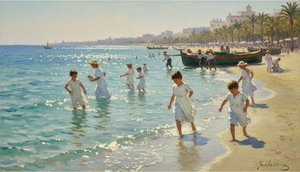
统计数据After Bathing, Valencia


 阅读全文
阅读全文
艺术微喷/版画
博物馆级艺术微喷或帆布版画,制作高效,并提供多种饰面选择。 ( 订购此收藏品的纯手工复刻画作 切换至数字图像销售渠道)




































标准尺寸
定制
CM
INCH
您可以从与原作比例一致的预设尺寸中进行选择。
Loading sizes...

宽度
高度
请输入您所需的宽度和高度,以适配您的画框或墙面。由于印刷品只能进行裁剪,无法超出原图尺寸,因此若比例不一致,画面的一部分将会被裁切。在正式印刷之前,我们会为您发送一份数字效果图供您确认。本页面显示的图片并非最终裁剪后的效果——只有效果图才能展示真实的裁剪情况。


 玻璃选项仅适用于110厘米以下的尺寸。

After Bathing, Valencia
艺术微喷/版画
复刻品尺寸说明
-


总计金额
¥ 464
A Moment of Mediterranean Grace: Exploring Sorolla’s “After Bathing, Valencia”
Joaquín Sorolla’s “After Bathing, Valencia,” painted in 1909, isn't merely a depiction of women emerging from the sea; it’s a vibrant distillation of Spanish light, culture, and the fleeting beauty of summer. This captivating work, housed within the Museo Sorolla in Madrid, offers a glimpse into a specific moment in Valencian life – a tradition deeply rooted in the region’s history and social fabric. The painting immediately draws the eye with its luminous palette; a symphony of blues, pinks, and whites that mimic the shimmering surface of the Mediterranean Sea and the delicate hues of the women's bathing attire. Sorolla masterfully captures the heat haze rising from the water, creating an atmosphere thick with warmth and vitality.
The scene unfolds on a simple wooden boat deck, suggesting a private moment of leisure amongst friends. Two young women – one clad in a blush-toned dressing gown, the other in a crisp white garment – stand close together, their postures relaxed and imbued with a quiet joy. A third woman, partially visible behind them, is preparing to shed her pink robe, completing the tableau of transformation and transition. The inclusion of two chairs and a handbag hints at the domesticity that underlies this idyllic scene, grounding it in everyday life. Sorolla’s brushwork is remarkably loose and expressive, particularly evident in the depiction of the water – a swirling dance of light and color that seems to ripple with movement. He employs broken brushstrokes and vibrant glazes, creating an effect of shimmering transparency that perfectly captures the essence of sunlight reflecting off the sea.
The Valencian Custom: Bathing and Social Ritual
To fully appreciate “After Bathing, Valencia,” it’s crucial to understand the historical context surrounding this seemingly simple subject. In late 19th and early 20th-century Valencia, a unique social custom prevailed: young boys would bathe naked in the sea until adolescence, while girls began using bathing gowns around the age of four or five. This practice, deeply ingrained in Valencian culture, was often undertaken at dawn or dusk to avoid the heat of the midday sun. The painting therefore isn’t just a portrait; it's a visual record of this cherished tradition, offering a window into the daily lives and social norms of the time. Sorolla’s choice to depict these scenes – bathing in the nude for boys and in gowns for girls – reflects the evolving roles and expectations within Valencian society.
Sorolla's Impressionistic Vision: Light as Subject
Joaquín Sorolla was a pivotal figure in the Spanish art world, renowned for his masterful use of light. He considered it not merely a technical element but an active participant in his paintings – a force that shaped color, form, and emotion. In “After Bathing, Valencia,” this philosophy is brilliantly demonstrated. Sorolla’s technique is firmly rooted in Impressionism, yet he developed a distinctly Spanish style characterized by bold colors, loose brushwork, and a focus on capturing the fleeting effects of light. He often painted *en plein air* (outdoors), directly observing and translating the natural world onto canvas. The painting's luminosity isn’t achieved through meticulous detail but rather through Sorolla’s intuitive understanding of how light interacts with surfaces – the wetness of the skin, the shimmer of the water, and the warmth of the sun.
Symbolism and Emotional Resonance
Beyond its depiction of a specific social custom, “After Bathing, Valencia” resonates with broader themes of youth, beauty, and connection. The women’s relaxed postures and shared gaze suggest a sense of camaraderie and intimacy. The painting evokes a feeling of nostalgia for a simpler time – a moment of carefree joy captured in a single, radiant instant. Sorolla's masterful use of color and light imbues the scene with an almost dreamlike quality, inviting the viewer to step into this idyllic world and experience its warmth and serenity. It’s a testament to his ability to transform everyday life into enduring works of art, imbued with both historical significance and timeless beauty.
问答详情
如何购买 索罗拉·巴斯蒂达 的《After Bathing, Valencia》 的版画?
若想订购 索罗拉·巴斯蒂达 的《After Bathing, Valencia》 的版画,只需前往其 艺术版画 页面进行订购即可:采用棉质帆布或档案级画布纸制作的艺术版画。
索罗拉·巴斯蒂达 的《After Bathing, Valencia》 的观众来自哪里?
关于 索罗拉·巴斯蒂达 的《After Bathing, Valencia》 的统计数据可在该作品的 统计数据 页面查看:包括作品的每月访问量、艺术家作品的访问量,以及近期访客的国家和语言分布情况。
我可以在这里订购"After Bathing, Valencia"的油画复制品吗?
您可以通过亚麻画布手工绘制油画复制品来订购《After Bathing, Valencia》的手绘复制品。您可以前往其手工油画复刻页面进行下单,并根据需求选择不同的尺寸。
相关艺术品


艺术家简介
Joaquín Sorolla y Bastida - A Life Bathed in Light
Joaquín Sorolla y Bastida, a name synonymous with the radiant light and vibrant energy of Spain, was more than just a painter; he was a chronicler of his nation’s soul. Born in Valencia in 1863, Sorolla's early life was marked by tragedy. Orphaned at the tender age of two following a cholera epidemic that claimed both parents, young Joaquín and his sister were raised by their maternal aunt and uncle. This early experience with loss perhaps instilled within him a profound appreciation for the fleeting beauty of life – a sentiment that would permeate his art. Though hardship shadowed his beginnings, it did not dim the spark of artistic talent that quickly became apparent. He received initial instruction in Valencia, demonstrating an aptitude that led to studies under established artists like Cayetano Capuz and José Benlliure, eventually culminating in a four-year grant to study in Rome. It was there, amidst the classical grandeur of Italy, that Sorolla began to forge his unique artistic path, absorbing influences while simultaneously developing a style distinctly his own.Early Life and Artistic Beginnings
Joaquín Sorolla’s formative years were shaped by profound loss and circumstance. Born into a modest Valencian family—his father a tradesman and his mother Concepción Bastida—the sudden death of both parents at just two years old due to cholera irrevocably altered the trajectory of his life. He and his sister, Concha, found solace in the care of their maternal aunt and uncle, fostering within him an empathy for vulnerability and resilience that would inform his artistic vision. Recognizing his exceptional talent from a young age, Sorolla pursued formal training at Valencia’s School of Artisans, honing his skills under prominent instructors like Cayetano Capuz and José Benlliure. This dedication to mastering technique laid the groundwork for his subsequent explorations into diverse artistic styles and subjects. At eighteen he travelled to Madrid where he studied master paintings in the Museo del Prado, absorbing the legacy of Velázquez and other titans of Spanish art.Rome: Embracing Impressionism and Classical Influence
A pivotal moment arrived when Sorolla secured a prestigious grant to study painting in Rome—a decision that would profoundly impact his artistic development. Amidst the monumental sculptures and architectural splendor of the Italian capital, he encountered the burgeoning movement of Impressionism, spearheaded by artists like Jules Bastien-Lepage and Adolph von Menzel. These encounters sparked an intellectual curiosity and fueled a desire to experiment with new approaches to color and brushwork—though Sorolla never fully embraced Impressionism’s radical aesthetic principles. Simultaneously, he remained captivated by the classical tradition, drawing inspiration from Roman art history and incorporating elements of sculptural form into his compositions. His studies under José Benlliure and Emilio Sala further solidified his artistic grounding, preparing him for a lifetime devoted to capturing the essence of visual experience.The Valencian Coast: Light, Color, and Everyday Life
Sorolla’s artistic focus shifted decisively upon returning to Valencia—his birthplace and lifelong home. Drawn irresistibly by the luminous Mediterranean sunlight and the expansive horizon of the coast, he embarked on a prolific exploration of landscapes and portraits depicting scenes of daily life among his countrymen. Unlike many artists of his time who sought grandeur or mythological narratives, Sorolla deliberately chose subjects that resonated with authenticity and immediacy—bathing children playing on the beach, fishermen hauling their boats ashore, families enjoying leisurely afternoons in shaded patios. His technique became instantly recognizable: a bravura display of brushwork characterized by loose, energetic strokes that conveyed movement and atmosphere. He worked *en plein air* whenever possible, confronting the challenges of capturing fleeting light conditions with unwavering dedication. This commitment to painting outdoors resulted in canvases brimming with life and vibrancy—a testament to his profound understanding of visual perception.Legacy: Luminism and Enduring Inspiration
Sorolla’s artistic legacy extends far beyond his individual paintings; he established a distinctive style known as Luminism—a term coined by art historian Kenneth Clark to describe the pursuit of capturing the effects of light on surfaces with remarkable precision and emotional intensity. His canvases are imbued with an unparalleled sense of luminosity, achieved through layering translucent glazes that shimmered with reflected sunlight—a technique that distinguishes him from many of his contemporaries. Sorolla’s influence can be seen in the works of subsequent generations of artists—particularly those who sought to emulate his masterful handling of light and color. His paintings continue to captivate audiences today, reminding us of the transformative power of art to illuminate our world and evoke profound emotional responses. He remains a master of Luminism—a painter whose work embodies the spirit of Spain’s golden age and secures his place as one of the most celebrated artists of the 20th century. ## Key Achievements & Recognition- 1892: Gold medal at the National Exhibition in Madrid for Another Marguerite
- 1894: Acclaimed for The Return from Fishing: Hauling the Boat, acquired by the Musée du Luxembourg
- 1899: Grand Prix and medal of honor at the Universal Exhibition in Paris for Sad Inheritance
- 1900-1923: Extensive exhibitions throughout Europe and the United States, establishing international recognition
- 1912-1928: Commissioned to create Vision of Spain for the Hispanic Society of America (completed posthumously)

索罗拉·巴斯蒂达
1863 - 1923 , 西班牙
快速概览
- Artistic Movement Or Style: 印象主義和光線主義。
- Date Of Birth: 二月二十七日,西班牙瓦倫西亞出生。
- Date Of Death: 八月十日逝世。
- Full Name: Joaquín Sorolla y Bastida
- Nationality: 西班牙人。
- Notable Artworks: ['瑪麗戈蕾絲與鮮花」、「漁船揚帆」、「憂鬱遺產」、「太陽光燦爛的海岸風景畫」、「兒童在海邊」,"縫補帆布"],\n "Artists who influenced this artist": ["弗朗西斯柯·普拉迪亞」、「朱爾斯·巴斯蒂安·勒佩傑」、「奧多爾夫·馮·門澤爾"],\n "Artists or movements influenced by this artist": [']
- Place Of Birth: 西班牙瓦倫西亞。
相关文章

保罗·塞尚:25幅大师杰作,重塑现代艺术与家居美学 | TopImpressionists
探索保罗·塞尚25幅经典杰作!深入了解后印象派大师的艺术生涯、独特技法与色彩运用。TopImpressionists提供高清油画复制品,为您的家居带来博物馆级艺术体验。立即发现更多名画,点亮生活空间!

Blush & Brilliance: 10 Iconic Paintings Dominated by Light Pink Tones |
Explore 10 iconic paintings bathed in captivating light pink tones! From Monet's Impressionism to Renoir’s romance, discover the stories behind these blush-hued masterpieces. Find museum-quality art reproductions & decor inspiration at .

Manuel Benedito Vives: A Study of Light, Color & Emotional Resonance in Contemporary Spanish Painting
Explore the captivating world of Manuel Benedito Vives, a celebrated Spanish painter influenced by Sorolla. Discover his masterful portraits, luminous landscapes & enduring legacy – a favorite of the Spanish Royal Family. Art collectors will appreciate this in-depth study.

Impressionism's Masterpieces: 10 Paintings That Defined a Movement | TopImpressionists
Journey through Impressionism's heart with 10 iconic paintings by Monet, Renoir & Degas. Explore light, color & the stories behind these masterpieces. Find museum-quality art reproductions and elevate your home decor on TopImpressionists.com.
Joaquín Sorolla: Capturing Spanish Light & Life – A Legacy of Impressionism
Explore the luminous world of Joaquín Sorolla, Spanish master of Impressionism. Discover his life, techniques & legacy – a guide for art collectors and enthusiasts. Invest in timeless beauty.


