





























从与原作比例一致的预设尺寸中进行选择。

您可以输入自定义尺寸,以适配特定的画框或空间。如果您选择的尺寸与原图比例不符,我们将对作品进行裁剪,或通过镜像填充/纯色填充边缘的方式来扩展图像。在开始制作之前,我们会向您发送一份数字效果图供您确认。
请注意,屏幕上的预览并不能反映实际的裁剪或扩展效果。只有效果图才能准确展示最终的构图。
虽然我们提供定制尺寸,但为了保持原图比例,我们建议您从预设列表中选择尺寸。

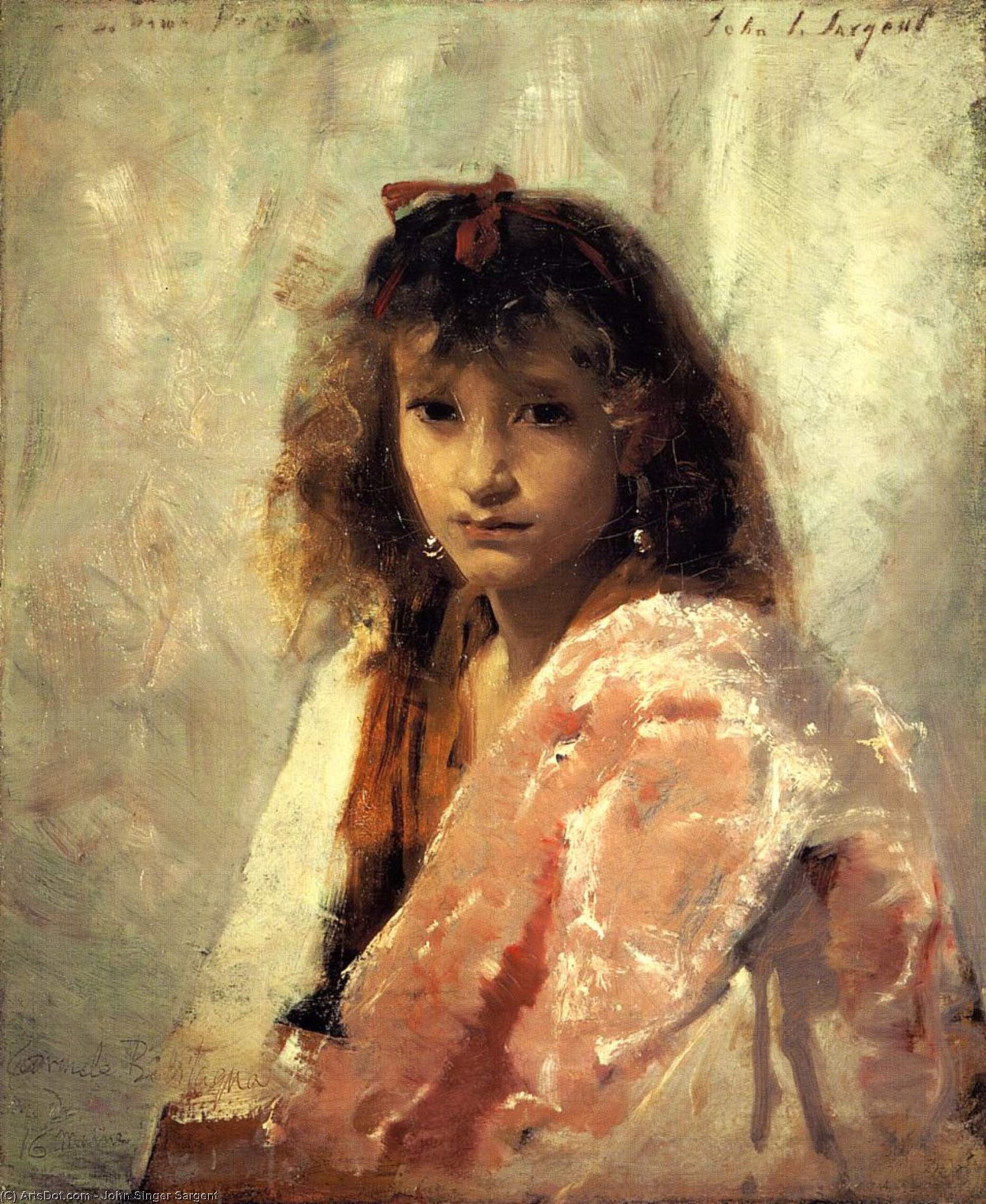
Carmela Bertagna
复制品尺寸
John Singer Sargent's 1879 portrait, *Carmela Bertagna*, is more than just a likeness; it’s a carefully constructed tableau of Edwardian society, imbued with the artist’s signature blend of technical mastery and psychological insight. Housed within the Columbus Museum of Art, this oil on canvas offers a captivating glimpse into a world of refined elegance and subtle complexities, revealing Sargent's evolving artistic voice during a pivotal period in his career.
The painting immediately draws the eye to its subject – a young woman radiating quiet confidence. Dressed in a sumptuous pink gown, accented by a delicate bow at her throat, Carmela possesses an air of poised composure. Her gaze, directed just beyond the viewer’s frame, suggests a private thought or engagement, inviting us into her world without explicitly revealing it. The carefully arranged background – a simple chair and the suggestion of other figures – reinforces this sense of contained intimacy, typical of Sargent's portraiture which often depicted moments of social interaction rather than static poses.
Sargent’s technical skill is immediately apparent in *Carmela Bertagna*. His ability to render fabric with such luminous detail – the folds of the dress, the sheen of the silk – speaks to his meticulous observation and masterful brushwork. He employed a technique he termed “drawing with a brush,” meticulously building up layers of paint to achieve an almost photographic realism. However, this approach was not without its detractors; some critics found it overly polished, lacking the spontaneity of Impressionism. Yet, Sargent skillfully navigated between these stylistic influences, adhering to the conventions of the ‘Grand Manner’ while simultaneously injecting his own distinctive sensibility.
The subtle use of light and shadow further enhances the painting's dramatic effect. Light falls across Carmela’s face and dress, creating a sense of depth and volume. The darker tones in the background contribute to the overall mood, adding an element of mystery and intrigue. This careful manipulation of light is characteristic of Sargent’s approach, designed to capture not just the physical appearance of his subjects but also their inner character.
*Carmela Bertagna* was painted during a period of significant social change in Britain. The Edwardian era, marked by rapid industrialization and burgeoning wealth, saw a rise in portraiture as a means of solidifying status and demonstrating success. Sargent’s work reflects this trend, but he also subtly challenges its conventions. The painting's composition, with its implied narrative and the subject's averted gaze, hints at the unspoken complexities of Victorian society – particularly regarding social expectations for women.
Interestingly, a reevaluation of Sargent’s oeuvre in the late 20th century revealed deeper layers of meaning within his work. The discovery of previously hidden male nudes sparked a critical reassessment, revealing themes of unconventional friendships, same-sex interests, and a progressive engagement with emerging globalism. *Carmela Bertagna*, therefore, can be viewed as part of this broader narrative – a subtle yet powerful statement about artistic freedom and the exploration of human experience.
Beyond its historical context and technical brilliance, *Carmela Bertagna* possesses an undeniable emotional resonance. The painting’s quiet dignity, combined with Carmela's enigmatic expression, invites viewers to contemplate themes of beauty, grace, and the complexities of human relationships. It is a portrait that transcends its time, continuing to captivate audiences with its elegance and psychological depth. Its enduring appeal lies in Sargent’s ability to capture not just a likeness but also the very essence of his subject – a woman poised between social expectation and personal reflection.

1856 - 1925 , 意大利

探索约翰·辛格·萨金特25幅传世杰作!深入了解这位美国印象派大师的肖像画技巧、金色时代风格与艺术故事。TopImpressionists.com提供高品质油画复制品,点亮您的室内设计,打造奢华艺术空间。立即在线探索完整系列!

探索康斯塔布尔的25幅传世杰作!沉浸于英国田园风光,感受浪漫主义绘画大师的光影与色彩。高清油画复制、艺术品购买尽在TopImpressionists.com,为您的家居增添经典之美。立即在线探索完整系列!

Explore the life & art of John Singer Sargent, premier portraitist of the Gilded Age. Discover his Impressionistic masterpieces, technical brilliance, and enduring legacy. Expert insights for collectors.

Explore 10 iconic portrait paintings – from Mona Lisa to Van Gogh’s self-portraits. Discover the stories behind these masterpieces, artistic techniques & find museum-quality art reproductions for your home at TopImpressionists.com.

Explore 25 captivating portraits by Sir Joshua Reynolds, a master of British art. Discover stories behind his iconic paintings, elegant style & historical influence. Find museum-quality reproductions and elevate your home decor on TopImpressionists.com.


第一时间获取最新的艺术新闻、独家优惠及装饰灵感。
向我们介绍您的项目需求,我们的艺术专家将为您提供 3 个个性化的艺术品推荐。
由我们的专家为您精选 3 款心仪之作 —— 完全免费!

 Preview
 定制手绘复刻品
 分享
分享 分享
分享
 详情
详情

 下载
下载
 相似作品
相似作品 X射线
X射线 幻灯片播放
幻灯片播放


 展开详情
展开详情









 玻璃选项仅适用于110厘米以下的尺寸。


