


 实景预览
实景预览
 发送
发送 分享
分享
 详情
详情 指南
指南

 下载图片
下载图片
 相似作品
相似作品 X射线
X射线 幻灯片播放
幻灯片播放 统计数据
统计数据Marina

Discover Juan Martínez Abades’ "Marina," an impressionistic landscape painting of a serene riverside scene. Explore its muted tones, balanced composition & evocative symbolism.
Juan Martínez Abades (1862-1920) was a Spanish Naturalist painter renowned for captivating seascapes & maritime scenes of the Cantabrian coast. Also a talented composer, his art reflects coastal life and song. Discover his legacy!
 阅读全文
阅读全文
手工油画复制品
由我们的艺术家按需定制,为您提供您所选尺寸及画框的布面手工油画。 ( 切换至版画销售渠道 切换至数字图像销售渠道)




































标准尺寸
定制
CM
INCH
您可以从与原作比例一致的预设尺寸中进行选择。
Loading sizes...

宽度
高度
请输入您需要的宽度和高度,以适配您的画框或墙面。由于作品为手工绘制,若您选择不同的尺寸比例,艺术家可能会在画面边缘多画一些或稍作裁剪 —— 由您决定。在开始绘画之前,我们会为您发送一份数字效果图供您确认。本页面上展示的图片并非最终实物 —— 只有效果图才能反映真实结果。
可定制示例:将面部替换为客户照片;添加宠物(例如,将猫替换为狗);在背景中加入隐藏信息;更改背景风景或元素。
下单后,TopImpressionists.com 团队将通过电子邮件联系客户获取具体要求,并提供效果预览图
下单后,TopImpressionists.com 团队将通过电子邮件联系客户获取具体要求,并提供效果预览图


 玻璃选项仅适用于110厘米以下的尺寸。

Marina
复制品材质
复刻品尺寸说明
-


总计金额
¥ 1810
相关艺术品


艺术家简介
The Coastal Visionary: The Life and Legacy of Juan Martínez Abades
Born amidst the salt-sprayed air of Gijón in 1862, Juan Martínez Abades emerged as a profound voice in Spanish Naturalism, a painter whose soul seemed inextricably linked to the rhythmic pulse of the Cantabrian Sea. His early years were shaped by an environment where industry and maritime tradition converged; as the son of an industrialist, his formative education took place at the Real Instituto Jovellanos. This institution, dedicated to the pursuits of mining and seafaring, provided more than just academic instruction—it offered a direct connection to the heritage of Asturias. It was within these halls that Abades first began to hone his extraordinary talent, finding inspiration in the act of copying exquisite works from the collection of the enlightened minister Gaspar Melchor de Jovellanos, a practice that instilled in him a deep reverence for artistic tradition.
The trajectory of his career took a decisive turn toward the vibrant artistic heart of Madrid. Between 1880 and 1887, Abades immersed himself in the rigorous atmosphere of the Escuela Especial de Pintura, Escultura y Grabado. Under the watchful eyes of masters such as the sculptor José Gragera and the painter Ignacio Suárez Llanos, he developed a technical discipline that would become the foundation of his mastery. While his early academic endeavors included historical subjects—notably his striking work La muerte de Mesalina, which echoed the dramatic intensity of Rosales—it was the call of the coast that truly defined his artistic identity. His talent was quickly recognized by provincial authorities, earning him a prestigious travel grant from the Diputación of Oviedo, an opportunity that would forever alter his aesthetic perception.
A Journey Through Light and Impressionism
The pilgrimage to Italy served as a transformative epoch in Abades’ development. Studying at the Accademia di San Luca, he moved beyond the rigid confines of academic realism to embrace the luminous, ephemeral qualities of Impressionism. This exposure to new light and atmosphere allowed him to transition from purely descriptive painting toward a more expressive and evocative style. He began to capture not just the physical presence of the sea, but its very essence—the way sunlight dances upon a cresting wave, the shifting mists of a morning harbor, and the melancholic beauty of a receding tide. This period of experimentation solidified his reputation as a premier painter of seascapes, capable of translating the maritime atmosphere of the Cornisa Cantábrica into a language of light and color.
His achievements during this era were marked by significant accolades at the National Exhibition of Fine Arts, where he secured both second and first place in 1890 and 1892, respectively. These triumphs established him as a leading figure within the Spanish art scene, a painter whose work resonated with both technical precision and emotional depth. His ability to render the complex textures of water, wood, and stone made his maritime scenes iconic, turning the rugged coastline of northern Spain into a stage for profound naturalistic beauty.
A Multidimensional Legacy
Beyond the canvas, Juan Martínez Abades was a man of diverse creative passions, embodying the intellectual vitality of the Spanish Restoration period. He was not merely a painter but also a gifted illustrator and a successful composer and lyricist of cuplés. This rare intersection of visual and auditory artistry suggests a creator who perceived the world through a symphony of sensory experiences—where the movement of the sea found its parallel in the cadence of song. His life, though spanning only until 1920, left an indelible mark on the Spanish landscape, bridging the gap between traditional academicism and the modern, impressionistic spirit.
Today, the works of Martínez Abades serve as a window into a vanished era of maritime splendor. His legacy is preserved through:
- Masterful Seascapes: Capturing the rugged beauty and atmospheric nuances of the Spanish coast.
- Technical Innovation: The seamless integration of Naturalist detail with Impressionistic light.
- Cultural Versatility: A unique contribution to both the fine arts and the popular musical traditions of his time.

Juan Martínez Abades
1862 - 1920 , Spain
快速概览
- Artistic Movement Or Style: Naturalist painting
- Artists Or Movements Influenced By This Artist: ['Impressionism']
- Artists Who Influenced This Artist:
- José Gragera
- Ignacio Suárez Llanos
- Date Of Birth: 1862
- Date Of Death: 1920
- Full Name: Juan Martínez Abades
- Nationality: Spanish
- Notable Artworks:
- Port of Bilbao
- Marina
- Naufragio
- Place Of Birth: Gijón, Spain
相关文章

Whispers of Light: The Timeless Elegance of Muted Palettes in Impressionist Art
Immerse yourself in the quiet beauty of Impressionism's muted palettes. From Monet’s soft light to Whistler’s tonal whispers, explore the emotional depth of these subtle hues. Discover exquisite, handmade oil reproductions at TopImpressionists.com—where art meets soul.

Capturing the Soul: The Most Emotionally Moving Impressionist and Post-Impressionist Masterpieces
Discover the profound emotional depth of Impressionist and Post-Impressionist masterpieces. Explore how legends like Monet, Van Gogh, and Gauguin captured light and soul through evocative landscapes and vibrant brushwork for a timeless connection to art history.

Beyond the Light: Capturing Raw Emotion and Subjective Vision in Post-Impressionist Landscapes
Explore the profound emotional depth of Post-Impressionist landscapes. Discover how masters like Van Gogh moved beyond light to capture raw human feeling through vibrant color and expressive texture in this expert art history retrospective.
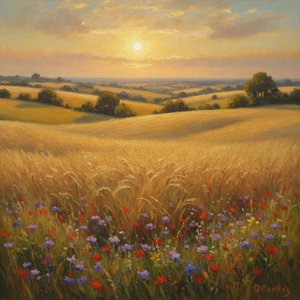
Golden Fields & Sun-Drenched Meadows: Capturing the Soul of Impressionist Landscapes
Immerse yourself in the luminous world of Impressionist landscapes. Discover how masters like Monet and Gauguin captured ephemeral light through plein air painting, and learn to bring the soul of sun-drenched meadows into your home with exquisite, hand-painted oil reproductions.

The Beauty of Impermanence: Capturing Decay through Impressionist Eyes
Explore the profound beauty of impermanence through Impressionist and Post-Impressionist eyes. Discover how masters like Monet and Van Gogh captured fleeting light and the poetic essence of nature's transitions in our deep dive into art history and emotional landscapes.