


 实景预览
实景预览
 发送
发送 分享
分享
 详情
详情 指南
指南

 下载图片
下载图片
 相似作品
相似作品 X射线
X射线 幻灯片播放
幻灯片播放 统计数据
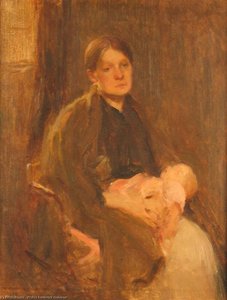
统计数据Maternité
 Contemporary Realism
 65.0 x 54.0 cm
Admire Julia Beatrice How’s ‘Maternité,’ a poignant oil painting of mother & child. Realistic style, layered textures, & soft lighting capture tender intimacy. Discover this unique artwork.
Julia Beatrice How (1865-1932) was a British painter celebrated in France for her delicate portraits of mothers & children, nudes, and still lifes. Compared to Morisot & Cassatt, she exhibited widely but remained underappreciated in Britain. Discover
 阅读全文
阅读全文
手工油画复制品
由我们的艺术家按需定制,为您提供您所选尺寸及画框的布面手工油画。 ( 切换至版画销售渠道 切换至数字图像销售渠道)




































标准尺寸
定制
CM
INCH
您可以从与原作比例一致的预设尺寸中进行选择。
Loading sizes...

宽度
高度
请输入您需要的宽度和高度,以适配您的画框或墙面。由于作品为手工绘制,若您选择不同的尺寸比例,艺术家可能会在画面边缘多画一些或稍作裁剪 —— 由您决定。在开始绘画之前,我们会为您发送一份数字效果图供您确认。本页面上展示的图片并非最终实物 —— 只有效果图才能反映真实结果。
可定制示例:将面部替换为客户照片;添加宠物(例如,将猫替换为狗);在背景中加入隐藏信息;更改背景风景或元素。
下单后,TopImpressionists.com 团队将通过电子邮件联系客户获取具体要求,并提供效果预览图
下单后,TopImpressionists.com 团队将通过电子邮件联系客户获取具体要求,并提供效果预览图


 玻璃选项仅适用于110厘米以下的尺寸。

Maternité
复制品材质
复刻品尺寸说明
-


总计金额
¥ 1973
相关艺术品




艺术家简介
A Quiet Voice Amidst Impressionistic Brilliance
Julia Beatrice How remains a somewhat overlooked figure in the annals of British art history, yet her paintings—particularly those produced during her formative years in France—hold a distinctive charm and capture a nuanced portrayal of motherhood and domestic life. Born in Devon to a family of silversmiths, How’s early life was marked by tragedy as both her parents succumbed to illness before she reached adulthood, shaping her resilience and fostering an independent spirit that would define her artistic journey. This early loss perhaps instilled in her the profound sensitivity with which she approached her subjects, finding beauty in the fleeting, tender moments of human connection.
Her formal education began at the Herkomer School at Bushey, Hertfordshire, where she honed her drawing skills alongside fellow artists preparing for careers in illustration and painting. However, it was a move to Paris around 1893 that truly propelled How’s artistic development. Drawn to the burgeoning Impressionist movement, she enrolled at the Académie Delecluse, immersing herself in the techniques championed by luminaries like Claude Monet and Pierre-Auguste Renoir—artists whose exploration of light and color profoundly impacted her own aesthetic sensibilities.
The Parisian Influence and Artistic Evolution
How quickly established herself as a respected artist within Parisian circles, gaining recognition from influential figures such as Auguste Rodin, Camille Claudel, and Lucien Simon. These encounters fostered an appreciation for sculptural form and expressive gesture, subtly informing the composition and emotional depth of her paintings. Her work began to reflect a sophisticated understanding of how light interacts with the human figure, moving beyond mere representation toward a more atmospheric and emotive experience.
Her debut exhibition at the Société nationale des beaux-arts in 1902 showcased a remarkable output—approximately 147 works—demonstrating her unwavering dedication to her craft and securing her place amongst the prominent painters of the era. Through this massive display, she proved herself not merely a student of the French masters, but a contributor to the vibrant dialogue of late 19th and early 20th-century art.
Themes of Tenderness and Technique
Her favored subjects included intimate portraits of mothers and children, rendered with meticulous detail and imbued with tenderness. In works such as Maternité and L'ombrelle bleu, one can observe her ability to transform the domestic sphere into a stage for profound emotional resonance. She skillfully employed various media to achieve her vision:
- Pastel Crayons: Used to capture soft textures and the delicate glow of skin.
- Oils: Employed to create layered depth, rich textures, and a sense of permanence in her portraits.
- Watercolors: Utilized for their transparency and ability to evoke light, airy atmospheres.
By blending these mediums, How achieved a remarkable level of tonal subtlety, allowing the play of shadow and light to breathe life into her figures. Her legacy is one of quiet strength; while she may not have sought the radical stylistic upheavals of the avant-garde, her ability to capture the ephemeral beauty of the maternal bond remains a testament to her enduring talent and her unique place in the lineage of British and French Impressionism.

Julia Beatrice How
1867 - 1932 , United Kingdom
快速概览
- Full Name: Julia Beatrice How
- Nationality: British
- Date Of Birth: 1867
- Date Of Death: 1932
- Place Of Birth: Devon, United Kingdom
- Notable Artworks:
- L'ombrelle bleu
- Maternité
- Artistic Movement Or Style: Impressionism
- Artists Who Influenced This Artist:
- Rodin
- Polin
- Besnard
- Lucien Simon
- Artists Or Movements Influenced By This Artist:
- Berthe Morisot
- Mary Cassatt
相关文章

The Timeless Charm of Oil on Board: Reimagining Texture and Light through the Impressionist Lens
Discover the profound intimacy of oil on panel. Explore how Impressionist masters used rigid supports to capture light, texture, and impasto depth through exquisite, handmade oil reproductions for discerning collectors.

The Soul of Impressionism: Why Oil on Canvas Captures Eternal Light and Timeless Emotion
Discover the enchanting alchemy of Impressionism. Explore how the mastery of oil on canvas, through glazing and impasto, captures eternal light and emotion. Perfect for lovers of Monet and Van Gogh seeking the profound depth of hand-painted fine art.

The Art of Impressionism: An Expert Guide to Our Hand-Painted Masterpieces and Custom Oil Commissions
Discover the luminous magic of Impressionism with TopImpressionists.com. We specialize in exquisite, hand-painted oil reproductions and bespoke portraits, bringing the textures and light of masters like Monet and Renoir directly to your home with unmatched artistry and trust.