


 实景预览
实景预览
 发送
发送 分享
分享
 详情
详情 指南
指南

 下载图片
下载图片
 相似作品
相似作品 X射线
X射线 幻灯片播放
幻灯片播放 统计数据
统计数据The Cripples
 Acrylic On Canvas
- WallArt
- Northern Renaissance
 101.0 x 76.0 cm
 The Lowry
 阅读全文
阅读全文
手工油画复制品
由我们的艺术家按需定制,为您提供您所选尺寸及画框的布面手工油画。 ( 切换至版画销售渠道 切换至数字图像销售渠道)




P118B ¥10

P118H ¥10

P118W ¥10

P438Z ¥10

P508JH ¥12

P508YH ¥12

P805H ¥10

P805Z ¥10

P919BZ ¥10

P919G ¥10

P919XJ ¥10

P959ZH ¥10

P968JZ ¥12

W106C ¥8

W218G ¥10

W218JH ¥8

W218Y ¥10

W307PJ ¥10

W316G ¥10

W316PJ ¥8

W316Y ¥10

W398PJ ¥8

W4111J ¥10

W500HY ¥15

W500JH ¥15

W692G ¥12

W849H ¥8

W940BG ¥15

W953PJ ¥8




标准尺寸
定制
CM
INCH
您可以从与原作比例一致的预设尺寸中进行选择。
Loading sizes...

宽度
高度
您可以输入自定义尺寸,以适配特定的画框或空间。如果所选尺寸与原图比例不符,我们将通过裁剪作品或添加手绘元素来扩展画面。数字样稿将在制作开始前发送给您确认。
请注意,屏幕预览无法准确反映实际的裁剪或扩展效果,只有样稿才能真实呈现最终的构图。
虽然我们提供定制尺寸服务,但为了保留原作比例,建议您从预设列表中选择尺寸。
可定制示例:将面部替换为客户照片;添加宠物(例如,将猫替换为狗);在背景中加入隐藏信息;更改背景风景或元素。
下单后,TopImpressionists.com 团队将通过电子邮件联系客户获取具体要求,并提供效果预览图
下单后,TopImpressionists.com 团队将通过电子邮件联系客户获取具体要求,并提供效果预览图


 玻璃选项仅适用于110厘米以下的尺寸。

The Cripples
复制品材质
复刻品尺寸说明
-


总计金额
¥ 5853
Laurence Stephen Lowry’s “The Cripples”: A Study in Urban Isolation
Laurence Stephen Lowry's "The Cripples," painted in 1949, isn’t merely a depiction of Manchester street life; it’s a poignant and unsettling meditation on anonymity, social exclusion, and the quiet dignity of those often overlooked. This iconic work, now housed within the collection of The Lowry in Salford, offers a rare glimpse into the artist's unique perspective – one that eschewed sentimentality for a starkly observed reality, revealing a profound sensitivity to the human condition amidst the relentless march of industrial progress. Lowry’s decision to avoid explicit emotional expression is key to understanding the painting’s enduring power; instead, he invites viewers to contemplate the lives and experiences of his subjects through their very absence of overt feeling.
The scene unfolds within a densely populated urban square, rendered in Lowry's signature monochrome palette – a deliberate choice that strips away any potential distraction, forcing the viewer to confront the figures with unflinching honesty. A multitude of pedestrians, predominantly men, populate the frame, their faces largely obscured and their movements seemingly aimless. They are not individuals engaged in conversation or activity; rather, they exist as anonymous components within a larger, impersonal landscape. The composition itself is deliberately chaotic, mirroring the perceived disorder of urban life – figures overlap, merge into one another, and recede into the distance, creating a sense of overwhelming density and isolation. The buildings lining the street are simplified architectural forms, serving primarily to establish a spatial context rather than offering any detailed representation.
A Study in Form and Technique
Lowry’s technique is instantly recognizable: a direct, almost childlike approach characterized by loose brushstrokes and a deliberate avoidance of meticulous detail. The figures are rendered with simplified geometric shapes – cylinders for limbs, rectangles for bodies – creating an effect that is both immediate and slightly unsettling. The lines delineating the forms are often imprecise, contributing to their anonymity and reinforcing the painting’s overall sense of detachment. Notably, Lowry employed a medium likely consisting of graphite or charcoal on paper, lending the work a subtle textural quality—a delicate balance between precision and spontaneity. The lack of blending or layering suggests an immediate, intuitive approach, as if Lowry were capturing fleeting impressions rather than constructing a carefully planned composition.
Symbolism and Historical Context
The title itself, “The Cripples,” immediately introduces a layer of complexity. While the painting depicts individuals with physical disabilities – a woman leaning heavily on a cane, a man with a limp – it’s crucial to understand that Lowry wasn't simply portraying charity cases or victims of misfortune. He was drawing inspiration from his own observations of Manchester’s streets and its inhabitants, many of whom were struggling with poverty, illness, and the social consequences of rapid industrialization. The figures are not presented as objects of pity; rather, they are integrated into the fabric of everyday life, existing alongside their able-bodied counterparts without receiving any particular attention or consideration. The presence of carnival headgear – a cardboard crown, a paper shako, a beret – adds another layer of symbolic meaning, suggesting that these individuals represent various social classes and roles within the community.
A Legacy of Observation
Further research reveals intriguing connections to Lowry’s own life and artistic sensibilities. The debate surrounding his potential Asperger's syndrome offers a compelling lens through which to interpret "The Cripples." His meticulous observation of detail, coupled with a seeming indifference to conventional notions of beauty or emotional expression, aligns remarkably well with the characteristics associated with this neurodevelopmental condition. Moreover, Lowry’s work reflects a broader trend in British art during the mid-20th century – a shift away from idealized representations and towards a more realistic, often unflinching portrayal of social realities. "The Cripples" stands as a testament to Lowry's unique vision, inviting viewers to contemplate the complexities of urban life and the enduring power of observation.
问答详情
考虑到其色彩搭配,建议将 劳伦斯·斯蒂芬·洛微 的《The Cripples》 悬挂在哪个房间?
劳伦斯·斯蒂芬·洛微 的《The Cripples》 的 Neutrals 色调与其推荐的布置空间——Living Room 完美契合。
"The Cripples" 的艺术家是谁?
《The Cripples》被归为劳伦斯·斯蒂芬·洛微的作品。
劳伦斯·斯蒂芬·洛微 的《The Cripples》 的色彩和谐度如何?
劳伦斯·斯蒂芬·洛微 的《The Cripples》 的色彩呈现出一种 Softly Mixed Palette 的和谐感。这种和谐感描述了色彩之间的相互关系。
哪里可以买到劳伦斯·斯蒂芬·洛微 的《The Cripples》的手绘复制品?
您可以在 本页 直接订购 劳伦斯·斯蒂芬·洛微 的《The Cripples》 的手绘复制品:亚麻画布手工绘制油画复制品,按需定制。
劳伦斯·斯蒂芬·洛微 的《The Cripples》 是否属于公有领域?
关于版权,"The Cripples" 属于 仍受版权保护。
《The Cripples》属于 劳伦斯·斯蒂芬·洛微 艺术生涯中的哪个时期?
"The Cripples" 代表了 劳伦斯·斯蒂芬·洛微 的 Late Period 时期。
哪里可以买到 劳伦斯·斯蒂芬·洛微 的《The Cripples》 的版画?
您可以在 本页 直接订购 劳伦斯·斯蒂芬·洛微 的《The Cripples》 的版画:采用棉质帆布或档案级画布纸制作的艺术版画。
艺术家简介
工业时代的静默观察者
1887年出生于柴郡斯特雷特福德核心地带的劳伦斯·史蒂芬·洛微,至今仍是20世纪英国艺术中最受喜爱且最具辨识度的声音之一。虽然他的名字如今已成为英格兰北部那粗粝而动人的景观的代名词,但他走向国际声誉的过程却是一段缓慢而凄美的攀升。在人生的大部分时光里,洛微一直以一名静默观察者的身份生活着:白天担任租金征收员,夜晚则潜心磨炼技艺。这种双重生活使他能够以一种独特的亲密感,去见证工业生活那富有节奏感却往往残酷的脉动。他的作品不仅仅是在描绘索尔福德和彭德里伯里那烟雾缭绕的地平线;它更捕捉到了对人类生存状态的深刻感悟,在工业时代冷峻的现实中寻得了一种静默的尊严。
洛微的艺术发展深深植根于他的周遭环境,然而他的技术基础却建立在对形态与光影的细致研究之上。最初,他受到印象派和后印象派原则的影响,力求捕捉场景的本质而非仅仅是其表象。他在曼彻斯特艺术学院接受的早期训练,为他提供了将蔓延的工厂和拥挤的街道转化为更具象征意义之物的工具。随着风格的成熟,他逐渐远离了宏大叙事,转而专注于观察中细微的差别。他经常在极其受限的色调范围内创作——运用如钛白、象牙黑、朱红、普鲁士蓝和赭石等色彩——以此创造出既扎根于现实,又因其梦幻般的、近乎超现实主义的特质而升华的构图。
“火柴人”的魔力
洛微最持久的艺术遗产或许便是他创造的所谓“火柴人”。这些风格化、简化的形体,往往没有阴影或清晰的面部特征,却以一种集体运动与共同命运感填充了他的城市景观。通过这些人物,洛微将熙攘的街景转化为关于社区与孤独的诗意冥想。无论他们是走向足球赛,还是聚集在磨坊附近,亦或是在公园中漫步,这些角色都体现了工人阶级的韧性。当他将这些渺小、脆弱的形态置于宏大、阴郁的工业建筑背景之下时,产生了一种令人难忘的美感,在工业的纪念碑式规模与人类生命的纤细本质之间创造出一种张力。
除了著名的城市场景,洛微的作品集也展现出惊人的多样性,透露出一位具有深厚底蕴和好奇心的艺术家特质。虽然工业景观是他最负盛名的主题,但他同时也探索了:
- 神秘的无人景观: 阴郁且富有氛围感的场景,唤起一种孤独感与时光流逝的感觉。
- 海景画: 对海洋与天空纯粹、原始的描绘,源于他在20世纪40年代对海岸线的着迷。
- 肖像画: 对个体进行亲密且往往带有忧郁色彩的研究,展示了他通过极简细节捕捉性格的能力。
- “木偶”系列作品: 一组仅在他去世后才被发现的、带有超现实主义倾向的未发表作品,揭示了他想象力中更具实验性的一面。
英国艺术的持久遗产
尽管他在1939年伦敦的首个个展之后获得了显著的全国知名度,但洛微真正的影响力体现在他重新定义英格兰景观的方式上。他并不寻求歌颂进步或描绘英雄式的远景;相反,他在平凡与忧郁中发现了美。他能够在西北部那被烟尘覆盖的街道中寻找到凄美的美感,这使得他的作品成为了英国文化认同的基石。如今,位于索尔福德码头的洛微美术馆 (The Lowry) 等机构正作为其巨大遗产的重要守护者,收藏着规模最大的其作品公开展览之一。
洛微的意义在于他拒绝回避那个时代艰难的现实。通过以如此深厚的同理心和风格创新来记录普通人的生活,他确保了工业时代的英国精神不仅作为历史被保存,更作为艺术被铭记。他始终是一位氛围的大师,一位向世人证明了即使在最拥挤、最工业化的环境中,也能发现深刻而静谧的魔力的艺术家。

劳伦斯·斯蒂芬·洛微
1887 - 1976 , 英国
快速概览
- Artistic Movement Or Style: 工业绘画
- Artists Or Movements Influenced By This Artist: ['英格兰北部艺术']
- Artists Who Influenced This Artist: ['印象派']
- Date Of Birth: 英国,斯特雷特福德 (1887)
- Date Of Death: 1976
- Full Name: 劳伦斯·史蒂芬·洛威
- Nationality: 英国
- Notable Artworks:
- 旧街道
- 斯温顿沼泽
- 无题 (447)
- Place Of Birth: 英国,斯特雷特福德
相关文章
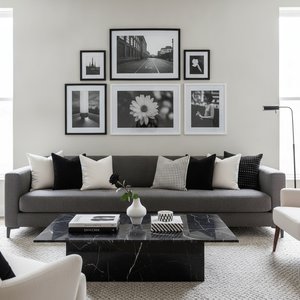
Timeless & Chic: Elevating Your New Home with the Sophistication of Black and White Photography
Transform your new home with the timeless allure of black and white photography. TopImpressionists.com specializes in elegant monochrome decor and custom hand-painted wedding portraits that turn cherished milestones into lasting, soulful masterpieces. Elevate your space with ease.

Shadow & Soul: Why Black & White Photography Remains the Ultimate Power Move in Modern Art
Discover why black & white photography remains a powerful force in contemporary art. Explore the impact of light, shadow, and texture through a visual journey of monochrome mastery and learn how to elevate your space with timeless grayscale aesthetics.

Monochrome Visions: Exploring the Aesthetic & Historical Significance of Black & White Photography
Explore the rich history & artistic power of black and white photography. From early techniques to iconic masters like Ansel Adams, discover why monochrome continues to captivate art lovers today. Expert insights for collectors.

Dark Masterpieces: 10 Iconic Paintings Dominated by Black Tones |
Explore 10 iconic paintings dominated by black tones, from Rembrandt’s chiaroscuro to Goya's dark expressions. Discover the stories behind these masterpieces & find museum-quality art reproductions for your home at .

White on Canvas: 10 Masterpieces & Timeless Elegance for Your Home Decor
Explore 10 iconic white paintings by Monet, Whistler & Rothko! Discover the stories behind these serene masterpieces and their impact on art history. Find museum-quality reproductions for your home decor at .