


 实景预览
实景预览
 切换至版画销售渠道
 分享
分享 分享
分享
 详情
详情 指南
指南

 下载作品
下载作品
 相似作品
相似作品 X射线
X射线 幻灯片播放
幻灯片播放 Q&A
Q&A 统计数据
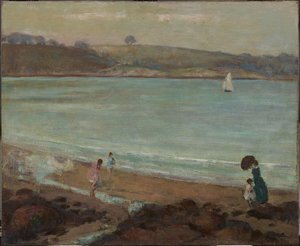
统计数据Mrs. Abrams in Paris

Explore Lucien Abrams' evocative paintings of landscapes & portraits from Paris to Texas. Discover his unique style – capturing light, nature, & American life (1870-1941).
 展开全文
展开全文
获取远超网页预览效果的印刷级文件。我们销售的每一张数字图像均源自库存数据库中的高分辨率母版——宽度通常在 5,000 至 15,000 像素之间——因此您可以放心地进行大幅打印、局部裁剪或还原细腻的细节。
每一件作品在离开我们的工作室前都经过了精心的处理。数字影像专家会对照原作核对色彩,并在必要时进行校正,随后利用专业修图工具提升清晰度与细节表现——且始终忠实于艺术家的笔触与风格。最终呈现的图像宛如原作本身,而非仅仅是一张加了滤镜的扫描件。
您可以在最终定稿前进行审核:我们的专家将在 72 小时内通过电子邮件向您发送图像以供审阅。如果不满意?您可以要求改进或修正;若质量未达预期,亦可申请退款。
这也是出版商、设计工作室、画廊及印刷厂所信赖的品质。
每份数字图像订单均包含的内容
专业级数字交付,品质保障
选择 TopImpressionists.com,您获得的不仅仅是一张图像——您收到的是经过专业级增强、精雕细琢的数字艺术作品,并享有满意保证。以下是您的订单中自动包含的所有内容:

邮件即时送达
您的高分辨率数字图像文件将在下单后 72 小时内通过电子邮件发送给您 —— 即可立即使用。

AI 增强型数字文件
您的艺术品经过专业优化,结合先进的 AI 技术与人工修饰,确保呈现极致的细节、清晰度与色彩准确度。

终身免费重发服务
不小心删除了文件或找不到了?没关系——我们将随时为您免费重发。

无需进口税费,始终如一
即刻拥有您的艺术作品,无需支付任何关税、税费或运费——数字下载始终免税。

色彩精准保障
我们通过专业工具与色彩管理技术,确保您的数字图像尽可能真实地还原原作色彩。

100天满意保证
如果您对所购数字图像不满意,我们将在100天内为您进行修改或提供100%的全额退款——无需任何理由。

100% 退款保证
不满意?在收到数字文件后的100天内,您可以申请全额退款——无需任何理由。

批量订购优惠
购买 3 张享 10% 折扣 - 购买 5 张享 15% 折扣 - 购买 10 张以上享 20% 折扣。非常适合创意项目、画廊及机构使用。
艺术家简介
Lucien Abrams: A Cosmopolitan’s Palette – Bridging Paris and Texas
Lucien Abrams (1870-1941) wasn't merely an artist; he was a collector of experiences, a traveler steeped in diverse cultures, and a remarkably adaptable painter. His life unfolded across continents—from the prairies of Kansas to the bustling streets of Paris, the sun-drenched landscapes of Algeria, and finally, the artistic haven of Old Lyme, Connecticut. This confluence of influences shaped his distinctive style, characterized by luminous color palettes, an intuitive understanding of light, and a subtle yet profound engagement with both European modernism and American regionalism. Abrams’ story is one of constant evolution, mirroring the changing currents of art history in the early 20th century.
Born into comfortable circumstances—his father a prominent land agent involved in the nascent Texas oil industry, his mother a Virginian socialite—Abrams received an unusually well-rounded education. He began with studies at Beloit College, followed by architectural training at Princeton University, and then a brief stint at the Art Students League in New York. However, it was his sojourn to Paris in 1894 that truly ignited his artistic passion. There, he immersed himself in the vibrant art scene, attending classes at prestigious academies like the Académie Julian and Académie Colarossi, absorbing the techniques of masters such as Whistler and Renoir. Crucially, Abrams wasn’t content with simply mimicking established styles; he actively sought out new approaches, experimenting with color theory and composition—a foundation that would later inform his distinctive vision.
- Early Influences: Abrams' initial work reflected a more academic approach, focusing on figure studies in muted tones.
- European Travels (1894-1914): His time in Europe—Italy, Belgium, the Netherlands, and Algeria—proved transformative, exposing him to diverse landscapes and cultures.
- Algeria’s Impact: The stark beauty and exotic atmosphere of North Africa profoundly influenced his palette and subject matter, leading to a series of evocative paintings capturing the region's light, architecture, and people.
The Old Lyme Years – A Synthesis of Styles
Following World War I, Abrams sought a community where he could continue his artistic pursuits, ultimately settling in Old Lyme, Connecticut, in 1915. This period marked a significant shift in his work—a synthesis of his European training and the burgeoning American Impressionist movement. The Lyme Art Colony, with its emphasis on plein air painting and direct observation of nature, provided an ideal environment for him to refine his skills and experiment with new techniques.
Abrams’ paintings from this era are characterized by a remarkable sensitivity to light and color—a hallmark of Impressionism. He skillfully captured the fleeting effects of sunlight on landscapes, buildings, and figures, employing broken brushstrokes and vibrant hues to create a sense of atmosphere and immediacy. Yet, unlike some of his American contemporaries, Abrams didn’t shy away from incorporating elements of Post-Impressionism and even Fauvism—bold color choices and expressive brushwork that hinted at the emotional intensity beneath the surface of his scenes. His work in Old Lyme reflected this eclectic approach, blending observations of the Connecticut countryside with memories of Parisian cafes and Algerian sunsets.
- Connection to the Colony: Abrams became an active member of the Lyme Art Association, sharing his experiences and artistic insights with fellow artists.
- Influence of Frank Vincent DuMond: His mentorship by Frank Vincent DuMond, a prominent figure in the Old Lyme movement, further shaped his artistic development.
- Incorporation of Fauvist Elements: Abrams’ use of intense colors and expressive brushstrokes demonstrates an awareness of the emerging Fauvist movement.
A Diverse Portfolio – Landscapes, Portraits, and Still Lifes
Abrams' oeuvre encompassed a surprisingly diverse range of subjects—landscapes, portraits, and still lifes. His landscapes, often depicting scenes from his travels or observations of the Connecticut countryside, are imbued with a sense of tranquility and beauty. He possessed an exceptional ability to capture the subtle nuances of light and shadow, creating paintings that feel both immediate and timeless.
His portraiture, particularly those featuring his wife, demonstrated a keen eye for capturing personality and emotion. Abrams’ still lifes—often featuring flowers or domestic objects—were rendered with meticulous detail and a sophisticated understanding of color theory. These works are not merely representations of objects; they are carefully constructed compositions that invite contemplation.
Notable Works:**- Déjeuner en Provence (c. 1910) – A vibrant depiction of a Provençal scene, influenced by Renoir’s work.
- Kabyle Woman (c. 1906) – A captivating portrait of a Berber woman in traditional attire, reflecting Abrams' interest in diverse cultures.
- Fruit and Feather Flowers (1941) - A luminous Impressionist still life showcasing vibrant peaches, porcelain, & atmospheric light.
Legacy and Historical Significance
Lucien Abrams’ artistic legacy is often overlooked, yet his work represents a significant contribution to both American and European art history. He was a cosmopolitan artist who embraced diverse influences—from the Impressionist movement in Paris to the regionalism of Texas—and synthesized them into a uniquely personal style. His paintings offer a glimpse into a bygone era—a time when artists were actively engaged with the world around them, seeking new ways to capture its beauty and complexity.
Today, Abrams’ work is increasingly recognized for its elegance, sensitivity, and artistic merit. His paintings continue to resonate with viewers who appreciate his masterful use of color, light, and composition—a testament to the enduring power of a truly remarkable artist.
Lucien Abrams
1870 - 1941
基本信息
- Full Name: Lucien Abrams
- Nationality: American
- Date Of Birth: 1870
- Date Of Death: 1941
- Place Of Birth: Lawrence, Kansas
- Notable Artworks:
- Fruit & Feather Flowers
- Kabyle Woman
- Mrs. Abrams in Paris
- Artistic Movement Or Style: Impressionism, American Impressionism
- Artists Who Influenced This Artist:
- Renoir
- Cézanne
- Artists Or Movements Influenced By This Artist:
- Fauvism
- Old Lyme Colony