





























从与原作比例一致的预设尺寸中进行选择。

您可以输入自定义尺寸,以适配特定的画框或空间。如果所选尺寸与原图比例不符,我们将通过裁剪作品或添加手绘元素来扩展画面。数字样稿将在制作开始前发送给您确认。
请注意,屏幕预览无法准确反映实际的裁剪或扩展效果,只有样稿才能真实呈现最终的构图。
虽然我们提供定制尺寸服务,但为了保留原作比例,建议您从预设列表中选择尺寸。

Coffee mill
复制品尺寸
In the early twentieth century, the art world was a landscape of established rules and predictable beauty, but Marcel Duchamp arrived like a sudden, sharp crack in a porcelain cup. His 1911 masterpiece, Coffee Mill, serves as a profound disruption of artistic conventions, standing as a cornerstone of the Dadaist movement. This is not merely a painting of a mundane object; it is a deliberate provocation. At first glance, one sees the familiar silhouette of a coffee grinder, yet it is inextricably bound to a large, dominating clock face that commands the left side of the canvas. Through this unexpected pairing, Duchamp invites us into a world where the mechanical and the temporal collide, forcing the viewer to question the very boundaries between everyday utility and high art.
The technical execution of Coffee Mill reveals a masterful command over the subtle nuances of graphite on board. Eschewing the vibrant palettes of his contemporaries, Duchamp utilized meticulous layering and tonal gradation to create a surface that feels both velvety and stark. The interplay between the deep, soft shadows of the graphite strokes and the pristine white of the board emphasizes the object’s materiality without relying on traditional illusionism. This understated approach is deeply intentional; by rejecting decorative embellishment, Duchamp directs our attention away from sensory pleasure and toward a more rigorous intellectual engagement. For the collector or designer, this piece offers a sophisticated, monochromatic elegance that commands attention through its structural clarity and quiet intensity.
To understand Coffee Mill is to understand the heart of Dadaism—a movement born from a desire to dismantle hierarchies and challenge the notion of artistic originality. Duchamp’s fascination with "readymades" and the mechanization of daily life finds its pulse here. The clock, with its secondary smaller faces scattered across the composition, acts as a symbol of repetition, rhythm, and the relentless march of time. By juxtaposing the grinding mechanism of the coffee mill with the ticking face of the clock, Duchamp suggests a parallel between the mechanical processing of beans and the automated nature of modern existence. It is a critique of a world becoming increasingly synchronized by machines.
For those seeking to infuse a contemporary space with historical depth, this artwork provides an unparalleled intellectual anchor. It does not merely decorate a wall; it starts a conversation. The piece resonates with the spirit of innovation and the courage to find beauty in the unconventional. Whether placed in a minimalist gallery setting or as a focal point in a curated study, Coffee Mill brings with it the revolutionary energy of a moment when art decided to stop being a window into another world and instead became a mirror held up to our own mechanical reality.

1887 - 1968 , 法国

Explore the exquisite world of TopImpressionists.com Giclée prints. Discover our commitment to archival quality, 12-color pigment inks, and museum-grade canvas, ensuring every Monet or Renoir reproduction retains its luminous beauty for generations.
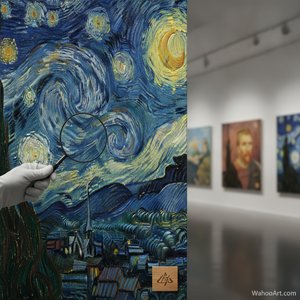
Discover the exquisite depth of TopImpressionists.com's premium textured Giclée prints. Experience museum-grade archival quality and a tactile, 3D finish that captures the soul of Impressionist masterpieces for the discerning collector.

Explore the technical excellence of TopImpressionists.com's premium art poster prints. Discover how our 12-color pigment system and archival inks capture the luminous beauty of Impressionist masterpieces with unmatched color fidelity and museum-grade durability for the discerning collector.


第一时间获取最新的艺术新闻、独家优惠及装饰灵感。
向我们介绍您的项目需求,我们的艺术专家将为您提供 3 个个性化的艺术品推荐。
由我们的专家为您精选 3 款心仪之作 —— 完全免费!


 效果预览
效果预览
 购买印刷品
购买印刷品 分享
分享 分享
分享
 详情
详情

 下载
下载
 相似作品
相似作品 X射线
X射线 幻灯片播放
幻灯片播放

 展开详情
展开详情









 玻璃选项仅适用于110厘米以下的尺寸。


