






























从与原作比例一致的预设尺寸中进行选择。

您可以输入自定义尺寸,以适配特定的画框或空间。如果您选择的尺寸与原图比例不符,我们将对作品进行裁剪,或通过镜像填充/纯色填充边缘的方式来扩展图像。在开始制作之前,我们会向您发送一份数字效果图供您确认。
请注意,屏幕上的预览并不能反映实际的裁剪或扩展效果。只有效果图才能准确展示最终的构图。
虽然我们提供定制尺寸,但为了保持原图比例,我们建议您从预设列表中选择尺寸。

Blue and gray
复制品尺寸
Mark Rothko, one of the 20th century's most influential figures in art, is inextricably linked with his monumental color field paintings. Among these iconic works, 'Blue and Gray,' created in 1970 and currently residing at the National Gallery of Art in Washington, D.C., stands as a profound exploration of human experience—a visual meditation on mortality, contemplation, and the very essence of being. This painting isn’t merely a composition of hues; it's an invitation to engage with raw emotion and a testament to Rothko’s revolutionary approach to abstraction.
At its core, ‘Blue and Gray’ is defined by its stark simplicity and deliberate ambiguity. The canvas is dominated by two vast, rectangular blocks of color: a deep, resonant blue on the left side and a muted gray on the right. These aren't vibrant, assertive colors; rather, they are carefully modulated, almost velvety in their application. Rothko employed thin layers of paint, allowing the underlying surface to subtly influence the final hue—a technique that contributes significantly to the painting’s luminous quality. The edges of these fields are deliberately soft and undefined, blurring the boundaries between color and creating a sense of atmospheric depth. This avoidance of sharp lines is crucial to understanding Rothko's intention: he sought to evoke an experience rather than represent a concrete image.
Rothko’s artistic philosophy centered on the belief that color itself could convey profound emotional and spiritual meaning. He rejected traditional representation, arguing that painting should be about “the best thing we can do is to paint the very substance of things—their energy.” 'Blue and Gray' embodies this principle perfectly. Rothko himself famously stated that his ‘grey and black’ paintings were about death – a stark declaration that reveals the underlying melancholy inherent in the work. The painting doesn’t depict a specific scene or subject; instead, it aims to tap into universal human feelings of loss, solitude, and the passage of time. This aligns directly with the tenets of Abstract Expressionism, the movement Rothko is most closely associated with. Unlike earlier abstract artists who focused on gesture and process, Rothko prioritized the emotional impact of color and form, creating works that are intensely personal yet universally resonant.
Despite its apparent simplicity, ‘Blue and Gray’ is rich in symbolic potential. The blue field often evokes feelings of sadness, introspection, or even a sense of longing—a deep, oceanic space that invites contemplation. Conversely, the gray suggests emptiness, stillness, and perhaps the inevitability of decay. However, Rothko deliberately resisted providing definitive interpretations, encouraging viewers to project their own experiences and emotions onto the canvas. Many scholars have noted the painting’s resemblance to a desolate Arctic landscape—a vast, empty expanse under an immense sky—further reinforcing its themes of isolation and mortality. The subtle variations in tone within each color field – the slight lightening of blue towards the center – add another layer of complexity, suggesting movement and depth within the seemingly static forms.
Mark Rothko’s influence on contemporary art is undeniable. His color field paintings continue to captivate audiences worldwide, inspiring artists in diverse fields—from visual arts to architecture and design. ‘Blue and Gray,’ with its profound emotional depth and understated elegance, remains a powerful example of Rothko's unique vision. It serves as a reminder that art can transcend the purely representational, offering instead a direct pathway to the human soul. For those seeking an artwork that invites contemplation, evokes deep emotion, and stands as a testament to the power of color, ‘Blue and Gray’ is an essential piece to experience. For further exploration into Rothko's work and the broader context of Abstract Expressionism, consider visiting the National Gallery of Art’s collection or researching resources like Wikipedia and TopImpressionists.com.

1903 - 1970 , 拉脱维亚

探索马克·罗斯科25幅杰作,感受抽象表现主义的色彩力量与深刻情感。从经典色域绘画到无题系列,了解艺术史上的大师及其作品背后的故事。TopImpressionists.com提供博物馆级高质量复制品,为您的家居装饰带来艺术灵感!立即探索完整收藏。

Explore 10 iconic artworks – from Monet to Matisse – that masterfully use color! Discover the stories behind these vibrant paintings, their techniques & emotional impact. Find museum-quality art reproductions and inspiring decor ideas on TopImpressionists.com.

Immerse yourself in the captivating world of slate blue! Explore 10 iconic paintings by Monet, Van Gogh & Renoir. Discover their stories, techniques & find museum-quality art reproductions for your home at .

Explore the profound emotional depth of Mark Rothko's abstract expressionism. Discover the history, techniques & lasting impact of this pivotal Color Field painter. Expert insights for collectors and art enthusiasts.
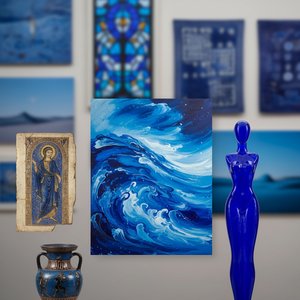
Explore the rich history of blue in art! Discover its symbolism, from ancient pigments to modern masterpieces by Kandinsky & Seurat. Uncover the psychological impact and cultural meanings behind this captivating hue.


第一时间获取最新的艺术新闻、独家优惠及装饰灵感。
向我们介绍您的项目需求,我们的艺术专家将为您提供 3 个个性化的艺术品推荐。
由我们的专家为您精选 3 款心仪之作 —— 完全免费!

 定制手绘复刻品
 分享
分享 分享
分享
 详情
详情

 下载
下载
 相似作品
相似作品 X射线
X射线 幻灯片播放
幻灯片播放


 展开详情
展开详情









 玻璃选项仅适用于110厘米以下的尺寸。


