


 实景预览
实景预览
 分享
分享 分享
分享
 详情
详情 指南
指南

 下载作品
下载作品
 相似作品
相似作品 X射线
X射线 幻灯片播放
幻灯片播放 Q&A
Q&A 统计数据
统计数据Bastard Toadflax (Comandra pallida)
 Watercolor
- WallArt
- Botanical Illustration
 1923
1923- 19th Century
 26.0 x 18.0 cm
 展开全文
展开全文
艺术微喷/版画
博物馆级艺术微喷或帆布版画,制作高效,并提供多种饰面选择。 ( 订购纯手工绘制画作 切换至数字图像销售渠道)




P118B ¥10

P118H ¥10

P118W ¥10

P438Z ¥10

P508JH ¥12

P508YH ¥12

P805H ¥10

P805Z ¥10

P919BZ ¥10

P919G ¥10

P919XJ ¥10

P959ZH ¥10

P968JZ ¥12

W106C ¥8

W218G ¥10

W218JH ¥8

W218Y ¥10

W307PJ ¥10

W316G ¥10

W316PJ ¥8

W316Y ¥10

W398PJ ¥8

W4111J ¥10

W500HY ¥15

W500JH ¥15

W692G ¥12

W849H ¥8

W940BG ¥15

W953PJ ¥8




标准尺寸
定制
CM
INCH
您可以从与原作比例一致的预设尺寸中进行选择。
Loading sizes...

宽度
高度
请输入您所需的宽度和高度,以适配您的画框或墙面。由于印刷品只能进行裁剪,无法超出原图尺寸,因此若比例不一致,画面的一部分将会被裁切。在正式印刷之前,我们会为您发送一份数字效果图供您确认。本页面显示的图片并非最终裁剪后的效果——只有效果图才能展示真实的裁剪情况。


 玻璃选项仅适用于110厘米以下的尺寸。

Bastard Toadflax (Comandra pallida)
艺术微喷/版画
复刻品尺寸
-


最终结算价
¥ 463
Bastard Toadflax (Comandra pallida): A Botanical Masterpiece by Mary Vaux Walcott
Mary Vaux Walcott's Bastard Toadflax (Comandra pallida), painted in 1923, is a captivating watercolor botanical illustration that exemplifies the precision and artistry of her work. This piece isn’t merely a depiction of a plant; it's a testament to meticulous observation, scientific accuracy, and an appreciation for the subtle beauty found within the natural world.
Subject & Style: Botanical Precision
The artwork focuses entirely on the Comandra pallida, commonly known as bastard toadflax. Walcott’s style is firmly rooted in botanical illustration—a genre that prioritizes accurate representation over artistic interpretation. However, her skill transcends mere documentation; she imbues the plant with a sense of life and vibrancy through delicate washes of color and precise detailing. The composition centers on the plant's stem and branches, extending diagonally across the frame to create visual interest. There’s an intentional flatness to the perspective, which draws attention to the intricate details of the leaves, flowers, and seed heads. This style was characteristic of 19th-century botanical art, emphasizing scientific accuracy for identification purposes.
Technique: Watercolor Mastery
Walcott's mastery of watercolor is evident in every brushstroke. The painting utilizes layered washes to build depth and create a slightly grainy texture that mimics the natural surface of plant tissue. She expertly employs subtle gradations of green and yellow, capturing the delicate hues of the flowers and foliage. The precision with which she renders each element—the veins on the leaves, the intricate structure of the seed heads—demonstrates her keen eye for detail and technical proficiency. The inscription "M.Y.W." (Mary Vaux Walcott) along with “Russian Hot Springs” and the date “G. T. 1893” at the bottom left corner provides valuable provenance information, adding to the artwork's historical significance.
Historical Context & Significance
Created in 1923, this painting reflects a period of renewed interest in botanical study and documentation. Walcott’s work is particularly significant because she contributed extensively to the Smithsonian American Art Museum, providing a valuable record of North American flora. She has often been referred to as "the Audubon of Botany," recognizing her dedication to documenting wildflowers with the same level of detail and passion that John James Audubon brought to bird illustration. Her illustrations were eventually compiled into a five-volume work entitled North American Wild Flowers, published by the Smithsonian in 1925.
Emotional Impact & Appeal
While primarily a scientific record, Bastard Toadflax (Comandra pallida) evokes a sense of tranquility and appreciation for the natural world. The soft color palette and delicate rendering create a soothing visual experience. The painting’s appeal lies in its ability to reveal the hidden beauty within an often-overlooked plant species. It serves as both a testament to Walcott's artistic skill and a reminder of the importance of botanical study and conservation, making it a compelling piece for art lovers, collectors, and those seeking to bring a touch of natural elegance into their homes.
常见问题与解答
玛丽·沃克特 的《Bastard Toadflax (Comandra pallida)》 是人像、风景还是方形构图?
"Bastard Toadflax (Comandra pallida)" 的画幅格式为 Portrait。这对于规划复制品的摆放位置非常有用。
建议将 玛丽·沃克特 的《Bastard Toadflax (Comandra pallida)》 悬挂在哪个空间?
玛丽·沃克特 的《Bastard Toadflax (Comandra pallida)》 的推荐陈列空间为 Living Room。当然,该建议也可根据您的室内装饰进行灵活调整。
玛丽·沃克特 的《Bastard Toadflax (Comandra pallida)》 在艺术史中处于怎样的地位?
从历史上看,"Bastard Toadflax (Comandra pallida)" 是广义上 19th Century 时期的 Botanical Illustration 时期作品。
艺术家简介
玛丽·沃克特:花卉世界的奥迪本
玛丽·莫里斯·沃克特(Mary Morris Vaux Walcott,1860-1940)是一位非凡的美国艺术家和博物学家,她以其精湛的水彩花卉绘画而闻名于世。人们常常称她为“植物学的奥迪本”,这不仅是对她艺术才华的高度赞扬,更是对她在记录北美野生植物方面所做出的杰出贡献的认可。她的故事并非仅仅是关于艺术天赋,更是一部关于坚韧、科学好奇心和挑战时代社会期望的传奇。出生于费城一个富裕的贵格会家庭,玛丽从小就展现出对自然的热爱和绘画的天赋。八岁时,她收到了一套水彩颜料作为礼物,这成为了开启她一生艺术热情的钥匙。尽管家族传统和社会规范似乎预示着她将过上安稳的生活,但玛丽内心深处却燃烧着一股强烈的创作欲望,渴望捕捉自然界的美丽瞬间。从摇篮曲到山巅:在落基山脉中绽放的艺术
沃克特家族每年都会前往加拿大落基山脉度假,这些旅程对她的艺术生涯产生了深远的影响。远离城市的喧嚣,她沉浸于壮丽的山河之中,开始认真研究矿物学、绘制冰川运动的照片,并深入了解高山植物的细节。这不仅仅是简单的观察,更是一种积极主动地参与到自然科学的研究中。在这些探险过程中,玛丽逐渐磨练了自己的绘画技巧,最初是为了满足植物学家们对稀有植物准确描绘的需求。她的绘画风格独树一帜:她以精确的比例呈现植物,充分展示了它们微妙的结构和鲜艳的色彩,这在当时是相当罕见的。与许多将花卉浪漫化或程式化的绘画作品不同,沃克特的作品始终坚持科学的准确性与艺术表现力的完美结合。1900年,她成为第一位成功登顶圣斯蒂芬山(Mount Stephen)的女性,这一壮举不仅展现了她的勇气和决心,也象征着她在男性主导的世界中不断突破自我。科学与艺术的交融:与沃克特的婚姻
1914年,玛丽·沃克特与史密森尼学会秘书兼著名古生物学家查尔斯·多利特尔·沃克特(Charles Doolittle Walcott)结婚,这段婚姻不仅是个人情感的结合,更是科学探索和艺术创作的完美融合。他们共同在落基山脉中度过了许多个夏天,查尔斯致力于地质研究,而玛丽则专注于她的植物绘画。他们的工作相互促进,彼此滋养。沃克特夫妇对史密森尼学会做出了巨大的贡献,最终促成了1925年出版的《北美野生花卉》(*North American Wild Flowers*),这是一部包含超过400幅精美插图的五卷本巨著。这部作品不仅巩固了玛丽·沃克特作为杰出植物艺术家的地位,也让她赢得了“植物学的奥迪本”的美誉,这与约翰·詹姆斯·奥迪本(John James Audubon)在鸟类绘画方面的成就相媲美。永恒的遗产:科学、艺术与慈善
玛丽·沃克特的影响力远远超出了她画作的美丽。她的作品代表了艺术技巧、科学观察和冒险精神的独特结合。她不仅记录了花卉,更捕捉到了它们的本质,揭示了它们复杂的结构,并庆祝了它们在自然界中的重要作用。她的插图至今仍被艺术爱好者和植物学家所珍视,是识别和研究北美植物的重要资源。除了艺术成就之外,沃克特还积极参与公共服务,从1927年到1932年担任联邦印第安人委员会的成员,并致力于改善美洲原住民的生活条件。在她去世后,她将一笔可观的遗产捐赠给史密森尼学会,确保未来几代人都能受益于科学研究和出版物。在贾斯珀国家公园(Jasper National Park)的山峰玛丽·沃克特山(Mount Mary Vaux)是她冒险精神和持久遗产的象征。她的故事激励着人们,证明了热情、奉献和与自然深厚联系可以成就非凡的一生。主要成就与荣誉
- 开创性的植物学插图:以其科学准确且艺术精湛的水彩花卉绘画而闻名。
- “植物学的奥迪本”:这个称号表彰她在植物艺术方面的重大贡献。
- 《北美野生花卉》(1925):出版了一部包含超过400幅插图的五卷本作品,巩固了她的声誉。
- 第一位成功登顶圣斯蒂芬山的女性:证明了她的冒险精神和身体素质。
- 对冰川地质学的贡献:与兄弟们一起记录了落基山脉冰川的消退,为气候变化研究提供了宝贵的数据。
- 慈善遗产:将一笔可观的资金捐赠给史密森尼学会,以支持科学研究。

玛丽·沃克特
1860 - 1940 , 美国
艺术家简介
- Artistic Movement Or Style: 植物插图
- Date Of Birth: 1860年7月31日
- Date Of Death: 1940年8月22日
- Full Name: 玛丽·沃克特·沃尔科特
- Nationality: 美国
- Notable Artworks:
- 秋叶
- Gaillardia aristata
- Rosa bourgeauiana
- Dendromecon rigidum
- Fremontodendron mexicanum
- Place Of Birth: 费城,美国
相关文章
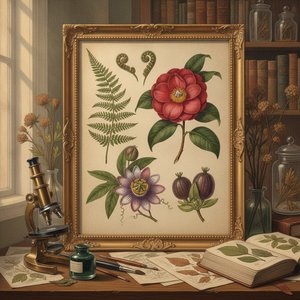
The Timeless Elegance of Victorian Botanical Painting: A Journey Through Nature's Intricate Detail and Scientific Artistry
Discover the exquisite world of Victorian botanical painting, where scientific precision meets profound aesthetic grace. Explore a journey through nature's intricate details, from legendary illustrators to the untamed beauty of Marianne North’s vibrant floral masterpieces.