

 Contemporary Realism
 24.0 x 20.0 cm
从与原作比例一致的预设尺寸中进行选择。

您可以输入自定义尺寸,以适配特定的画框或空间。如果您选择的尺寸与原图比例不符,我们将对作品进行裁剪,或通过镜像填充/纯色填充边缘的方式来扩展图像。在开始制作之前,我们会向您发送一份数字效果图供您确认。
请注意,屏幕上的预览并不能反映实际的裁剪或扩展效果。只有效果图才能准确展示最终的构图。
虽然我们提供定制尺寸,但为了保持原图比例,我们建议您从预设列表中选择尺寸。

'SPECTACLES'
复制品尺寸
Pierre Dubreuil (March 5, 1872 – January 9, 1944) stands as a pivotal figure in the history of French photography, marking a crucial transition between the rigid formalism of Neoclassicism and the burgeoning expressive spirit of Romanticism. Born in Lille, France, into a wealthy family involved in wallpaper manufacturing, Dubreuil’s artistic journey began with an early fascination for capturing images—a passion nurtured by his enrollment at Saint Joseph’s Jesuit College where he honed his photographic skills using a half-plate camera at the tender age of sixteen.
His formative years were marked by service in the Saint Omer Dragoons, followed by collaboration with Louis Jean Delton, specializing in equine photography. This early exposure to diverse subjects instilled in him a meticulous attention to detail and an appreciation for capturing reality with precision. Crucially, he joined the Lille Photographic Society in 1891 where he encountered Robert Pauli, who introduced him to groundbreaking printing techniques—carbon and platinum printing—methods that would become hallmarks of his distinctive style.
Dubreuil’s breakthrough arrived in 1896 with “Sombre Clarté,” a photograph lauded for its masterful use of tonal contrasts. Exhibited at the Photo-club de Paris alongside luminaries like Alfred Stieglitz and Robert Demachy, it immediately established him as an innovator within the Pictorialist movement. Dubreuil’s work gained international acclaim, surpassing even those of his contemporaries, cementing his reputation as a visionary artist who dared to challenge conventional photographic norms.
The First World War profoundly impacted Dubreuil's life and career, disrupting his family ties and temporarily halting his artistic pursuits. However, he persevered through the turbulent years following the war, continuing to explore new creative avenues. Notably, he embraced the influence of Cubism and Futurism, experimenting with unconventional compositional strategies—particularly utilizing birds-eye views—to convey a fresh perspective on familiar subjects. His pioneering use of bromoil printing allowed him to manipulate tonal ranges with unprecedented control, mirroring the stylistic shifts occurring in broader artistic circles.
Dubreuil’s commitment to modernist aesthetics was recognized by critics like Fritz Loescher who praised his originality and daring experimentation. He participated in exhibitions showcasing his work at prestigious venues including the Albright Gallery in Buffalo, New York; the Little Gallery of the Amateur Photography Magazine in London; and the Royal Photographic Society. His photographs were celebrated for their ability to capture both beauty and emotion—a testament to his artistic vision.
Throughout his prolific career, Dubreuil’s work consistently prioritized idea over mere representation. He meticulously crafted images that conveyed profound meaning through subtle nuances of light and shadow, anticipating the developments of movements like Surrealism and cementing his legacy as one of the foremost figures in shaping the trajectory of photographic art.
His enduring influence can be seen in the works of subsequent generations of photographers who embraced experimentation and sought to transcend traditional conventions. Dubreuil’s unwavering dedication to artistic innovation ensured that his contribution to photography would resonate far beyond his lifetime, securing his place as a cornerstone of modern art history.

1891 - 1970
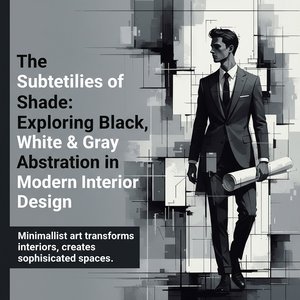
Explore the power of black, white & gray abstraction in modern interior design. Discover how minimalist art impacts spatial perception & creates sophisticated hotel spaces. Expert insights for designers.

TopImpressionists.com:将珍藏照片转化为永恒的印象派杰作。手工绘制,匠心独运,品质保证!定制专属艺术品,传承家族记忆,打造您家中的独特风景线。立即体验,让回忆跃然于画布之上。

Explore 10 iconic paintings dominated by black tones, from Rembrandt’s chiaroscuro to Goya's dark expressions. Discover the stories behind these masterpieces & find museum-quality art reproductions for your home at .

TopImpressionists.com:用人工智能重塑您的个人摄影作品,赋予其暗黑与哥特美学风格。定制手绘油画复刻,唤醒尘封记忆,打造永恒的艺术珍品。专业艺术家团队,博物馆级品质保证!

Explore the rich history & artistic power of black and white photography. From early techniques to iconic masters like Ansel Adams, discover why monochrome continues to captivate art lovers today. Expert insights for collectors.


第一时间获取最新的艺术新闻、独家优惠及装饰灵感。
向我们介绍您的项目需求,我们的艺术专家将为您提供 3 个个性化的艺术品推荐。
由我们的专家为您精选 3 款心仪之作 —— 完全免费!

 效果预览
效果预览
 切换至手工绘画版
 分享
分享 分享
分享
 详情
详情

 下载
下载
 相似作品
相似作品 X射线
X射线 幻灯片播放
幻灯片播放 展开详情
展开详情






































 玻璃选项仅适用于110厘米以下的尺寸。


