
 实景预览
实景预览
 切换至版画销售渠道
 分享
分享 分享
分享
 详情
详情 指南
指南

 下载作品
下载作品
 相似作品
相似作品 X射线
X射线 幻灯片播放
幻灯片播放 Q&A
Q&A 统计数据
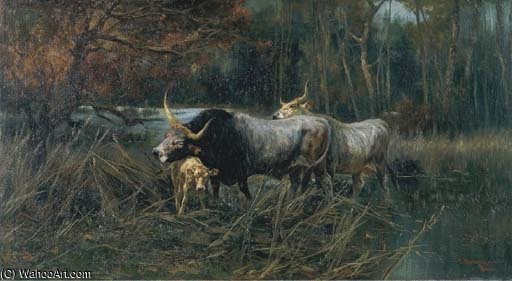
统计数据Nella Palude
Pietro Barucci (1845-1917) was an Italian landscape painter renowned for his depictions of the Roman countryside, including scenes of rural life, the Campagna romana, and the Pontine Marshes. Discover his serene paintings & historical significance.
 展开全文
展开全文
获取远超网页预览效果的印刷级文件。我们销售的每一张数字图像均源自库存数据库中的高分辨率母版——宽度通常在 5,000 至 15,000 像素之间——因此您可以放心地进行大幅打印、局部裁剪或还原细腻的细节。
每一件作品在离开我们的工作室前都经过了精心的处理。数字影像专家会对照原作核对色彩,并在必要时进行校正,随后利用专业修图工具提升清晰度与细节表现——且始终忠实于艺术家的笔触与风格。最终呈现的图像宛如原作本身,而非仅仅是一张加了滤镜的扫描件。
您可以在最终定稿前进行审核:我们的专家将在 72 小时内通过电子邮件向您发送图像以供审阅。如果不满意?您可以要求改进或修正;若质量未达预期,亦可申请退款。
这也是出版商、设计工作室、画廊及印刷厂所信赖的品质。
每份数字图像订单均包含的内容
专业级数字交付,品质保障
选择 TopImpressionists.com,您获得的不仅仅是一张图像——您收到的是经过专业级增强、精雕细琢的数字艺术作品,并享有满意保证。以下是您的订单中自动包含的所有内容:

邮件即时送达
您的高分辨率数字图像文件将在下单后 72 小时内通过电子邮件发送给您 —— 即可立即使用。

AI 增强型数字文件
您的艺术品经过专业优化,结合先进的 AI 技术与人工修饰,确保呈现极致的细节、清晰度与色彩准确度。

终身免费重发服务
不小心删除了文件或找不到了?没关系——我们将随时为您免费重发。

无需进口税费,始终如一
即刻拥有您的艺术作品,无需支付任何关税、税费或运费——数字下载始终免税。

色彩精准保障
我们通过专业工具与色彩管理技术,确保您的数字图像尽可能真实地还原原作色彩。

100天满意保证
如果您对所购数字图像不满意,我们将在100天内为您进行修改或提供100%的全额退款——无需任何理由。

100% 退款保证
不满意?在收到数字文件后的100天内,您可以申请全额退款——无需任何理由。

批量订购优惠
购买 3 张享 10% 折扣 - 购买 5 张享 15% 折扣 - 购买 10 张以上享 20% 折扣。非常适合创意项目、画廊及机构使用。
艺术家简介
Pietro Barucci: A Roman Painter of the Campagna
Pietro Barucci (1845-1917) stands as a significant, yet often overlooked, figure in late 19th and early 20th century Italian landscape painting. Born in Rome amidst the burgeoning artistic energy of the city, Barucci’s career unfolded largely within the confines of his beloved Campagna Romana – the Roman countryside – offering viewers serene glimpses into a world both familiar and imbued with timeless beauty. His work isn't characterized by dramatic narratives or bold innovations; instead, it resides in a quiet mastery of light, color, and composition, capturing the essence of rural life and the evocative atmosphere of the Italian landscape.
Barucci’s artistic journey began without formal academic training. He initially honed his skills through self-study, absorbing the techniques of earlier masters while developing his own distinctive style. Crucially, he apprenticed under Achille Vertunni at the Accademia di San Luca in Rome, a prestigious institution that provided him with invaluable exposure to established artistic traditions and a network of fellow artists. This grounding in classical principles informed his approach, resulting in paintings that possess a remarkable sense of balance, harmony, and realism – though tempered by an undeniable romantic sensibility.
The Subject Matter: Roman Landscapes and Rural Life
Barucci’s oeuvre is overwhelmingly devoted to the landscapes surrounding Rome. He wasn't interested in grand vistas or dramatic mountain ranges; rather, he focused on the subtle beauties of the Campagna Romana – the rolling hills, vineyards, olive groves, and small villages that defined the region. His subjects included scenes of daily life: shepherds tending their flocks, farmers working the land, families gathering for meals, and solitary figures contemplating the landscape. These depictions weren’t merely topographical representations; they were imbued with a sense of nostalgia and an appreciation for the simple pleasures of rural existence.
The Pontine Marshes, a vast and often desolate area south of Rome, also featured prominently in his work. Barucci's paintings of this region are particularly striking, capturing the stark beauty of the wetlands – the shimmering reflections on the water, the muted colors of the reeds, and the sense of isolation and solitude. These landscapes weren’t always celebrated; they were often viewed as unproductive and challenging, but Barucci found within them a profound source of artistic inspiration.
Technique and Style: Realism with Romantic Touches
Barucci's technical skill is evident in his meticulous attention to detail – the way he rendered the texture of fabrics, the sheen of water, and the subtle variations in color. He employed a predominantly realistic style, favoring muted earth tones and soft lighting. However, his paintings are not devoid of romanticism; there’s an underlying sense of melancholy and longing that permeates many of his works. This is achieved through the use of atmospheric perspective, the suggestion of movement, and the portrayal of figures in moments of quiet contemplation.
His brushwork is generally smooth and controlled, contributing to a sense of serenity and stability. He skillfully utilized light to create depth and atmosphere, often employing diffused sunlight to evoke a feeling of warmth and tranquility. Barucci’s compositions are typically balanced and symmetrical, reflecting his adherence to classical principles, yet he avoids rigid formality, allowing for a natural flow and visual interest.
Historical Context and Legacy
Barucci's work emerged during a period of significant social and political change in Italy. The unification of the country in 1861 had brought about profound transformations, but also created new challenges – economic hardship, social unrest, and regional disparities. Barucci’s paintings can be seen as a reflection of this complex context, offering a nostalgic vision of a disappearing rural world.
Despite not achieving widespread fame during his lifetime, Barucci's work has gained increasing recognition in recent decades. His paintings are now held by prestigious collections and exhibited internationally. He is remembered as a master of the Roman landscape, whose serene depictions capture the enduring beauty and spirit of the Campagna Romana. His legacy lies not in revolutionary innovations but in a quiet, persistent dedication to capturing the essence of his subject matter with remarkable skill and sensitivity – a testament to the power of observation and artistic vision.

Pietro Barucci
1845 - 1917 , Italy
基本信息
- Full Name: Pietro Barucci
- Nationality: Italian
- Date Of Birth: 1845
- Date Of Death: 1917
- Place Of Birth: Rome, Italy
- Notable Artworks:
- I Primi Passi
- The Goat Keeper
- Campagna Landscape
- Artistic Movement Or Style: Landscape painting
- Artists Who Influenced This Artist: ['Achille Vertunni],\n "Artists or movements influenced by this artist": [']