
 实景预览
实景预览
 切换至版画销售渠道
 分享
分享 分享
分享
 详情
详情 指南
指南

 下载作品
下载作品
 相似作品
相似作品 X射线
X射线 幻灯片播放
幻灯片播放 问答
问答 统计数据
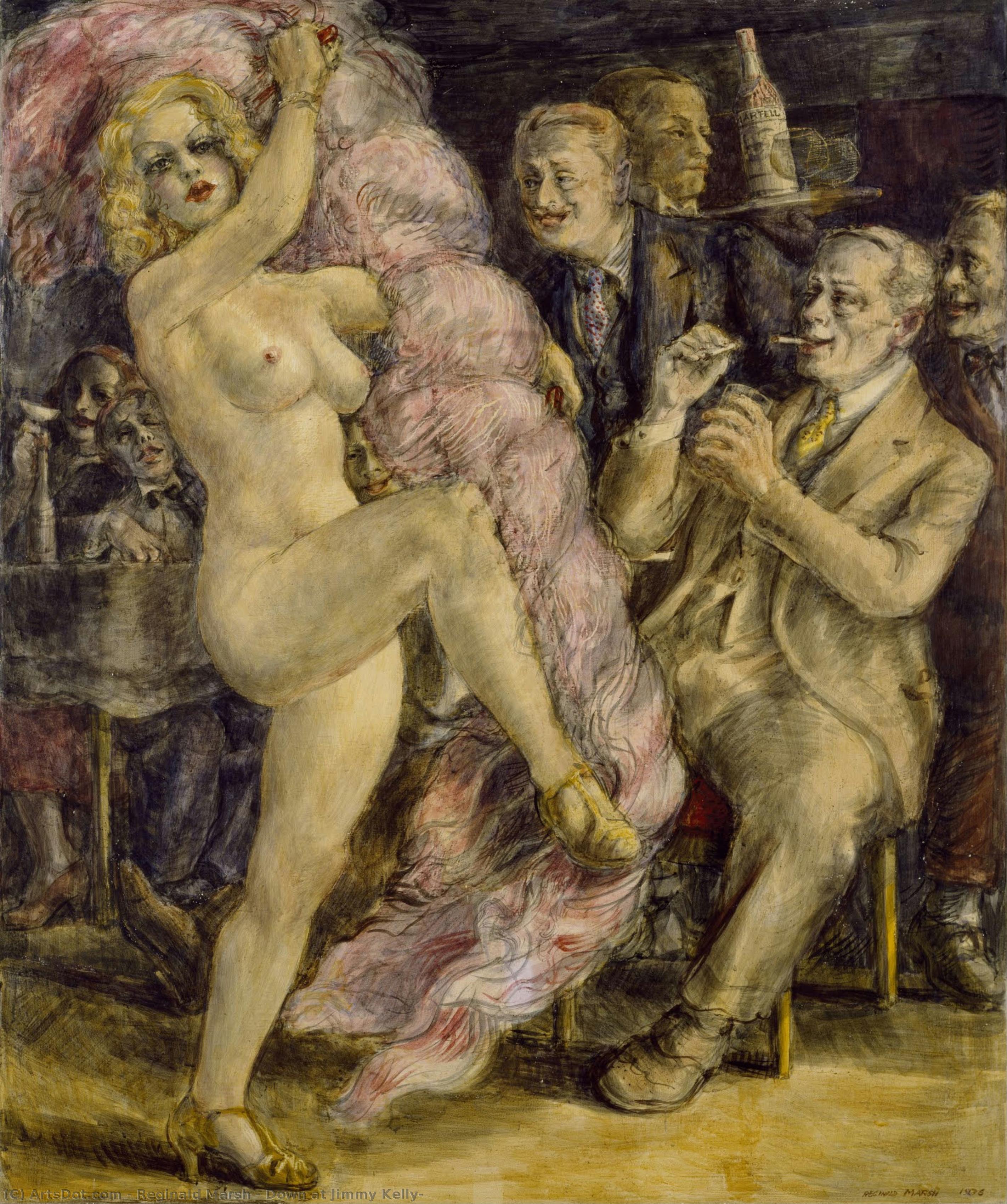
统计数据Down at Jimmy Kelly

- 91.0 x 76.0 cm


Reginald Marsh’s masterful conte crayon and gouache depiction of Jimmy Kelly's burlesque nightclub captures the gritty energy of 1930s New York with astonishing detail—a celebration of hedonistic urban life that invites exploration.
 展开全文
展开全文
Reginald Marsh (1898-1954) was an American painter famed for his realistic depictions of 1920s & 30s New York City life. Explore his iconic scenes of Coney Island, burlesque, and the Bowery—a key Social Realist artist capturing urban energy & societa
获取远超网页预览效果的印刷级文件。我们销售的每一张数字图像均源自库存数据库中的高分辨率母版——宽度通常在 5,000 至 15,000 像素之间——因此您可以放心地进行大幅打印、局部裁剪或还原细腻的细节。
每一件作品在离开我们的工作室前都经过了精心的处理。数字影像专家会对照原作核对色彩,并在必要时进行校正,随后利用专业修图工具提升清晰度与细节表现——且始终忠实于艺术家的笔触与风格。最终呈现的图像宛如原作本身,而非仅仅是一张加了滤镜的扫描件。
您可以在最终定稿前进行审核:我们的专家将在 72 小时内通过电子邮件向您发送图像以供审阅。如果不满意?您可以要求改进或修正;若质量未达预期,亦可申请退款。
这也是出版商、设计工作室、画廊及印刷厂所信赖的品质。
每份数字图像订单均包含的内容
专业级数字交付,品质保障
选择 TopImpressionists.com,您获得的不仅仅是一张图像——您收到的是经过专业级增强、精雕细琢的数字艺术作品,并享有满意保证。以下是您的订单中自动包含的所有内容:

邮件即时送达
您的高分辨率数字图像文件将在下单后 72 小时内通过电子邮件发送给您 —— 即可立即使用。

AI 增强型数字文件
您的艺术品经过专业优化,结合先进的 AI 技术与人工修饰,确保呈现极致的细节、清晰度与色彩准确度。

终身免费重发服务
不小心删除了文件或找不到了?没关系——我们将随时为您免费重发。

无需进口税费,始终如一
即刻拥有您的艺术作品,无需支付任何关税、税费或运费——数字下载始终免税。

色彩精准保障
我们通过专业工具与色彩管理技术,确保您的数字图像尽可能真实地还原原作色彩。

100天满意保证
如果您对所购数字图像不满意,我们将在100天内为您进行修改或提供100%的全额退款——无需任何理由。

100% 退款保证
不满意?在收到数字文件后的100天内,您可以申请全额退款——无需任何理由。

批量订购优惠
购买 3 张享 10% 折扣 - 购买 5 张享 15% 折扣 - 购买 10 张以上享 20% 折扣。非常适合创意项目、画廊及机构使用。
Reginald Marsh: Capturing Urban Grit and Artistic Vision
Reginald Marsh (1898-1954) stands as a pivotal figure in American Social Realism, renowned for his strikingly detailed depictions of New York City during the 1920s and 1930s. More than just documenting scenes of Coney Island beaches or burlesque performances—though these undeniably populate his oeuvre—Marsh’s art embodies a profound engagement with the textures and rhythms of urban life, underpinned by an unwavering commitment to artistic exploration. His legacy resides not only in his iconic images but also in his pioneering techniques and enduring influence on subsequent generations of artists. Born in Paris above the Café du Dome, Marsh's formative years were steeped in artistic heritage. The son of Frederick Dana Marsh—a muralist who championed American Impressionism—and Alice Randall, a miniaturist painter—Marsh’s family fostered an environment where creativity flourished. His father’s early embrace of modernist aesthetics established a foundation for Marsh’s own distinctive approach to visual representation.The Canvas of Coney Island
Marsh's fascination with the burgeoning American urban landscape found its most immediate expression in works like “Down at Jimmy Kelly’s,” a vibrant tableau capturing the frenetic energy of a burlesque nightclub. Painted in 1936, this piece exemplifies Marsh’s masterful use of conte crayon and gouache—a technique he honed to achieve unparalleled realism—resulting in an astonishing level of detail that transports viewers directly into the smoky atmosphere of Jimmy Kelly's. The composition is deliberately asymmetrical, mirroring the chaotic dynamism of the scene itself; figures jostle for space amidst a backdrop of tables, bottles, and performers, creating a palpable sense of immediacy. Marsh’s meticulous rendering of light and shadow further enhances this effect, emphasizing the physicality of the environment and conveying its emotional impact—a celebration of hedonistic indulgence juxtaposed with an underlying awareness of social disparity.Symbolism Within Spectacle
Marsh wasn't merely recording what he saw; he was actively interpreting it through a lens informed by Social Realist principles. The inclusion of portraits, notably Lloyd Goodrich—a prominent art critic and Marsh’s close collaborator—serves as more than just stylistic embellishment. Goodrich represents the intellectual discourse surrounding artistic innovation at the time, highlighting the tension between aesthetic beauty and social responsibility. Furthermore, the depiction of a woman performing in burlesque underscores themes of female agency and vulnerability within a societal context marked by shifting gender roles. Marsh’s subtle use of symbolism elevates “Down at Jimmy Kelly’s” beyond mere visual representation, prompting contemplation about the complexities of urban culture and its influence on human experience.A Pioneer's Technique
Marsh’s groundbreaking approach to painting—characterized by his unwavering dedication to meticulous observation and painstaking execution—established him as a leader in American Social Realism. He rejected idealized representations, favoring instead unflinching portrayals of everyday life that confronted social issues head-on. His mastery of conte crayon and gouache allowed him to achieve remarkable tonal range and textural depth, capturing the gritty surfaces of urban spaces with astonishing accuracy. This technique—a deliberate departure from Impressionistic tendencies—became a cornerstone of Marsh’s artistic vision, ensuring that his images retained an enduring power to engage viewers emotionally and intellectually.Legacy and Influence
Reginald Marsh's influence extends far beyond his own lifetime, inspiring countless artists who followed in his footsteps. His commitment to realism combined with a keen awareness of social commentary continues to resonate within contemporary art practice. “Down at Jimmy Kelly’s,” as well as his broader body of work—including depictions of Coney Island and the Bowery—remains a testament to Marsh's enduring legacy as one of America’s most compelling Social Realist painters, securing his place in art history as an artist who captured not only the visual splendor of his era but also its underlying moral dilemmas.常见问题与解答
"Down at Jimmy Kelly" 的艺术风格与其创作时代有何关联?
"Down at Jimmy Kelly" 属于 Social Realism 流派,其创作者活跃于 Modern 时期。
"Down at Jimmy Kelly" 使用了怎样的色彩搭配?
"Down at Jimmy Kelly" 的色彩构成了一个 Earthy 色调。此分类描述了作品中的主导色系。
Reginald Marsh 的《Down at Jimmy Kelly》 传达了怎样的情感?
Reginald Marsh 的《Down at Jimmy Kelly》 传达出一种 Reflective 的情感基调。
艺术家简介
The Urban Chronicler: The Life and Legacy of Reginald Marsh
Reginald Marsh stands as a pivotal figure in American Social Realism, renowned for his strikingly detailed depictions of New York City during the 1920s and 1930s. More than just documenting scenes of Coney Island beaches or burlesque performances—though these undeniably populate his oeuvre—Marsh’s art embodies a profound engagement with the textures and rhythms of urban life, underpinned by an unwavering commitment to artistic exploration. His legacy resides not only in his iconic images but also in his pioneering techniques and enduring influence on subsequent generations of artists.
Born in Paris in 1898 above the Café du Dome, Marsh's formative years were steeped in a rich artistic heritage. The son of Frederick Dana Marsh—a muralist who championed American Impressionism—and Alice Randall—a miniaturist painter—Marsh’s family fostered an environment where creativity flourished from his earliest days. Moving to Nutley, New Jersey, at the age of two, he benefited from proximity to Frank Fowler's Artist Colony, a haven for American painters seeking inspiration and camaraderie, which further cemented his connection to the artistic tradition. This early exposure to both the delicate precision of miniature painting and the grand scale of muralism would later inform his ability to capture both the intimate human moment and the sweeping energy of the metropolis.
A Journey from Law to the Canvas
Marsh’s path to becoming a master of urban realism was far from linear. He pursued formal education with great diligence, earning a Bachelor’s degree in Law from Yale University in 1920 before subsequently delving into art studies at the Yale Art School. During this period, he honed his skills as an illustrator for the Yale Record, immersing himself in the vibrant spirit of collegiate life and developing an early mastery of visual storytelling. This formative period solidified his artistic sensibilities and prepared him for a career dedicated to capturing the essence of human experience through compelling imagery.
As his professional journey began in New York City, Marsh tirelessly sought to document the pulse of the streets. His work often utilized diverse media to achieve specific atmospheric effects, ranging from the gritty energy of conte crayon and gouache to the thick, dynamic impasto of oil paintings. Whether he was portraying the hedonistic atmosphere of Jimmy Kelly's burlesque nightclub or the maritime commerce found in his mural studies like Atlantic Liner in Harbor, Marsh possessed a unique ability to translate the chaos of the city into structured, rhythmic compositions.
The Essence of Social Realism and Urban Grit
The significance of Reginald Marsh lies in his role as a visual historian of a vanished era. His work serves as a window into the Social Realist movement, focusing on the lives of the working class and the raw, unvarnished reality of New York's most famous districts, such as the Bowery and Coney Island. His paintings are characterized by:
- Dynamic Movement: A mastery of capturing the frantic, overlapping motion of crowds in subway stations, beaches, and dance halls.
- Textural Depth: The use of varied techniques to replicate the grime, light, and physical weight of an industrializing city.
- Human Connection: An ability to find poignant, individual emotions within massive, anonymous urban gatherings.
Beyond his crowded street scenes, Marsh also demonstrated a remarkable capacity for portraiture, blending realism with subtle emotion as seen in his black and white oil works. Through his dedication to the "urban grit," Reginald Marsh did more than paint New York; he immortalized its soul, ensuring that the energy of the early twentieth century would continue to resonate through the decades.

Reginald Marsh
1898 - 1954 , France
基本信息
- Full Name: Reginald Marsh
- Nationality: American
- Date Of Birth: 1898
- Date Of Death: 1954
- Place Of Birth: Paris, France
- Notable Artworks:
- Atlantic Liner in Harbor with Tug
- The Steeplechase
- Asbury Park The Morrow Castle
- Artistic Movement Or Style: Social Realism
- Artists Who Influenced This Artist:
- Frank Fowler
- John Sloan
- Kenneth Hayes Miller
- George Luks
- Jacques Maroger
- Artists Or Movements Influenced By This Artist:
- Tintoretto
- Rubens
- Thomas Hart Benton