

 实景预览
实景预览
 切换至版画销售渠道
 分享
分享 分享
分享
 详情
详情 指南
指南

 下载作品
下载作品
 相似作品
相似作品 X射线
X射线 幻灯片播放
幻灯片播放 Q&A
Q&A 统计数据
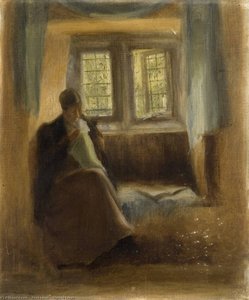
统计数据Man in a Smock

- 51.0 x 40.0 cm
Rosa Lucas: German Renaissance painter & printmaker. Court artist to Saxony, known for portraits & Reformation art. Explore her legacy at the National Academy of San Luca.
 展开全文
展开全文
获取远超网页预览效果的印刷级文件。我们销售的每一张数字图像均源自库存数据库中的高分辨率母版——宽度通常在 5,000 至 15,000 像素之间——因此您可以放心地进行大幅打印、局部裁剪或还原细腻的细节。
每一件作品在离开我们的工作室前都经过了精心的处理。数字影像专家会对照原作核对色彩,并在必要时进行校正,随后利用专业修图工具提升清晰度与细节表现——且始终忠实于艺术家的笔触与风格。最终呈现的图像宛如原作本身,而非仅仅是一张加了滤镜的扫描件。
您可以在最终定稿前进行审核:我们的专家将在 72 小时内通过电子邮件向您发送图像以供审阅。如果不满意?您可以要求改进或修正;若质量未达预期,亦可申请退款。
这也是出版商、设计工作室、画廊及印刷厂所信赖的品质。
每份数字图像订单均包含的内容
专业级数字交付,品质保障
选择 TopImpressionists.com,您获得的不仅仅是一张图像——您收到的是经过专业级增强、精雕细琢的数字艺术作品,并享有满意保证。以下是您的订单中自动包含的所有内容:

邮件即时送达
您的高分辨率数字图像文件将在下单后 72 小时内通过电子邮件发送给您 —— 即可立即使用。

AI 增强型数字文件
您的艺术品经过专业优化,结合先进的 AI 技术与人工修饰,确保呈现极致的细节、清晰度与色彩准确度。

终身免费重发服务
不小心删除了文件或找不到了?没关系——我们将随时为您免费重发。

无需进口税费,始终如一
即刻拥有您的艺术作品,无需支付任何关税、税费或运费——数字下载始终免税。

色彩精准保障
我们通过专业工具与色彩管理技术,确保您的数字图像尽可能真实地还原原作色彩。

100天满意保证
如果您对所购数字图像不满意,我们将在100天内为您进行修改或提供100%的全额退款——无需任何理由。

100% 退款保证
不满意?在收到数字文件后的100天内,您可以申请全额退款——无需任何理由。

批量订购优惠
购买 3 张享 10% 折扣 - 购买 5 张享 15% 折扣 - 购买 10 张以上享 20% 折扣。非常适合创意项目、画廊及机构使用。
艺术家简介
Rosa Lucas: A Renaissance of Light and Emotion
Rosa Lucas, a name perhaps less heralded than some of her contemporaries within the grand halls of 16th-century art, nevertheless carved out a significant and deeply personal space for herself as a painter and printmaker. Born in Germany during a period of immense artistic ferment – the tail end of the Northern Renaissance and the burgeoning influence of Italian Mannerism – Lucas’s work offers a unique blend of meticulous technique and intensely felt emotion. Her legacy isn't one of monumental commissions or courtly grandeur, but rather a quiet testament to her ability to capture fleeting moments of beauty, domestic tranquility, and profound human connection.
Lucas’s early life remains somewhat shrouded in the mists of historical record, though it is generally accepted that she received a solid artistic education within the workshops of prominent artists in Saxony. This training instilled in her a rigorous understanding of perspective, anatomy, and color theory – hallmarks of the Renaissance tradition. However, unlike many of her peers who diligently replicated established styles, Lucas quickly developed a distinctive approach, prioritizing emotional resonance over strict adherence to convention. Her subjects often centered on intimate scenes: portraits of women engaged in quiet contemplation, glimpses into domestic interiors bathed in soft light, and evocative depictions of everyday life.
The Court Artist of Saxony
Lucas’s career truly flourished during her tenure as a court artist for the Electorate of Saxony. This appointment, a considerable achievement for a woman in that era, afforded her access to influential patrons – including members of the ruling family and prominent nobility. Her commissions primarily consisted of portraiture, but these were not merely formal representations; they aimed to capture the inner lives and personalities of her subjects. She skillfully employed subtle gestures, expressive glances, and carefully chosen attire to convey a sense of character and mood. Her portraits frequently featured women – often members of the court or their families – rendered with remarkable sensitivity and psychological depth.
Beyond portraiture, Lucas also produced a substantial body of work in the medium of woodcut printmaking. These prints, characterized by their crisp lines and vibrant colors, served as both independent artworks and illustrations for devotional texts and illuminated manuscripts. Her prints frequently depicted religious scenes, but always with an emphasis on human emotion and experience rather than purely theological dogma. The influence of German Expressionism, a movement that would not emerge until centuries later, is subtly present in her use of color and the heightened emotional intensity of her compositions.
Technique and Style
Lucas’s artistic style can be described as a harmonious blend of Northern Renaissance realism and Italianate elegance. She possessed a remarkable command of oil paint, utilizing layering techniques to create rich textures and luminous effects. Her use of light is particularly noteworthy – she masterfully employed chiaroscuro (the contrast between light and dark) to sculpt forms, define volumes, and evoke a sense of atmosphere. Her compositions are typically balanced and harmonious, but never static; there’s always a feeling of movement or anticipation.
In her woodcuts, Lucas demonstrated an exceptional ability to render intricate detail with minimal lines. She skillfully manipulated the grain of the wood to create subtle tonal variations and achieve a remarkable sense of depth. Her prints are not simply reproductions of images; they are carefully crafted works of art in their own right.
Legacy and Influence
Despite her considerable talent, Rosa Lucas’s work has often been overshadowed by that of her male contemporaries. However, recent scholarship is beginning to recognize the unique contributions she made to the artistic landscape of 16th-century Germany. Her paintings and prints offer a valuable glimpse into the lives and experiences of women during this period – a perspective that is often missing from traditional art historical narratives.
Her work continues to be exhibited in museums across Europe, and her paintings are highly sought after by collectors. Rosa Lucas’s legacy lies not only in her artistic achievements but also in her quiet determination to forge a path for herself as an artist in a world dominated by men. She stands as a testament to the enduring power of individual creativity and the importance of recognizing the contributions of all artists, regardless of gender or social status.
Notable Works
- Dining Room at Stanegarth, Cumbria: A captivating impressionistic oil painting capturing a cozy, atmospheric interior.
- Hitchin Market: An evocative watercolor depicting a bustling European market scene.
- Matilda Lucas: Oil painting by Rosa Lucas depicting an elderly woman’s quiet contemplation.
Further Exploration
For more information about Rosa Lucas, we recommend visiting the National Academy of San Luca in Rome, where her work is prominently displayed. The museum's collection offers a comprehensive overview of her artistic career and provides valuable context for understanding her place within the broader history of art.
基本信息
- Artistic Movement Or Style: Renaissance Painting
- Artists Or Movements Influenced By This Artist: ['Italian Renaissance']
- Artists Who Influenced This Artist: ['Lucas Cranach Elder']
- Full Name: Rosa Lucas
- Nationality: German
- Notable Artworks:
- Dining Room at Stanegarth
- Hitchin Market
- Matilda Lucas
- Place Of Birth: WahooArt