


 实景预览
实景预览
 发送
发送 分享
分享
 详情
详情 指南
指南

 下载图片
下载图片
 相似作品
相似作品 X射线
X射线 幻灯片播放
幻灯片播放 统计数据
统计数据Approaching Storm

Explore Théodore Roussel’s "Approaching Storm," a dramatic Impressionistic landscape of Dover Cliffs. Capturing nature's power & melancholy, this oil painting offers texture & depth.
Atmospheric landscapes
 阅读全文
阅读全文
艺术微喷/版画
博物馆级艺术微喷或帆布版画,制作高效,并提供多种饰面选择。 ( 订购此收藏品的纯手工复刻画作 切换至数字图像销售渠道)




































标准尺寸
定制
CM
INCH
您可以从与原作比例一致的预设尺寸中进行选择。
Loading sizes...

宽度
高度
您可以输入自定义尺寸,以适配特定的画框或空间。如果您选择的尺寸与原图比例不符,我们将对作品进行裁剪,或通过镜像填充/纯色填充边缘的方式来扩展图像。在开始制作之前,我们会向您发送一份数字效果图供您确认。
请注意,屏幕上的预览并不能反映实际的裁剪或扩展效果。只有效果图才能准确展示最终的构图。
虽然我们提供定制尺寸,但为了保持原图比例,我们建议您从预设列表中选择尺寸。


 玻璃选项仅适用于110厘米以下的尺寸。

Approaching Storm
艺术微喷/版画
复刻品尺寸说明
-


总计金额
$ 69


艺术家简介
A Late Bloomer’s Journey: The Life and Art of Théodore Roussel
Théodore Casimir Roussel, a name perhaps less instantly recognizable than some of his contemporaries, occupies a fascinating niche in the landscape of late 19th and early 20th-century art. Born in Orléans, France, in 1847, his path to becoming a painter was decidedly unconventional. Unlike artists who demonstrated precocious talent from youth, Roussel embarked on his artistic journey relatively late, around 1872, after fulfilling his military service. Entirely self-taught, he initially explored scenes of everyday life, grounding himself in the techniques of the Old Masters—a foundation that would later be brilliantly transformed by a unique and deeply personal vision. This early work, while skillful, lacked the distinctive voice that would eventually set him apart, hinting at the potential within but not yet revealing the artist he was destined to become.London Calling: A Crucible of Artistic Development
A pivotal moment arrived in 1878 with Roussel’s relocation to London. This move proved transformative, shaping his artistic career in profound ways. Two years later, marriage to Frances Amelia Smithson Bull, a distant relative of James Smithson, further cemented his ties to British society. However, it was an encounter in 1885 that truly ignited his aesthetic development: his meeting with the celebrated James McNeill Whistler. This marked the beginning of a lifelong friendship and mentorship, one that would indelibly influence Roussel’s sensibilities. Whistler encouraged him to embrace etching as a medium, guiding him towards a “free etching” style—drawing directly onto the copper plate from nature, preserving spontaneity and lightness. This period wasn't merely about technical instruction; it was an immersion into a particular philosophy of art, one that valued aesthetic harmony and suggestive beauty over strict realism.Controversy and Recognition: “The Reading Girl” and Beyond
Roussel’s arrival on the London art scene wasn't without its initial shockwaves. His debut at the New English Art Club exhibition in 1887 with a life-size nude, “The Reading Girl,” caused an immediate sensation—and not of the entirely positive kind. A scathing review in *The Spectator* condemned it as “realism of the worst kind,” finding it vulgar and crude. Yet, this very notoriety proved to be a catalyst for his career. Ironically, decades later, Sir William Orpen would declare it the best nude painting of its period—a testament to the enduring power and artistic merit that transcended initial critical backlash. The model for this groundbreaking work was Hetty Pettigrew, along with her sisters Rose and Lily, all popular figures in the London art world, having posed for artists like Whistler, Holman Hunt, and Millais. Roussel’s personal life continued to evolve; after his first wife's passing, he married Ethel Melville, the widow of Arthur Melville, forging further connections within the artistic community.Landscapes, Etchings, and a Lasting Legacy
Following the exhibition of “The Reading Girl,” Roussel settled in Parsons Green and dedicated himself primarily to painting atmospheric landscapes, often depicting scenes along the River Thames. These weren’t simply picturesque views; they were explorations of light, mood, and the subtle nuances of the English countryside. Simultaneously, he became a pioneer of color etching in England, skillfully blending Impressionistic techniques with his own distinct style. He regularly exhibited at the Royal Society of British Artists and the Royal Scottish Academy, solidifying his position within the artistic establishment. In 1908, Roussel further cemented his involvement by becoming a founding member of the Allied Artists’ Association. His landscapes continued to evolve, characterized by muted tones, loose brushwork, and an almost poetic sensitivity to atmosphere. He wasn't merely *representing* nature; he was conveying its emotional resonance. Théodore Roussel passed away in 1926, leaving behind a body of work that represents a compelling intersection of French and English artistic traditions—a legacy increasingly recognized for its originality, technical innovation, and enduring beauty.
Théodore Roussel
1847 - 1926 , France
快速概览
- Artistic Movement Or Style: Impressionism, Etching
- Artists Who Influenced This Artist: ['James McNeill Whistler']
- Date Of Birth: 1847
- Date Of Death: 1926
- Full Name: Théodore Casimir Roussel
- Nationality: French-English
- Notable Artworks:
- The Reading Girl
- Battersea From Cheyne Walk
- The Great Oaks of Old Bas-Breau
- Place Of Birth: Orléans, France
相关文章

Beyond the Light: Capturing Raw Emotion and Subjective Vision in Post-Impressionist Landscapes
Explore the profound emotional depth of Post-Impressionist landscapes. Discover how masters like Van Gogh moved beyond light to capture raw human feeling through vibrant color and expressive texture in this expert art history retrospective.
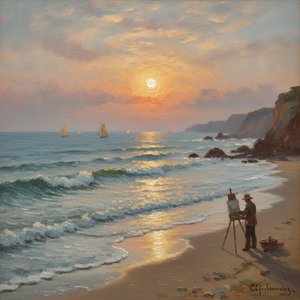
Whispers of the Waves: Discovering the Luminous Beauty and Timeless Light of Impressionist Coastal Art
Experience the breathtaking luminosity of Impressionist coastal art. From Monet’s shores to Sorolla’s sun-drenched waves, discover our exquisite hand-painted oil reproductions and bespoke commissions. Bring the timeless beauty of maritime masters into your home with TopImpressionists.com.

Capturing the Soul: The Most Emotionally Moving Impressionist and Post-Impressionist Masterpieces
Discover the profound emotional depth of Impressionist and Post-Impressionist masterpieces. Explore how legends like Monet, Van Gogh, and Gauguin captured light and soul through evocative landscapes and vibrant brushwork for a timeless connection to art history.

The Beauty of Impermanence: Capturing Decay through Impressionist Eyes
Explore the profound beauty of impermanence through Impressionist and Post-Impressionist eyes. Discover how masters like Monet and Van Gogh captured fleeting light and the poetic essence of nature's transitions in our deep dive into art history and emotional landscapes.
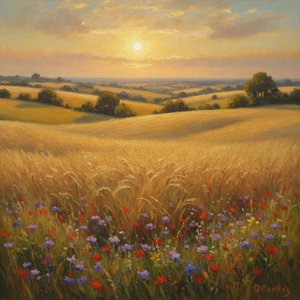
Golden Fields & Sun-Drenched Meadows: Capturing the Soul of Impressionist Landscapes
Immerse yourself in the luminous world of Impressionist landscapes. Discover how masters like Monet and Gauguin captured ephemeral light through plein air painting, and learn to bring the soul of sun-drenched meadows into your home with exquisite, hand-painted oil reproductions.