

 实景预览
实景预览
 分享
分享 分享
分享
 详情
详情 指南
指南

 下载作品
下载作品
 相似作品
相似作品 X射线
X射线 幻灯片播放
幻灯片播放 问答
问答 统计数据
统计数据Weda Cook


 展开全文
展开全文
艺术微喷/版画
博物馆级艺术微喷或帆布版画,制作高效,并提供多种饰面选择。 ( 订购纯手工绘制画作 切换至数字图像销售渠道)




P118B ¥10

P118H ¥10

P118W ¥10

P438Z ¥10

P508JH ¥12

P508YH ¥12

P805H ¥10

P805Z ¥10

P919BZ ¥10

P919G ¥10

P919XJ ¥10

P959ZH ¥10

P968JZ ¥12

W106C ¥8

W218G ¥10

W218JH ¥8

W218Y ¥10

W307PJ ¥10

W316G ¥10

W316PJ ¥8

W316Y ¥10

W398PJ ¥8

W4111J ¥10

W500HY ¥15

W500JH ¥15

W692G ¥12

W849H ¥8

W940BG ¥15

W953PJ ¥8




标准尺寸
定制
CM
INCH
您可以从与原作比例一致的预设尺寸中进行选择。
Loading sizes...

宽度
高度
请输入您所需的宽度和高度,以适配您的画框或墙面。由于印刷品只能进行裁剪,无法超出原图尺寸,因此若比例不一致,画面的一部分将会被裁切。在正式印刷之前,我们会为您发送一份数字效果图供您确认。本页面显示的图片并非最终裁剪后的效果——只有效果图才能展示真实的裁剪情况。


 玻璃选项仅适用于110厘米以下的尺寸。

Weda Cook
艺术微喷/版画
复刻品尺寸
-


最终结算价
¥ 469
The Unflinching Gaze: Capturing Modernity in Thomas Eakins' Weda Cook
To stand before Thomas Eakins’ Weda Cook is not merely to observe a portrait; it is to confront a moment of profound, unvarnished reality. Painted in 1891, this oil on canvas transcends the simple act of likeness, offering instead a deep psychological study wrapped in the elegance of late Victorian fashion. Eakins, the master of American realism, possessed an almost scientific dedication to capturing the human form and spirit with breathtaking accuracy. The subject herself, Weda Cook, is rendered with a poise that seems both natural and meticulously composed. Her long hair cascades around her shoulders, framing a face that meets the viewer’s gaze with an intensity that refuses easy interpretation. It is this directness—this refusal to simply smile for posterity—that makes the painting such a compelling piece of art history.
Technique and The Art of Realism
Eakins' technical mastery in Weda Cook is evident in every visible brushstroke. He was a proponent of realism, eschewing the romantic flourishes that sometimes characterized his contemporaries for something far more grounded: truth. Observe the texture of the pink dress; Eakins has managed to convey the weight and drape of the fabric while simultaneously suggesting its delicate nature. The handling of light across her skin is masterful, giving her complexion a luminous quality that seems almost alive. This attention to detail—the subtle shading around the eyes, the precise rendering of the hair strands—speaks to an artist who studied anatomy as rigorously as he studied composition. For those interested in acquiring a reproduction, understanding this commitment to visible technique allows one to appreciate the painstaking effort required to translate such depth onto canvas.
Historical Echoes and Social Portraiture
The late 19th century was a period of immense social flux in America, and Eakins chronicled that change through his subjects. Weda Cook serves as a beautiful artifact from this era, capturing the societal expectations placed upon women while simultaneously celebrating their individual presence. The seriousness etched into her expression suggests a woman of substance, perhaps navigating the complex currents of turn-of-the-century society. Unlike idealized portraits meant solely for vanity, Eakins’ work feels engaged with the world around him—a testament to the dignity found in everyday American life. It invites us to consider not just who she was, but what it meant to be a woman of her standing during that transformative time.
Emotional Resonance and Interior Placement
Emotionally, the painting resonates with a quiet power. There is an undeniable gravity emanating from Weda Cook that draws the viewer in, compelling them to look closer, to decipher the meaning behind that steady gaze. For collectors or interior designers seeking art that anchors a space with intellectual weight, Weda Cook offers more than mere decoration; it offers conversation. Imagine this piece gracing a formal drawing-room or a sophisticated study—its presence would lend an air of cultivated history and thoughtful depth to the surroundings. It is a work that demands contemplation, rewarding the viewer with layers of observation upon every viewing.
艺术家简介
一位献身于现实的艺术家:托马斯·埃金斯
托马斯·埃金斯,1844年7月25日出生于费城,是美国艺术史上的一座丰碑——一位毫不妥协的现实主义画家,他一生致力于捕捉人类经验的本质。他并非仅仅满足于*再现*世界,而是渴望剖析它,理解其解剖结构,无论是身体上的还是心理上的,然后以一种近乎挑衅的诚实将它重构在画布上。埃金斯的道路并非一帆风顺,而是一段充满奉献、争议和最终持久认可的缓慢燃烧过程,他或许是19世纪和20世纪初美国艺术中最深刻的现实主义者。他的费城不是壮丽风景或浪漫理想之都,而是一个医生、划船运动员、猎人和普通人构成的世界——这些都是他的创作对象,以一种近乎科学的精确度呈现出来。早年影响与艺术形成
埃金斯的成长环境培养了他的求知欲和艺术倾向。他的父亲本杰明·埃金斯是一位书法大师,向他灌输了纪律性和细致观察的热爱。这种基础在中央高中和宾夕法尼亚美术学院的教育中得到了进一步加强,在那里他在绘画和解剖学方面表现出色——这种迷恋贯穿了他整个创作生涯。然而,真正塑造他艺术风格的是他在欧洲的学习时光,尤其是在巴黎跟随让-莱昂·热罗姆学习。热罗姆对精确素描和历史准确性的强调与埃金斯的倾向产生了共鸣,但他很快超越了单纯的模仿。在西班牙逗留进一步完善了他对光线、阴影和直接观察力量的理解。他并不满足于简单地复制老大师的作品;他想了解他们*如何*实现这些效果,然后将这种知识应用于自己独特的愿景。这段时期对于巩固他对直接写生绘画的承诺至关重要,这种实践定义了他的一生。对真理的追求:主题与技巧
埃金斯的作品以对现实主义毫不动摇的承诺为特征——拒绝理想化或浪漫化他的创作对象。他数百幅肖像画并非旨在取悦委托人的奉承表现,而是对人物性格的深刻研究,既揭示了力量又揭示了脆弱性。他描绘的人物从事着各自的职业——外科医生在《格罗斯诊所》中工作,划船运动员在《Max Schmitt in a Single Scull》中奋力划桨——捕捉的不仅仅是他们的外貌,还有他们专注的强度和工作的要求。这种对真理的奉献延伸到他的技巧上。埃金斯着迷于运动,并采用创新的方法来准确地捕捉它。他一丝不苟地研究解剖学,经常解剖尸体以了解人体的潜在结构。他甚至尝试摄影,将其作为分析运动和提高绘画准确性的工具。他对明暗对比法(光与影之间的强烈对比)的使用进一步增强了作品的现实感和心理深度。争议与遗产
尽管埃金斯具有非凡的艺术才华,但他的职业生涯却充满了争议。他坚持直接写生绘画,经常包括裸体模特,这与维多利亚时代费城保守的价值观格格不入。他在宾夕法尼亚美术学院的教学方法同样非常规;他强调研究人体的重要性,并鼓励学生挑战传统的艺术惯例。这导致了他与同事之间的摩擦,最终于1886年被迫辞职。个人丑闻进一步损害了他的声誉,使他在有生之年很大程度上被艺术界排斥在外。然而,埃金斯并没有因此气馁,继续进行绘画和私人教学,直到他的健康状况恶化。在他1916年去世后,他的作品逐渐获得了认可,现在他被誉为美国艺术史上的一位重要人物。他对现实主义毫不妥协的承诺、对解剖学准确性的奉献以及他对人类状况的深刻理解继续激励着艺术家并吸引着观众。他留下的不仅仅是绘画,更是一种艺术正直和不懈追求真理的精神——这是观察力的力量和持久的人类美的证明。关键作品与持久影响
有几部作品代表了埃金斯才华的巅峰之作。《Max Schmitt in a Single Scull》(1871),以其对运动和光线的精湛描绘,无疑是他最具标志性的画作。*The Gross Clinic* (1875)*,尽管当时因其毫不掩饰的手术场景而备受争议,但仍然是对医疗专业人员奉献精神和技能的有力证明。 *William Rush and His Model* (1908) 展示了他后来的风格,将肖像画与寓言元素融为一体。除了这些特定的绘画之外,埃金斯的影响可以在无数追随他的艺术家的作品中看到——那些寻求以诚实、精确和对人类精神的深刻理解来捕捉周围世界的艺术家。他对现实主义的承诺为后来的运动如灰尘派铺平了道路,并继续影响着当代的艺术家。他仍然是美国艺术中的一股重要力量,提醒我们真正的艺术不在于模仿或修饰,而在于勇敢地追求真理。
托马斯·埃金斯
1844 - 1916 , 美国
艺术家简介
- Artistic Movement Or Style: 现实主义
- Artists Or Movements Influenced By This Artist: ['美国现实主义']
- Artists Who Influenced This Artist: ['让-莱昂·热罗姆']
- Date Of Birth: 1844年7月25日
- Date Of Death: 1916年6月25日
- Full Name: 托马斯·伊金斯
- Nationality: 美国国籍
- Notable Artworks (List Of Titles):
- 《麦克斯·施密特在单人划艇中》
- 《格罗斯诊所》
- 《游泳洞》
- 《阿格纽诊所》
- Place Of Birth (City And Country): 美国费城
相关文章

The Unvarnished Truth: A Cultural Journey Through the Soul of American Realism
Explore the profound beauty of American Realism. From the Ashcan School's urban grit to intimate portraits, discover how artists captured the authentic soul of a nation through unvarnished truth and masterful observation.
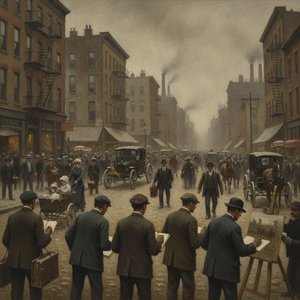
The Ashcan School: Capturing the Raw, Unfiltered Soul of Urban Life through American Realism
Discover the raw beauty of the Ashcan School. Explore how masters like Bellows and Henri captured the gritty, vibrant soul of early 20th-century New York through profound American Realism and evocative urban landscapes.

