

 实景预览
实景预览
 分享
分享 分享
分享
 详情
详情 指南
指南

 下载作品
下载作品
 相似作品
相似作品 X射线
X射线 幻灯片播放
幻灯片播放 问答
问答 统计数据
统计数据Search


A vibrant red and orange surrealist composition featuring textured layers and abstract figures by American artist William Frederick Halsey Jr., offering a profound sense of movement for your collection.
 展开全文
展开全文
Explore the art of William Frederick Halsey Jr., a multifaceted American figure known for maritime paintings & subtle contributions to US art. Discover his works at Mariners' Museum & Gibbes Museum.
艺术微喷/版画
博物馆级艺术微喷或帆布版画,制作高效,并提供多种饰面选择。 ( 订购纯手工绘制画作 切换至数字图像销售渠道)




































标准尺寸
定制
CM
INCH
您可以从与原作比例一致的预设尺寸中进行选择。
Loading sizes...

宽度
高度
请输入您所需的宽度和高度,以适配您的画框或墙面。由于印刷品只能进行裁剪,无法超出原图尺寸,因此若比例不一致,画面的一部分将会被裁切。在正式印刷之前,我们会为您发送一份数字效果图供您确认。本页面显示的图片并非最终裁剪后的效果——只有效果图才能展示真实的裁剪情况。


 玻璃选项仅适用于110厘米以下的尺寸。

Search
艺术微喷/版画
复刻品尺寸
-


最终结算价
¥ 469
A Charleston native, William Halsey achieved wide recognition as one of the premier artists of the South
常见问题与解答
在William Frederick Halsey Jr.反复探讨的主题中,"Search"处于怎样的地位?
William Frederick Halsey Jr. 的创作主题常涉及 surrealist influence, abstracted human figures, vibrant color palette, historical museum piece, part of naval legacy;而《Search》则聚焦于 abstract, surrealism, red color scheme, textured paint, figures, vibrant colors。
William Frederick Halsey Jr. 的《Search》创作于哪个时期?
“Search”创作于Modern时期。
"Search" 的作者是谁?属于哪种艺术流派?
"Search" 的背后是 William Frederick Halsey Jr. 及其所属的 Surrealism 流派。
艺术家简介
The Dual Legacy of William Frederick Halsey Jr.
In the grand tapestry of American history, certain names are woven into the fabric of military triumph, while others reside in the quiet, contemplative corners of fine art. William Frederick Halsey Jr. (1882–1959) is a figure who occupies both realms, though his identity is often bifurcated by the sheer magnitude of his naval command. Born on October 30, 1882, in Elizabeth, New Jersey, Halsey’s early years were shaped by a discipline that would later define his leadership during World War II. Before he was a Fleet Admiral commanding vast oceanic theaters, he was a young man navigating the academic and social landscapes of the University of Virginia and the United States Naval Academy. His time at the Academy was marked not only by rigorous study but by a spirited athleticism, earning his letter in football as a fullback and contributing to the "Lucky Bag" yearbook—a subtle hint at the creative inclinations that would persist beneath his military exterior.
While history books predominantly celebrate his strategic brilliance and his role in shaping United States Navy strategy, there exists a more delicate, artistic dimension to his life. Halsey’s engagement with the arts provides a fascinating counterpoint to the steel and salt of his naval career. His work, though often overshadowed by the thunder of naval battles, possesses a quiet dignity that speaks to the observant eye of a man accustomed to watching the horizon. This artistic pursuit was not merely a hobby but a way of interpreting the world through a lens of composition and light, finding beauty in the maritime environments that would later become his professional domain.
Artistic Contributions and Maritime Vision
The art of William Frederick Halsey Jr. is characterized by its connection to the sea and the subtle nuances of American life. Unlike the grand, sweeping historical canvases of his era, much of his contribution lies in a more subdued, evocative style that captures the essence of maritime themes. His ability to translate the vastness of the ocean and the specificities of naval atmosphere into visual form allows us to glimpse the world through the eyes of a commander who lived among the waves. This connection is most notably seen in works such as Search, which resides within the prestigious Gibbes Museum of Art in Charleston, showcasing his ability to contribute meaningfully to the American artistic canon.
His collection of work serves as a bridge between the rigid structure of military life and the fluid expression of fine art. The presence of his pieces in significant institutions highlights a legacy that transcends the battlefield:
- The Mariners' Museum and Park: A repository for maritime-themed art where his works find a natural home among the history of the sea.
- Wells College: An eclectic setting that showcases the breadth of his artistic reach within American academic collections.
- Gibbes Museum of Art: A testament to his ability to engage with the fine art traditions of the American South and beyond.
A Life of Multifaceted Service
To study Halsey is to study the complexity of a man who could command fleets and contemplate canvas with equal intensity. His life serves as a profound testament to the multifaceted nature of human endeavor. While his naval achievements—reaching the highest ranks and influencing the course of global conflict—are well-documented and undeniably monumental, his artistic endeavors offer a more intimate portrait of his character. He was a man of action, yes, but also a man of observation.
The historical significance of Halsey lies not just in the victories won at sea, but in the quiet persistence of his creative spirit. He reminds us that even amidst the most harrowing responsibilities of leadership, there remains a space for the aesthetic and the contemplative. His legacy is a dual one: a pillar of American military strength and a subtle, enduring contributor to the visual history of his nation. Through his art, we are invited to look past the uniform and discover the soul of an artist hidden within the commander.

William Frederick Halsey Jr.
1882 - 1959 , United States of America
艺术家简介
- Full Name: William Frederick Halsey Jr.
- Nationality: American
- Date Of Birth: 1882
- Date Of Death: 1959
- Place Of Birth: Elizabeth, United States of America
- Notable Artworks: ['Search']
- Artistic Movement Or Style: Maritime Art
- Artists Or Movements Influenced By This Artist: ['Naval Art']
相关文章

马克·罗斯科25幅杰作:色彩与情感的深度之旅 | TopImpressionists
探索马克·罗斯科25幅杰作,感受抽象表现主义的色彩力量与深刻情感。从经典色域绘画到无题系列,了解艺术史上的大师及其作品背后的故事。TopImpressionists.com提供博物馆级高质量复制品,为您的家居装饰带来艺术灵感!立即探索完整收藏。
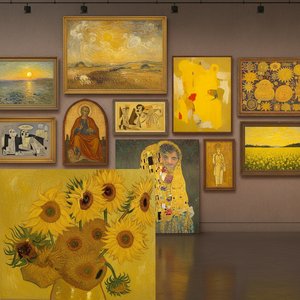
Golden Hues: 10 Masterpieces Dominated by Chrome Yellow | TopImpressionists
Immerse yourself in golden light! Explore 10 famous paintings dominated by 'Chrome Yellow', from Van Gogh’s Sunflowers to Monet's Haystacks. Discover the stories behind these iconic Impressionist & Post-Impressionist masterpieces and find museum-quality art reproductions at TopImpressionists.com.

The Golden Hue: Exploring Symbolism & Emotion in Yellow Art
Explore the rich symbolism & emotional power of yellow in art history! From Van Gogh to Kandinsky, discover how artists used this vibrant hue. Expert analysis & high-quality reproductions at TopImpressionists.

Crimson Threads of Narrative: Exploring Symbolism & Representation in Artworks Featuring the Red Dress
Explore the rich symbolism of the red dress in art history! From ancient power displays to iconic portraits like Cézanne’s 'Madame Cezanne', discover the cultural and artistic significance behind this captivating color. Expert analysis & insights.
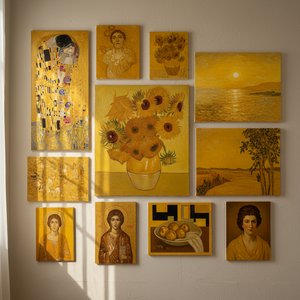
Golden Hues: Top 10 Paintings Dominated by Yellow Ochre |
Explore 10 iconic paintings bathed in golden yellow ochre! From Van Gogh's sunflowers to Monet’s haystacks, discover the stories behind these masterpieces. Find museum-quality art reproductions & elevate your home decor on .