

 实景预览
实景预览
 分享
分享 分享
分享
 详情
详情 指南
指南

 下载作品
下载作品
 相似作品
相似作品 X射线
X射线 幻灯片播放
幻灯片播放 问答
问答 统计数据
统计数据Chez Mouquin


 展开全文
展开全文
艺术微喷/版画
博物馆级艺术微喷或帆布版画,制作高效,并提供多种饰面选择。 ( 订购纯手工绘制画作 切换至数字图像销售渠道)




































标准尺寸
定制
CM
INCH
您可以从与原作比例一致的预设尺寸中进行选择。
Loading sizes...

宽度
高度
请输入您所需的宽度和高度,以适配您的画框或墙面。由于印刷品只能进行裁剪,无法超出原图尺寸,因此若比例不一致,画面的一部分将会被裁切。在正式印刷之前,我们会为您发送一份数字效果图供您确认。本页面显示的图片并非最终裁剪后的效果——只有效果图才能展示真实的裁剪情况。


 玻璃选项仅适用于110厘米以下的尺寸。

Chez Mouquin
艺术微喷/版画
复刻品尺寸
-


最终结算价
¥ 470
Chez Mouquin: A Snapshot of Parisian Bohemia
William James Glackens’ “Chez Mouquin,” completed in 1905, stands as a quintessential emblem of the Ashcan School—a movement that irrevocably altered the course of American art. Rejecting the idealized landscapes and mythological narratives favored by their predecessors, Glackens and his fellow artists sought to portray the gritty realities of urban life with unflinching honesty.
The painting depicts a scene within Mouquin’s Restaurant, a popular Parisian establishment frequented by artists and intellectuals during the Belle Époque. At its center is Jeanne Mouquin, the proprietor's wife, engaged in conversation with James B. Moore, a wealthy playboy known for his patronage of the arts. Glackens himself subtly captures the atmosphere of the dining room, reflecting the faces of fellow attendees—Charles Fitzgerald, an art critic and Edith Glackens, his wife—creating a tableau vivant that encapsulates the spirit of artistic camaraderie.
Glackens’ masterful technique exemplifies Ashcan Realism. Employing muted tones—primarily browns, ochres, and blacks—he skillfully captures the dim lighting of the restaurant, enhancing the sense of intimacy and immediacy. The brushstrokes are loose and expressive, conveying movement and capturing the subtle nuances of facial expressions. Glackens' deliberate use of chiaroscuro – dramatic contrasts between light and dark – draws attention to key figures and contributes to the painting’s overall mood.
A Reflection of Artistic Vision
“Chez Mouquin” isn’t merely a depiction of a social gathering; it’s a profound statement about Glackens' artistic philosophy. Like many Ashcan artists, he eschewed grand narratives in favor of capturing everyday moments—the conversations, gestures, and expressions that define human experience. This approach aligns with the broader Ashcan ethos: to portray American life as it truly is – flawed, vibrant, and brimming with potential.
Glackens’ influence extends beyond his stylistic choices. He championed a rejection of academic conventions, prioritizing observation and emotional resonance over meticulous detail. His work anticipates the modernist impulse toward simplification and abstraction, foreshadowing developments that would reshape art in subsequent decades.
Historical Context: The Belle Époque
The painting’s setting—Paris during the Belle Époque (roughly 1871-1914)—provides crucial context for understanding its significance. This era witnessed unprecedented social and cultural transformation, fueled by industrialization, urbanization, and burgeoning artistic experimentation. Artists like Glackens sought to document these changes, capturing the dynamism of a society undergoing rapid modernization.
Mouquin’s Restaurant itself was a hub of intellectual discourse and artistic activity—a place where writers, painters, and musicians convened to discuss ideas and inspire one another. Glackens' portrayal captures this atmosphere perfectly, reflecting the optimism and ambition that characterized the Belle Époque.
Symbolism & Emotional Impact
"Chez Mouquin" speaks volumes about the human condition—the desire for connection, the pursuit of beauty amidst chaos, and the celebration of shared experience. The muted palette contributes to a contemplative mood, inviting viewers to linger on the faces of the figures depicted.
Glackens’ ability to convey emotion through subtle gestures and expressions underscores his commitment to realism as a means of capturing psychological truth. “Chez Mouquin” remains a powerful reminder that art can illuminate the complexities of human life and inspire us to appreciate the beauty found in ordinary moments—a legacy cemented by its prominent place within the Art Institute of Chicago’s collection.
常见问题与解答
在“Chez Mouquin”中,哪种颜色最为醒目?
威廉·詹姆斯·格拉肯斯 的《Chez Mouquin》 的主色调为 Gray (#959982)。
威廉·詹姆斯·格拉肯斯 的《Chez Mouquin》 的技法与风格具有哪些特征?
威廉·詹姆斯·格拉肯斯 的《Chez Mouquin》 将 Oil On Canvas 技法与 Contemporary Realism 流派风格完美融合。技法与流派分别描述了作品的创作手法及其艺术风格。
对于Living Room,建议将"Chez Mouquin"打印成多大的尺寸?
在Living Room中,建议将"Chez Mouquin"打印为Large的大小。
相似作品


艺术家简介
早期生活与艺术启蒙
威廉·詹姆斯·格拉肯斯,这位对美国艺术史产生深远影响的杰出人物,以其引人入胜的现实主义绘画而闻名。1870年出生于宾夕法尼亚州的费城,格拉肯斯的艺术之路是他对捕捉日常生活本质的不懈热情证明。早年的岁月里,他对艺术有着天生的倾向,这促使他进入宾夕法尼亚美术学院深造。在著名现实主义画家托马斯·安舒茨的指导下,格拉肯斯磨练了他的技能,最终成为“灰烬派”运动的创始人之一。这个运动拒绝了传统艺术美的惯例,转而关注大都市生活的残酷现实。艺术生涯与风格演变
格拉肯斯的创作特点是其色调暗沉、充满活力的街景和一战前纽约及巴黎日常生活的描绘。他的后期作品受到雷诺阿的影响,展现出更明快的基调,反映了他作为艺术家的成长。值得注意的是,格拉肯斯还曾在费城和纽约的报纸杂志担任插画家。他早期的绘画风格深受印象派影响,注重光影效果和色彩的运用,但逐渐发展出独特的现实主义特征。他的作品并非简单地复制现实,而是通过对细节的敏锐观察和主观情感的表达,揭示了城市生活的复杂性和人性的多面性。灰烬派运动与社会批判
格拉肯斯是“灰烬派”运动的核心人物之一,该运动以其对城市贫民窟、廉价剧院和底层民众生活的真实描绘而著称。他们挑战了当时主流艺术的审美标准,将目光投向被忽视的社会角落,展现了城市的阴暗面和人性的挣扎。格拉肯斯的绘画作品常常带有强烈的社会批判意识,揭示了贫富差距、阶级压迫和城市生活的残酷现实。然而,他的作品并非单纯的控诉,而是通过对人物形象的刻画和场景氛围的营造,引发人们对社会问题的思考和关注。主要成就与艺术遗产
格拉肯斯的贡献不仅仅在于他自己的创作,还在于他对美国现代艺术的发展产生了深远的影响。他积极推动阿尔伯特·C·巴恩斯为费城巴恩斯基金会收购欧洲绘画作品,这一收藏已成为美国艺术史的重要基石。他的代表作包括《购物者》和《哈勒姆风干场一景》,充分展现了他捕捉城市生活本质的卓越技艺。他的作品不仅在艺术史上具有重要的地位,也对后来的艺术家产生了深远的影响。- 《购物者》(新现实主义,油画,克莱斯勒美术馆):这幅画作是格拉肯斯捕捉城市生活精髓的杰出代表作,展现了纽约街头熙熙攘攘的人群和充满活力的场景。
- 《哈勒姆风干场一景》(鲁伊斯达尔,米兰索尔佐城堡,意大利):这幅画作体现了格拉肯斯作品中对细节的敏锐观察和精湛技艺。
历史意义与当代影响
威廉·詹姆斯·格拉肯斯是美国现实主义绘画的重要代表人物之一,他的作品不仅记录了特定时代的社会风貌,也反映了艺术家对人性和社会的深刻思考。他挑战了传统艺术的审美标准,将目光投向被忽视的社会角落,为后来的艺术家提供了新的创作视角和可能性。“灰烬派”运动的兴起,标志着美国现代艺术发展的一个重要转折点,格拉肯斯作为该运动的核心人物之一,对美国艺术史产生了深远的影响。他的作品至今仍受到人们的喜爱和研究,继续激励着新一代的艺术家不断探索和创新。 推荐阅读: * https://TopImpressionists.com/@/william-james-glackens - 探索格拉肯斯作品在TopImpressionists.com的丰富收藏。 * https://en.wikipedia.org/wiki/william_glackens - 在维基百科上深入了解威廉·詹姆斯·格拉肯斯的详细传记。
威廉·詹姆斯·格拉肯斯
1870 - 1938 , 美国
艺术家简介
- Artistic Movement Or Style: 阿什坎派
- Artists Or Movements Influenced By This Artist: ['皮埃尔·奥古斯特·雷诺阿']
- Artists Who Influenced This Artist: ['托马斯·安舒茨']
- Date Of Birth: 1870年宾夕法尼亚州费城
- Date Of Death: 1938年康涅狄格州韦斯特波特
- Full Name: 威廉·詹姆斯·格拉肯斯
- Nationality: 美国国籍
- Notable Artworks (List Of Titles):
- 购物者
- 哈勒姆风光
- Place Of Birth (City And Country): 美国宾夕法尼亚州费城
相关文章

Capturing the Light: A Journey Through the Soul of American Impressionism and the Hudson River School
Explore the luminous beauty of American Impressionism and the Hudson River School. Discover a curated journey through light, landscape, and history, celebrating the enduring legacy of masters through exquisite, hand-painted oil reproductions for the discerning art lover.

The Unvarnished Truth: A Cultural Journey Through the Soul of American Realism
Explore the profound beauty of American Realism. From the Ashcan School's urban grit to intimate portraits, discover how artists captured the authentic soul of a nation through unvarnished truth and masterful observation.
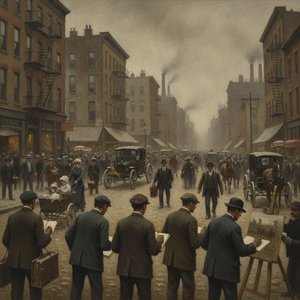
The Ashcan School: Capturing the Raw, Unfiltered Soul of Urban Life through American Realism
Discover the raw beauty of the Ashcan School. Explore how masters like Bellows and Henri captured the gritty, vibrant soul of early 20th-century New York through profound American Realism and evocative urban landscapes.
