

 实景预览
实景预览
 切换至版画销售渠道
 分享
分享 分享
分享
 详情
详情 指南
指南

 下载作品
下载作品
 相似作品
相似作品 X射线
X射线 幻灯片播放
幻灯片播放 Q&A
Q&A 统计数据
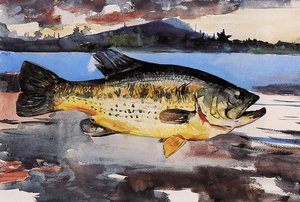
统计数据Two Trout


Admire Winslow Homer’s ‘Two Trout,’ a realistic watercolor capturing tranquil fish in a muted landscape. Explore this 1889 masterpiece of American art – realism & impressionism blend seamlessly.
 展开全文
展开全文
美国写实主义大师温斯洛·霍默 (1836-1910),以描绘海洋、风景和19世纪生活而闻名。他的作品如《海流》、《微风》等,展现了对自然力量的深刻理解与美国精神的真实写照,是美国艺术史上的重要人物。
获取远超网页预览效果的印刷级文件。我们销售的每一张数字图像均源自库存数据库中的高分辨率母版——宽度通常在 5,000 至 15,000 像素之间——因此您可以放心地进行大幅打印、局部裁剪或还原细腻的细节。
每一件作品在离开我们的工作室前都经过了精心的处理。数字影像专家会对照原作核对色彩,并在必要时进行校正,随后利用专业修图工具提升清晰度与细节表现——且始终忠实于艺术家的笔触与风格。最终呈现的图像宛如原作本身,而非仅仅是一张加了滤镜的扫描件。
您可以在最终定稿前进行审核:我们的专家将在 72 小时内通过电子邮件向您发送图像以供审阅。如果不满意?您可以要求改进或修正;若质量未达预期,亦可申请退款。
这也是出版商、设计工作室、画廊及印刷厂所信赖的品质。
每份数字图像订单均包含的内容
专业级数字交付,品质保障
选择 TopImpressionists.com,您获得的不仅仅是一张图像——您收到的是经过专业级增强、精雕细琢的数字艺术作品,并享有满意保证。以下是您的订单中自动包含的所有内容:

邮件即时送达
您的高分辨率数字图像文件将在下单后 72 小时内通过电子邮件发送给您 —— 即可立即使用。

AI 增强型数字文件
您的艺术品经过专业优化,结合先进的 AI 技术与人工修饰,确保呈现极致的细节、清晰度与色彩准确度。

终身免费重发服务
不小心删除了文件或找不到了?没关系——我们将随时为您免费重发。

无需进口税费,始终如一
即刻拥有您的艺术作品,无需支付任何关税、税费或运费——数字下载始终免税。

色彩精准保障
我们通过专业工具与色彩管理技术,确保您的数字图像尽可能真实地还原原作色彩。

100天满意保证
如果您对所购数字图像不满意,我们将在100天内为您进行修改或提供100%的全额退款——无需任何理由。

100% 退款保证
不满意?在收到数字文件后的100天内,您可以申请全额退款——无需任何理由。

批量订购优惠
购买 3 张享 10% 折扣 - 购买 5 张享 15% 折扣 - 购买 10 张以上享 20% 折扣。非常适合创意项目、画廊及机构使用。
A Moment Frozen in Time: Winslow Homer’s Two Trout
Winslow Homer, born in Boston in 1836, wasn't sculpted by the formal academies of Europe; he emerged from a distinctly American spirit—one rooted in observation and practicality. His artistic journey began not with grand historical canvases but as a commercial illustrator at twelve for Harper's Weekly, an experience that instilled within him an exceptional ability to capture scenes with remarkable clarity and detail – skills that would become foundational to his mature oeuvre. He wasn’t absorbing perspective from Parisian studios; he was learning to *see* America—its landscapes, its people, and its unfolding narrative. The quiet dignity of rural New England life, the bustling energy of Boston's harbor, these were his initial subjects, rendered with a precision born of necessity for the demands of print media. This formative apprenticeship allowed him to transition seamlessly into painting, initially in watercolor before embracing oil as he matured.The Essence of Impressionistic Realism
“Two Trout,” painted in 1889, exemplifies Homer’s masterful blend of realism and impressionism. Unlike many artists of his time striving for idealized representations, Homer prioritized capturing the immediacy of experience—the subtle nuances of light and color that define a particular moment in nature. The painting depicts two trout suspended gracefully in still water, bathed in diffused sunlight. Homer eschews dramatic lighting or exaggerated perspective; instead, he employs loose washes and layering techniques characteristic of watercolor to create an atmosphere of serene contemplation. Soft lines delineate the fish’s forms against a textured background that suggests movement and fluidity—a deliberate departure from traditional academic conventions.Technique and Texture: Layers of Observation
Homer's meticulous attention to detail is evident in the rendering of the trout’s scales, which shimmer subtly with reflected light. The artist utilizes a technique that prioritizes texture – rough washes in the water’s surface contrast sharply with smooth areas on the fish themselves. This layering process isn’t merely decorative; it conveys a profound understanding of how light interacts with surfaces and contributes to the overall impressionistic effect. Homer's brushstrokes are loose and flowing, capturing not just what he sees but also *how* he perceives it—a testament to his unwavering commitment to honest representation.Symbolism Beneath the Surface Calm
Beyond its visual beauty, “Two Trout” carries symbolic weight. Fish have long been associated with abundance, prosperity, and spiritual connection in Western culture. Homer’s choice to depict the trout from a fish's perspective—rather than a fisherman’s gaze—adds another layer of interpretation. It suggests an empathy for the subject matter, inviting viewers to consider its inherent dignity and resilience. The muted color palette reinforces the painting’s tranquil mood, mirroring the stillness of the aquatic environment and prompting reflection on the beauty found in simple observation.A Legacy of American Art
“Two Trout” stands as a cornerstone of Homer's artistic legacy—a poignant reminder that true artistry resides not in imitation but in capturing the essence of the world around us. Its understated elegance and masterful technique continue to inspire artists and collectors alike, securing its place as an enduring symbol of American landscape painting and Homer’s unparalleled ability to convey emotion through meticulous detail.




艺术家简介
一位美国精神的画笔:温斯洛·霍默的生平与艺术
温斯洛·霍默,1836 年出生于波士顿,并非在传统欧洲美术学院中打磨出的艺术家。相反,他从一种独特的美国经验中崛起,这种经验植根于实用主义和观察。他的旅程并非始于宏大的历史画卷,而是作为一名为《哈珀周刊》服务的商业插画家开始,年仅十二岁就已崭露头角。这段早期的学徒生涯对他产生了深远的影响,磨练了他以清晰度和细节捕捉场景的非凡能力——这些技能将成为他成熟作品中的标志性特征。他并非在巴黎学习透视法;他是在学习 *看* 美国,它的民众,以及它不断展开的故事。波士顿熙熙攘攘的街道、新英格兰乡村生活的宁静尊严,这些都是他的第一批主题,以一种为报纸印刷需求服务的精确性呈现出来。这个基础使他能够过渡到绘画领域,最初是水彩画,然后充分利用油画所蕴含的表达潜力。从田园风光到自然的原始力量
霍默早期的画作常常描绘着田园诗般的场景——孩子们玩耍、农民照料田地、家庭生活的宁静时刻。这些作品虽然迷人,却暗示着一种等待释放的更深层次的艺术敏感性。无疑,内战成为了这场转变的催化剂。作为《哈珀周刊》的战争特派记者,霍默亲眼目睹了冲突的残酷现实。他没有关注英雄般的战斗或宏大的战略;相反,他记录了士兵和平民的日常生活,在混乱中默默流逝的悲伤和韧性时刻。这段经历深刻地改变了他的艺术视野。田园风光让位于更具挑战性的主题:与创伤作斗争的老兵、在新世界中航行的解放奴隶以及受苦难触及的风景的朴素之美。他开始探索挣扎、孤立和人类与自然之间不稳定的关系的主题——这些主题将主导他的最有力作品。他的风格也随之演变,变得更加大胆和直接,反映了他所目睹的原始情感冲击。掌握光线、质感和美国风景
温斯洛·霍默的艺术技巧因其坚实性和纹理而立即具有辨识度。他并不感兴趣于转瞬即逝的印象;他想要在画布上构建一种有形现实的感觉。他的油画以直接绘画的方式为特征——自信地涂抹颜料层,创造深度和光泽。他拥有非凡的能力来捕捉光线,无论是阳光在海洋上的耀眼光芒还是乡村风景中黄昏的柔和光芒。这种掌握也延伸到他的水彩画中,他在那里通过充满活力的色彩和精致的晕染实现了非凡的大气效果。《拂风》(A Fair Wind)于 1876 年绘制,完美地体现了这种技能——对美国航海生活的典型描绘,充满了活力和运动。几十年后创作的《墨西哥湾流》或许是他最具代表性的作品,它是一个强大而象征性的肖像,描绘了一个人与自然的力量搏斗,是人类在巨大逆境中挣扎的比喻。他不仅仅是在画他所看到的;他是在传递一种感觉,一种关于人性真相的情感。在美国现实主义中铸就的遗产
虽然霍默钦佩巴若纳学派(以其对乡村生活的真实描绘而闻名)的欧洲艺术家,并承认来自库尔贝和米莱特的的影响,但他最终开辟了他自己的独特美国道路。他拒绝了盛行的学术惯例,而是专注于捕捉他的国家的独特精神。《拂风》中帆船的姿态、阳光在水面上的闪烁,都体现出他对光线和运动的敏锐观察力。他的遗产在于他能够以诚实和真实地描绘美国的能力,而没有浪漫化或理想化它。他不希望模仿欧洲风格;他想要创造一种独特的美国艺术,反映它的风景、人民及其挑战。《天真》是一幅感人的作品,描绘了在自然背景下成长的童年,而《科学家》则展示了他捕捉人类心理的技巧,都是对这一承诺的证明。他的影响可以从后来的美国画家的作品中看到,他们试图以类似的方式直接和情感地描绘自己的国家。持久的印象:霍默的历史意义
温斯洛·霍默的艺术为 19 世纪的美国提供了一个深刻的窗口,提供了对那个时代社会、政治和文化景观的宝贵见解。他的画作不仅仅是美丽的代表;它们是关于人类韧性、自然之美以及美国经验复杂性的有力声明。他于 1910 年去世,留下了一大批作品,这些作品至今仍能引起观众的共鸣。他能够捕捉到正在经历快速变化的国家的本质——从内战后的影响到新世纪的曙光——确保了他作为美国最重要的艺术家之一的地位。他不仅仅是在画画;他是在记录一个时代,将其保存给后代。- 他的作品继续激励着当代艺术家。
- 霍默仍然是美国现实主义发展中的关键人物。

温斯洛·霍默
1836 - 1910 , 美国
基本信息
- 全名: 温斯洛·霍默
- 出生地点: 美国波士顿
- 出生日期: 1836年10月3日
- 去世日期: 1910年
- 受其影响的艺术家: ['美国画家']
- 国籍: 美国
- 影响艺术家:
- 巴比松画派
- 库尔贝
- 米莱
- 艺术流派或风格: 美国现实主义
- 著名作品:
- 清风拂面 (A Fair Wind)
- 海流
- 纯真
- 科学之士