

 PaintingGeometric Abstraction
 1961Modern
 50.0 x 35.0 cm
 The Museum of Katowice History
从与原作比例一致的预设尺寸中进行选择。

您可以输入自定义尺寸,以适配特定的画框或空间。如果您选择的尺寸与原图比例不符,我们将对作品进行裁剪,或通过镜像填充/纯色填充边缘的方式来扩展图像。在开始制作之前,我们会向您发送一份数字效果图供您确认。
请注意,屏幕上的预览并不能反映实际的裁剪或扩展效果。只有效果图才能准确展示最终的构图。
虽然我们提供定制尺寸,但为了保持原图比例,我们建议您从预设列表中选择尺寸。

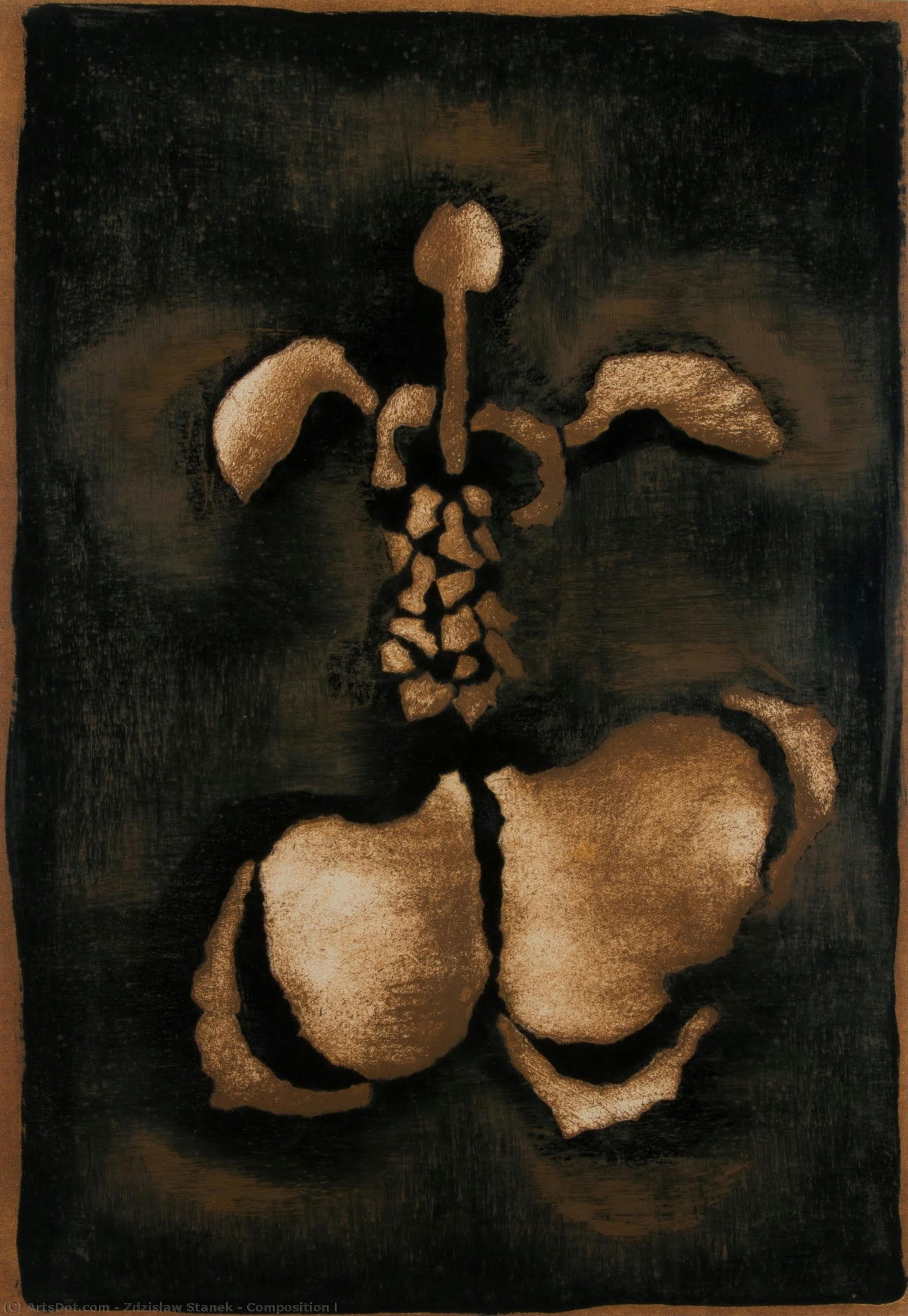
Composition I
复制品尺寸
In the quiet, evocative realm of mid-century Polish abstraction, few works capture the tension between human presence and geometric movement as poignantly as Zdzisław Stanek’s Composition I. Created in 1961, this masterpiece serves as a profound window into a period of intense artistic experimentation. At first glance, the viewer is drawn into a complex choreography of figures that seem to emerge from and dissolve into the canvas. A central figure, anchored on the left, bears the weight of a bird with outstretched wings—a motif that immediately invites contemplation of freedom, burden, and the delicate balance between the earthly and the ethereal. The composition is not merely a collection of shapes but a rhythmic arrangement where bodies are positioned in a deliberate, almost musical, sequence across the frame.
The technique employed by Stanek reflects his deep-seated connection to the theories of Wład::adysław Strzemiński, particularly the revolutionary concept of light as an active, transformative force. In Composition I, light does not simply illuminate the subjects; it sculpts them. Through a masterful use of contrast and tonal depth, Stanek creates a sense of three-dimensional movement within a flattened plane. The figures—ranging from those standing sentinel on the right to the more enigmatic presence in the upper corner—are woven together by a shared atmospheric energy. This interplay of light and shadow gives the artwork a breathing quality, making the stillness of the 1961 canvas feel vibrantly alive with an unspoken narrative.
For the discerning collector or interior designer, this piece offers much more than visual interest; it provides a sophisticated emotional anchor for any curated space. The monochromatic essence of the work lends it a timeless, sculptural elegance that complements both minimalist modern interiors and more classical, textured environments. There is a haunting beauty in the way the bird’s wingspan breaks the stillness, suggesting a moment of transition or a sudden burst of inspiration. Owning a high-quality reproduction of this work means bringing into one's home a piece of history—a fragment of the Polish avant-garde that continues to challenge the eye and stir the soul with its profound exploration of form, light, and the human condition.
In the storied landscape of mid-20th-century Polish art, few names resonate with the same quiet intensity as Zdzisław Stanek. Born in 1925 in the industrial heart of Łódź, Stanek emerged not merely as a painter, but as a profound investigator of the very mechanics of sight. His life’s work was a continuous dialogue between the tangible and the ethereal, a pursuit driven by an almost scientific curiosity regarding how light interacts with form to shape human perception. To encounter a Stanek canvas is to step into a world where the boundaries between matter and radiance begin to dissolve, leaving the viewer suspended in a state of luminous contemplation.
The foundation of Stanek’s artistic identity was deeply rooted in the revolutionary theoretical frameworks established by Władmentsław Strzemiński. From his earliest years, Stanek was captivated by Strzemiński’s radical notion that light should not be treated as a mere external source of illumination, but as an active, transformative force capable of sculpting space and evoking deep psychological resonance. This intellectual lineage became the heartbeat of his practice. He embraced the idea that light could breathe life into geometric structures, turning static shapes into dynamic participants in a cosmic dance of color and shadow.
As his career progressed, Stanek’s aesthetic language underwent a fascinating evolution, characterized by a refusal to be tethered to any single passing trend. While he drew significant inspiration from the structural rigor of Cubism, he infused these geometric foundations with an experimental spirit that bordered on the futuristic. His compositions frequently utilized the stark, clean lines of cubes and spheres, yet these were never cold or clinical. Instead, through a masterful application of vibrant pigments and layered textures, he achieved a sense of depth and dimensionality that felt almost organic.
His later explorations into Cyber Art and more abstract geometric forms demonstrated his ability to bridge the gap between classical painterly traditions and the burgeoning technological consciousness of the era. In these works, the interplay of form and color becomes a complex puzzle of light:
The historical importance of Zdzisław Stanek lies in his role as a bridge between the avant-garde traditions of early 20th-century Poland and the experimental movements that followed. In an era often defined by political and social upheaval, Stanek remained steadfast in his commitment to pure visual experimentation. He resisted the pressure to conform to more literal or propagandistic styles, choosing instead to focus on the universal language of light and geometry. This dedication ensured that his work remained timeless, transcending the specific historical moment of its creation.
Today, Stanek is remembered as a pioneer who dared to treat the canvas as a laboratory for perception. His ability to synthesize the rigid logic of geometric abstraction with the emotive power of light continues to inspire those who seek beauty in the intersection of science and art. His legacy remains etched in the luminous glow of his masterpieces, reminding us that even the most structured forms can be imbued with an eternal, breathing soul.

1925 - 1996 , Poland

探索几何抽象艺术的十大杰作!康定斯基、蒙德里安等大师作品,色彩构成与非具象之美。TopImpressionists.com提供博物馆级艺术复制品,为您的家居带来现代艺术灵感。立即在线探索完整系列!

Explore the evolution of geometric abstraction from Cubism to contemporary art. Discover key artists like Malevich & Mondrian, investment insights, and expert collecting advice at TopImpressionists.

Explore the captivating world of geometric abstraction! Discover its origins, key artists like Malevich & Mondrian, and why this movement remains highly valued by art collectors today. Expert insights at TopImpressionists.

Journey through Wassily Kandinsky's 25 most iconic abstract paintings. Explore his revolutionary use of color, form & spiritual expressionism. Find museum-quality Kandinsky reproductions and elevate your home decor with TopImpressionists.com. Discover all masterpieces on TopImpressionists.com!

探索抽象表现主义的十幅经典杰作!波洛克、罗斯科等大师作品,揭秘艺术史上的重要瞬间。TopImpressionists.com为您呈现高品质艺术品复制和精选家居装饰方案,感受现代艺术的力量与魅力。立即浏览全系列!


第一时间获取最新的艺术新闻、独家优惠及装饰灵感。
向我们介绍您的项目需求,我们的艺术专家将为您提供 3 个个性化的艺术品推荐。
由我们的专家为您精选 3 款心仪之作 —— 完全免费!
 定制手绘复刻品
 分享
分享 分享
分享
 详情
详情

 下载
下载
 相似作品
相似作品 X射线
X射线 幻灯片播放
幻灯片播放 展开详情
展开详情






































 玻璃选项仅适用于110厘米以下的尺寸。


