

المعروض: · بالإطار:
 معاينة الحجم الواقعي
 مشاركة
 مشاركة
 التفاصيل
 دليل
دليل

 تحميل الملف
 قطع مشابهة
 الأشعة السينية
 عرض شرائح
 الأسئلة والأجوبة
 الإحصائيات


E£ 14090
نسخة زيتية مرسومة يدوياً
لوحة زيتية مرسومة يدوياً على الكانفاس بالمقاس والإطار الذي تفضله، تُنفذ حسب الطلب على أيدي فنانينا. ( التبديل إلى نسخة مطبوعة الانتقال إلى الصورة الرقمية)
المقاس
·قياسي
حسب الطلب
CM
INCH
اختر من بين أحجامنا المُعدّة مسبقاً والتي تتوافق مع النسب الأصلية للعمل الفني.
جاري تحميل المقاسات...

العرض
الارتفاع
أدخل العرض والارتفاع اللذين تحتاجهما ليتناسب العمل مع إطارك أو جدارك. وبما أن هذه اللوحة مرسومة يدوياً، ففي حال اختيار مقاس بأبعاد مختلفة، يمكن للفنان رسم مساحة إضافية حول الصورة أو تقليصها قليلاً — الخيار لك. سنرسل لك نموذجاً رقمياً تجريبياً لاعتماده قبل البدء في الرسم. علماً بأن الصورة المعروضة في هذه الصفحة لا تعكس النتيجة النهائية الحقيقية، فالنموذج التجريبي هو الوحيد الذي يوضح ذلك بدقة.
 للمزيد من المعلومات
إنهاء
·
أبيض E£1

حواف ضبابية E£1

ممتد الحواف E£1

P118B E£10

P118H E£10

P118W E£10

P438Z E£10

P508JH E£12

P508YH E£12

P805H E£10

P805Z E£10

P919BZ E£10

P919G E£10

P919XJ E£10

P959ZH E£10

P968JZ E£12

W106C E£8

W218G E£10

W218JH E£8

W218Y E£10

W307PJ E£10

W316G E£10

W316PJ E£8

W316Y E£10

W398PJ E£8

W4111J E£10

W500HY E£15

W500JH E£15

W692G E£12

W849H E£8

W940BG E£15

W953PJ E£8

H24-GOLD E£30

H24-SILVER E£30

H36-GOLD E£45

H36-SILVER E£45
تُشحن في أنبوب واقٍ، لتكون جاهزة للتأطير لدى فني الإطارات الخاص بك.
للقطع التي يتجاوز طولها ١٠٥ سم، يتم شحن الإطار كمجموعة مخصصة لخبراء التأطير — اقرأ التفاصيل.
خدمات إضافية
اختياريماذا تشمل الإضافات؟
أمثلة على ما يمكن تغييره: استبدال الوجه بصورة العميل؛ إضافة حيوان أليف (على سبيل المثال، استبدال قطة بكلب)؛ تضمين رسالة مخفية في الخلفية؛ تغيير المناظر الطبيعية أو العناصر في الخلفية.
بعد الطلب، سيقوم فريق TopImpressionists.com بمراسلة العميل عبر البريد الإلكتروني للحصول على التعليمات وتزويده بمعاينة تجريبية للعمل
بعد الطلب، سيقوم فريق TopImpressionists.com بمراسلة العميل عبر البريد الإلكتروني للحصول على التعليمات وتزويده بمعاينة تجريبية للعمل
توصيل عالمي إلى خلال 3 إلى 4 أسابيع بدلاً من المدة المعتادة البالغة 5 أسابيع. (7 نوفمبر). جودة لا تهاون فيها.
ورنيش واقٍ
بطاقة التعريف
تفاصيل اللوحة البرونزية المحفورة
This elegant plaque features the artist's name and the title of the artwork, finely engraved for a timeless presentation.
It is made from bronze with a refined, elegant finish. The text is precisely laser-engraved for a sharp and permanent result. Measuring 9x2 cm, the plaque is compact yet easy to read. It's built to be durable and scratch-resistant, offering a professional, museum-quality look. Mounting is simple thanks to the included adhesive backing.
تفاصيل اللوحة الأكريليكية الشفافة
The plaque includes essential engraved details such as the artist's name, the title of the artwork, the date it was created, the type of media used-like oil on canvas or watercolor-a brief description of the piece, and a QR code that links to the complete artwork information.
It is crafted from clear acrylic, offering a sleek, modern appearance. The text is UV-engraved in black to ensure strong visual contrast. With a size of 10x15 cm, it ensures optimal readability. It comes equipped with two metal hooks for secure wall mounting. The plaque is designed to be weather-resistant, making it suitable for various environments, and it includes interactive features that work seamlessly with smartphone scanning.
تفاصيل اللوحة الأكريليكية السوداء
This elegant plaque includes engraved information such as the artist's name, the title of the artwork, the date it was created, the type of media used (like oil on canvas or watercolor), a short description of the artwork, and a QR code for quick access to more information.
The plaque itself is made from refined black acrylic with a premium finish. The text is laser-engraved in white for high contrast and readability. Its size is 10x15 cm, designed to be easy to read. It comes with two metal hooks for professional mounting. The design is sleek and fits any interior style. It is also weather-resistant and durable, with built-in digital integration for mobile compatibility.
خيار الزجاج متاح فقط للمقاسات التي تقل عن 110 سم
 خيار الزجاج متاح فقط للمقاسات التي تقل عن 110 سم
- شحن سريع ومجاني لجميع أنحاء العالم
- قماش كتان عالي الجودة
- تأمين شامل على الشحن
- ضمان استرداد الرسوم الجمركية
- ضمان مطابقة الألوان الحقيقية
- سياسة الإرجاع خلال 100 يوم (في حالات العيوب فقط)
- ضمان استرداد نقدي بنسبة 100%
- خصم عند طلب كميات


وصف القطعة المقتناة
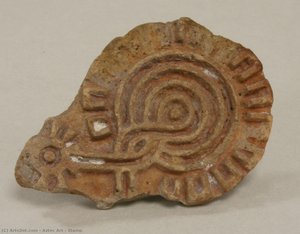
Hand-painted reproduction of 'Stamp' by Aztec Empire (1521). Explore this captivating piece from ancient Mexico – a unique symbol of Aztec artistry and culture. #AztecArt
السيرة الذاتية للفنان
استكشف الفن المذهل لإمبراطورية الأزتيك! اكتشف المنحوتات المعقدة، المخطوطات النابضة بالحياة، والفسيفساء الرمزية التي تعكس ثقافتهم الغنية ومعتقداتهم الدينية. #AztecArt #Mexico
عن اللوحة
The Echoes of Stone: Unveiling the ‘Stamp’
Within the realm of ancient Mesoamerica lies a deceptively simple object – a terracotta stamp, often referred to as a “stamp” in modern parlance. Yet, this unassuming artifact is far more than just a tool for marking textiles; it's a potent symbol of Aztec identity, religious belief, and the sophisticated artistry that flourished within their empire. This particular reproduction captures the essence of these ancient practices, offering a tangible connection to a civilization that once dominated central Mexico.

The piece itself is a testament to the skill of Aztec artisans. Crafted from fired clay – likely terracotta, judging by its texture and color – it’s a compact rectangle adorned with an intricate design. The dominant motif consists of three stylized figures, rendered in a manner that speaks volumes about Aztec cosmology and artistic conventions. These aren't realistic depictions; rather, they are abstracted representations, echoing the geometric patterns so prevalent throughout Mesoamerican art. Notice the parallel lines radiating outwards from the central figure’s crown – a deliberate element reminiscent of the shock of hair worn by the Mexican spider monkey, a creature deeply intertwined with Aztec mythology and associated with music, dance, and even the wind deity Ehecatl.
A Legacy Forged in Clay: Historical Context
To truly appreciate this stamp, one must understand its place within the broader context of Aztec society. The Aztecs, or Mexica as they called themselves, were a remarkably innovative people who built a vast empire on a foundation of military prowess and intricate social structures. Their art wasn’t merely decorative; it served as a powerful means of communication – conveying religious beliefs, political authority, and historical narratives. Ceramic stamps like this one were employed for a variety of purposes, from embellishing clothing and textiles to marking bark paper (amate), a crucial medium for writing and record-keeping. The practice dates back millennia, with roots in earlier Mesoamerican civilizations like the Olmecs and Maya, demonstrating a continuous artistic tradition.
The stamp’s creation aligns perfectly with the Aztec era of roughly 1300 to 1521 AD. During this time, the Aztecs were at their peak, controlling much of central Mexico through a complex system of alliances and tribute. The use of stamps was closely associated with elite culture, primarily crafted by scribes who held positions of high status within the empire. These objects were considered valuable possessions, often interred with the deceased – suggesting they held significant spiritual importance.
Symbolism and Meaning: Decoding the Design
The specific imagery on this stamp is rich in symbolic meaning. The stylized figures likely represent deities or cosmological concepts central to Aztec belief. While a definitive interpretation remains elusive, their abstracted forms align with the broader artistic conventions of the period – prioritizing geometric patterns and symbolic representation over realistic depiction. The spider monkey itself carries significant weight; as mentioned earlier, it was closely linked to Ehecatl, the wind deity, suggesting a connection between earthly existence and the celestial realm.
Furthermore, the stamp’s function as a tool for marking textiles speaks to the Aztec emphasis on ornamentation and visual display. Clothing and other fabrics were often adorned with intricate designs, reflecting social status, religious affiliation, and personal identity. The ‘stamp’ served as a means of adding these decorative elements efficiently and consistently.
A Timeless Masterpiece: Reproduction and Beyond
This hand-painted reproduction captures the spirit and artistry of this remarkable artifact. It offers a beautiful way to bring a piece of Aztec history into your home or studio, serving as a conversation starter and a reminder of the ingenuity and cultural richness of this ancient civilization. Consider it not just an image, but a portal – a window into the world of the Aztecs, where art, symbolism, and daily life were inextricably intertwined.
الأسئلة والأجوبة
ما هو حجم الطباعة المقترح لـ "Stamp" للفنان إمبراطورية الأزتيك؟
حجم الطباعة الموصى به لعمل "Stamp" للفنان إمبراطورية الأزتيك هو Medium.
ما مدى التناغم بين ألوان "Stamp"؟
تتميز لوحة "Stamp" للفنان إمبراطورية الأزتيك بتناغم لوني Unified Palette.
أين يمكنني تحميل "Stamp" للفنان إمبراطورية الأزتيك؟
يمكنك تنزيل "Stamp": حيث توفر صفحة تحميل الصورة الرقمية الخاصة بالعمل الفني خيار تحميل صورة رقمية عالية الدقة.
حقائق سريعة واختبار فني
عن إمبراطورية الأزتيك

إمبراطورية الأزتيك
1300 - 1521
السيرة الذاتية للفنان
أصداء الحجر: استكشاف فن وإرث إمبراطورية الأزتك
يستحضر اسم "الأزتك" – المشتق من كلمة الناواتل ātl-ce-tlācati–tlān، والتي تعني "شعب الأشكال المتعددة" – صوراً لإمبراطورية شاسعة ومعقدة هيمنت على أمريكا الوسطى لقرون طويلة. ولم يكن الأزتك مجرد محاربين وغزاة، بل كانوا أفراداً فنانين بعمق، حيث نسجوا الجمال المعقد في كل جانب من جوانب حياتهم؛ من العمارة الصرحية إلى أعمال الريش الرقيقة، ومن الطقوس المقدسة إلى الأدوات اليومية. لم يكن فنهم مجرد زينة، بل كان لغة نابضة بالحياة، تنقل المعتقدات الدలకు، والقوة السياسية، والسرديات التاريخية، والتراتب الاجتماعي داخل مجتمع اتسم بالهيكلية الصارمة والابتكار المذهل في آن واحد.
ومع بزوغ فجر القرن الرابع عشر في تينوتشتيتلان، قلب إمبراطورية الأزتك، كانت التقاليد الفنية للأزتك متجذرة بعمق في موروثات حضارات أمريكا الوسطى السابقة. فقد ساهمت حضارة الأولمك، برؤوسها الضخمة وأنظمتها التقويمية المتطورة، وحضارة تيوتيهواكان، المشهورة بأهراماتها العملاقة وتخطيطها العمراني، وحضارة التولتيك، أساتذة صياغة المعادن والنحت، جميعها في إثراء النسيج الفني الذي ورثه الأزتك. ومع ذلك، لم يكن الأزتك مجرد مقلدين؛ بل قاموا بدمج هذه التأثيرات مع حساسياتهم الجمالية الفريدة، مطورين أسلوباً متميزاً يتسم بالألوان الجريئة، والأنماط الهندسية المعقدة، والتمثيلات الرمزية.
لوحة القوة: المواد والتقنيات
تميز فن الأزتك بتنوع مذهل، حيث استخدم مجموعة مدهشة من المواد والتقنيات. وقد احتلت النقوش الحجرية مكانة بارزة، وتجسدت في المنحوتات الصرحية التي تصور الآلهة والحكام والمخلوقات الأسطورية. وتقف "حجر الشمس" الضخم (حجر التقويم)، الذي اكتشف عام 1946، شاهداً على براعتهم في هذا الوسيط؛ فهو عبارة عن نقش حجري معقد ومتعدد الطبقات يجمع بين المعلومات التقويمية والرمزية الكونية. كما عمل الحرفيون المهرة بالخشب، والطين، والريش – وخاصة ريش طائر الكيتزال النابض بالحياة – بالإضافة إلى اليشم، والفيروز، والأوبسيديان، والذهب، مما عكس الثراء والمكانة الاجتماعية في آن واحد.
ولعل أعمال الريش كانت الجانب الأكثر إثارة للإعجاب بصرياً في فن الأزتك. فقد صُنعت تيجان الرأس، والعباءات، والدروع، وغيرها من القطع الزخرفية بدقة متناهية باستخدام آلاف الريش المرتب بعناية فائقة، وهي عملية تتطلب مهارة وصبرًا لا حدود لهما. ولم تكن هذه الأشياء جميلة فحسب، بل كانت رموزاً قوية للسلطة، والتفاني الديني، والرتب الاجتماعية. حتى الألوان نفسها كانت تحمل معانٍ محددة: فالأزرق يمثل السماوات، والأخضر يرمز إلى الخصوبة، والأحمر يشير إلى الحرب، بينما يمثل الأصفر الشمس.
علاوة على ذلك، كان فنانو الأزتك أساتذة في فن الفسيفساء، حيث أبدعوا ألواحاً زخرفية مذهلة باستخدام قطع حجرية صغيرة مقصوصة بدقة. وقد زينت هذه الفسيفساء المعابد والقصور والمساكن الخاصة، مما أضاف طبقة من الغنى البصري إلى البيئة العمرانية. كما كانت فخارياتهم مثيرة للإعجاب بنفس القدر، حيث تميزت بتصاميم هندسية معقدة وتصوير للحيوانات والآلهة.
لغة الرموز: الموضوعات والزخارف
يزخر فن الأزتك بالرمزية، حيث تحمل كل صورة طبقات من المعاني التي تتطلب تفسيراً دقيقاً من قبل الكهنة والكتبة والحكام. فالإله المركزي "ويتزيلوبوتشتلي"، إله الحرب والشمس، كان يُصور غالباً في تيجان رأس مزخرفة بالريش والأحجار الكريمة. كما احتلت شخصية "كويتزالكواتل"، إله الثعبان ذو الريش المرتبط بالمعرفة والحكمة والخلق، مكانة مرموقة في مجمع آلهتهم وظهرت في العديد من التمثيلات الفنية.
وكان نظام التقويم – وهو مزيج متطور للغاية من الدورات الشمسية والطقوسية – موضوعاً متكرراً آخر. حيث دمجت صور التقاويم، والرموز الهيروغليفية، والرموز الفلكية في المنحوتات والفسيفساء والمخطوطات (الكتب المصورة)، مما يعكس فهم الأزتك العميق للزمن والكون. كما رمزت تمثيلات الذرة، المحصول الأساسي في نظامهم الغذائي، إلى القوت والخصوبة. أما الصور الحيوانية – وخاصة النمور، والنسور، والثعابين، وطائر الطنان – فقد حملت دلالات رمزية تتعلق بالقوة والشجاعة والألوهية.
إرث من الشظايا: الفن والأهمية التاريخية
أدى الانهيار المفاجئ لإمبراطورية الأزتك على يد الغزاة الإسبان في عام 1521 إلى خسارة فادحة لثقافة أمريكا الوسطى. ومن المؤسف أن الكثير من تراثهم الفني دُمر خلال الغزو؛ حيث هُدمت المعابد، وتحطمت المنحوتات، وأُحرقت المخطوطات. ومع ذلك، ورغم هذه الخسائر، فإن شظايا من فن الأزتك لا تزال باقية حتى يومنا هذا، لتقدم رؤى لا تقدر بثمن حول هذه الحضارة الرائعة.
وتشمل الأمثلة البارزة "حجر الشمس"، وهو منحوتة صرحية تستعرض معرفة الأزتك المتقدمة بعلم الفلك والرياضيات؛ وتيجان الرأس والعباءات المزينة بالريش والمحفوظة في المتاحف حول العالم؛ بالإضافة إلى المخطوطات الناجية، وهي كتب مكتوبة بخط اليد تحتوي على روايات تاريخية ومعتقدات دينية ومعلومات تقويمية. وتضم "مجموعة أندريس بلايستن" في المكسيك مجموعة هامة من فن أمريكا اللاتينية، بما في ذلك نماذج تسلط الضوء على التقاليد الفنية للأزتك.
إن تأثير الإرث الفني لإمبراطورية الأزتك لا يزال مرئياً حتى اليوم، حيث يلهم الفنانين والمصممين المعاصرين على حد سواء. فتقنياتهم المبتكرة، وصورهم الرمزية، وارتباطهم العميق بالطبيعة، لا تزال تتردد أصداؤها لدى الجمهور في جميع أنحاء العالم. إن استكشاف فن الأزتك ليس مجرد تمرين في التقدير التاريخي؛ بل هو رحلة إلى قلب حضارة معقدة وساحرة – شهادة على الإبداع البشري، والبراعة، والعمق الروحي.
لاستكشاف المزيد من الأعمال الفنية من إمبراطورية الأزتك وفنانين بارزين آخرين، تفضل بزيارة TopImpressionists.com.
حقائق سريعة عن إمبراطورية الأزتيك
- Artistic Movement Or Style: فن ميزوأميركا
- Artists Or Movements Influenced By This Artist: ['الفن الحديث']
- Artists Who Influenced This Artist:
- أولمك
- تيوتیواكان
- تولتيك
- Date Of Birth: 1300 (تينوتشتيتلان)
- Date Of Death: 1521
- Full Name: إمبراطورية الأزتك
- Nationality: مكسيكي
- Notable Artworks:
- تقويم الأزتك
- هرم الشمس
- أعمال الريش المكسيكية
- Place Of Birth: تينوتشتيتلان، المكسيك
إمبراطورية الأزتيك
Stamp
() ·
بالإطار: · رُسمت يدوياً بالزيت على الكتان
الإجمالي