

المعروض: · بالإطار:
 معاينة الحجم الواقعي
 مشاركة
 مشاركة
 التفاصيل
 دليل
دليل

 تحميل الملف
 قطع مشابهة
 الأشعة السينية
 عرض شرائح
 الأسئلة والأجوبة
 الإحصائيات


E£ 16686
نسخة زيتية مرسومة يدوياً
لوحة زيتية مرسومة يدوياً على الكانفاس بالمقاس والإطار الذي تفضله، تُنفذ حسب الطلب على أيدي فنانينا. ( التبديل إلى نسخة مطبوعة الانتقال إلى الصورة الرقمية)
هذا العمل الفني محمي بموجب حقوق الطبع والنشر
إن العمل الفني المعروض في هذه الصفحة محمي بموجب قوانين حقوق الطبع والنشر، مما يعني أنه لا يحق لنا قانوناً إنشاء أو بيع نسخ مطابقة له. وتُطبق هذه الحماية بموجب الاتفاقيات الدولية مثل الـ اتفاقية برن ووفقاً للقوانين الوطنية، بما في ذلك تلك المنصوص عليها في قانون حقوق الطبع والنشر في الولايات المتحدة - الباب 17.
وكبديل قانوني وراقٍ، نقدم أعمالاً فنية مخصصة ومرسومة يدوياً مستوحاة من العمل الأصلي. حيث يقوم فنانونا المهرة والمحترفون بدراسة أسلوب العمل الأصلي وأجوائه وجوهره الفني بعناية فائقة، لابتكار قطعة جديدة وفريدة تثير الشعور ذاته - مع بقائها عملاً أصيلاً بحد ذاته.
تتوافق هذه الطريقة تماماً مع لوائح حقوق النشر لأنها لا تتضمن نسخ أو تكرار العمل الفني المحمي، بل هي إعادة تفسير إبداعية؛ أي أنها لوحة جديدة مستوحاة من الأصل ولكنها ليست مطابقة له.
 للمزيد من المعلومات
المقاس
·قياسي
حسب الطلب
CM
INCH
اختر من بين أحجامنا المُعدّة مسبقاً والتي تتوافق مع النسب الأصلية للعمل الفني.
جاري تحميل المقاسات...

العرض
الارتفاع
أدخل العرض والارتفاع اللذين تحتاجهما ليتناسب العمل مع إطارك أو جدارك. وبما أن هذه اللوحة مرسومة يدوياً، ففي حال اختيار مقاس بأبعاد مختلفة، يمكن للفنان رسم مساحة إضافية حول الصورة أو تقليصها قليلاً — الخيار لك. سنرسل لك نموذجاً رقمياً تجريبياً لاعتماده قبل البدء في الرسم. علماً بأن الصورة المعروضة في هذه الصفحة لا تعكس النتيجة النهائية الحقيقية، فالنموذج التجريبي هو الوحيد الذي يوضح ذلك بدقة.
إنهاء
·
أبيض E£1

حواف ضبابية E£1

ممتد الحواف E£1

P118B E£10

P118H E£10

P118W E£10

P438Z E£10

P508JH E£12

P508YH E£12

P805H E£10

P805Z E£10

P919BZ E£10

P919G E£10

P919XJ E£10

P959ZH E£10

P968JZ E£12

W106C E£8

W218G E£10

W218JH E£8

W218Y E£10

W307PJ E£10

W316G E£10

W316PJ E£8

W316Y E£10

W398PJ E£8

W4111J E£10

W500HY E£15

W500JH E£15

W692G E£12

W849H E£8

W940BG E£15

W953PJ E£8

H24-GOLD E£30

H24-SILVER E£30

H36-GOLD E£45

H36-SILVER E£45
تُشحن في أنبوب واقٍ، لتكون جاهزة للتأطير لدى فني الإطارات الخاص بك.
للقطع التي يتجاوز طولها ١٠٥ سم، يتم شحن الإطار كمجموعة مخصصة لخبراء التأطير — اقرأ التفاصيل.
خدمات إضافية
اختياريماذا تشمل الإضافات؟
أمثلة على ما يمكن تغييره: استبدال الوجه بصورة العميل؛ إضافة حيوان أليف (على سبيل المثال، استبدال قطة بكلب)؛ تضمين رسالة مخفية في الخلفية؛ تغيير المناظر الطبيعية أو العناصر في الخلفية.
بعد الطلب، سيقوم فريق TopImpressionists.com بمراسلة العميل عبر البريد الإلكتروني للحصول على التعليمات وتزويده بمعاينة تجريبية للعمل
بعد الطلب، سيقوم فريق TopImpressionists.com بمراسلة العميل عبر البريد الإلكتروني للحصول على التعليمات وتزويده بمعاينة تجريبية للعمل
توصيل عالمي إلى خلال 3 إلى 4 أسابيع بدلاً من المدة المعتادة البالغة 5 أسابيع. (4 نوفمبر). جودة لا تهاون فيها.
ورنيش واقٍ
بطاقة التعريف
تفاصيل اللوحة البرونزية المحفورة
This elegant plaque features the artist's name and the title of the artwork, finely engraved for a timeless presentation.
It is made from bronze with a refined, elegant finish. The text is precisely laser-engraved for a sharp and permanent result. Measuring 9x2 cm, the plaque is compact yet easy to read. It's built to be durable and scratch-resistant, offering a professional, museum-quality look. Mounting is simple thanks to the included adhesive backing.
تفاصيل اللوحة الأكريليكية الشفافة
The plaque includes essential engraved details such as the artist's name, the title of the artwork, the date it was created, the type of media used-like oil on canvas or watercolor-a brief description of the piece, and a QR code that links to the complete artwork information.
It is crafted from clear acrylic, offering a sleek, modern appearance. The text is UV-engraved in black to ensure strong visual contrast. With a size of 10x15 cm, it ensures optimal readability. It comes equipped with two metal hooks for secure wall mounting. The plaque is designed to be weather-resistant, making it suitable for various environments, and it includes interactive features that work seamlessly with smartphone scanning.
تفاصيل اللوحة الأكريليكية السوداء
This elegant plaque includes engraved information such as the artist's name, the title of the artwork, the date it was created, the type of media used (like oil on canvas or watercolor), a short description of the artwork, and a QR code for quick access to more information.
The plaque itself is made from refined black acrylic with a premium finish. The text is laser-engraved in white for high contrast and readability. Its size is 10x15 cm, designed to be easy to read. It comes with two metal hooks for professional mounting. The design is sleek and fits any interior style. It is also weather-resistant and durable, with built-in digital integration for mobile compatibility.
خيار الزجاج متاح فقط للمقاسات التي تقل عن 110 سم
 خيار الزجاج متاح فقط للمقاسات التي تقل عن 110 سم
- شحن سريع ومجاني لجميع أنحاء العالم
- قماش كتان عالي الجودة
- تأمين شامل على الشحن
- ضمان استرداد الرسوم الجمركية
- ضمان مطابقة الألوان الحقيقية
- سياسة الإرجاع خلال 100 يوم (في حالات العيوب فقط)
- ضمان استرداد نقدي بنسبة 100%
- خصم عند طلب كميات


وصف القطعة المقتناة
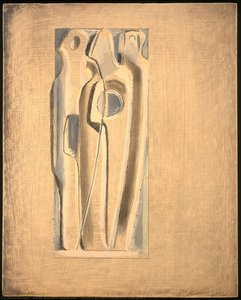
Explore Dame Barbara Hepworth’s ‘Three Figures’ (1951), a captivating abstract study of human forms. Discover her pioneering modernist style & layered brushwork in this evocative piece.
السيرة الذاتية للفنان
استكشف المنحوتات الحداثية للديم باربرا هيبورث (1903-1975). رائدة الفن التجريدي، يمزج عملها - بما في ذلك 'Oval Form' و'Two Forms' - بين السريالية والتجريد. اكتشف إرثها في متحف هيبورث ويكفيلد.
عن اللوحة
Barbara Hepworth’s ‘Three Figures – Project for Sculpture’: A Meditation on Form and Connection
“Three Figures – Project for Sculpture,” created in 1951 by the influential British sculptor Barbara Hepworth, offers a compelling glimpse into her exploration of form and space during a pivotal moment in modern art. This work, rendered in a luminous golden hue, transcends mere representation to become a deeply evocative study of human presence—a testament to Hepworth’s mastery of abstraction and her profound engagement with the fundamental principles of sculpture. The painting's strength lies not in literal depiction but in its ability to conjure a sense of quiet contemplation, inviting viewers to consider the relationships between individuals and their shared experience.
A Modernist Vision: Style and Technique
Hepworth’s approach aligns squarely with the modernist movement, particularly its emphasis on reducing forms to their essential geometric elements. The composition is dominated by rectangular and triangular shapes, meticulously constructed to create a sense of depth through overlapping planes and subtle tonal variations. Visible brushstrokes, layered and glazed with oil paint, contribute significantly to the artwork's tactile quality – an invitation to almost reach out and touch the implied solidity of the figures. The directional lighting further enhances this three-dimensionality, casting carefully considered shadows that sculpt the forms themselves. This technique, rooted in Hepworth’s training at the Royal College of Art, demonstrates a sophisticated understanding of both representational space and abstract form.
Historical Context and Influences
Created in 1951, “Three Figures” reflects a period of significant artistic innovation. Hepworth was a key figure within the Unit One movement, alongside Ben Nicholson and Paul Nash, which sought to bridge the gap between Surrealism and Abstraction – a bold experiment that challenged traditional notions of representation. Her earlier work, heavily influenced by her time in Paris and engagement with abstraction-création, paved the way for this exploration of simplified forms and spatial relationships. The painting’s restrained style echoes the growing interest in geometric abstraction prevalent throughout Europe at the time, while retaining a distinctly humanistic focus.
Symbolism and Emotional Resonance
While overtly symbolic elements are absent, “Three Figures” possesses a powerful emotional resonance. The solemn postures of the figures suggest introspection and perhaps a shared experience – a quiet connection forged through form and space. Hepworth’s work often explored themes of human vulnerability and resilience, and this piece is no exception. It invites viewers to contemplate their own place within the larger world, prompting a sense of empathy and understanding. The painting's enduring appeal lies in its ability to tap into these universal emotions, making it a timeless meditation on the nature of human connection.
الأسئلة والأجوبة
إلى أي مرحلة من مسيرة باربرا هيبورث المهنية تنتمي لوحة "Three Figures – Project for Sculpture"، بالنظر إلى تاريخ إنتاجها؟
يعود تاريخ 1951 للوحة "Three Figures – Project for Sculpture"، مما يضعها ضمن مرحلة Mature Period من مسيرة تطور باربرا هيبورث.
كيف يربط عمل "Three Figures – Project for Sculpture" للفنان باربرا هيبورث بين Modernism والوطن الأم للفنان؟
تجسد لوحة "Three Figures – Project for Sculpture" الروابط بين حركة Modernism والمملكة المتحدة من خلال مسقط رأس مبدعها.
ما هو المكان الأنسب لتعليق "Three Figures – Project for Sculpture" للفنان باربرا هيبورث؟
بفضل شكلها الـ Portrait، يُقترح وضع نسخة من "Three Figures – Project for Sculpture" في Living Room.
حقائق سريعة واختبار فني
عن باربرا هيبورث

باربرا هيبورث
1903 - 1975, المملكة المتحدة
السيرة الذاتية للفنان
البدايات والنشأة التعليمية
السيدة باربرا هيبورث، الفنانة والنحاتة الإنجليزية المرموقة، ولدت في العاشر من يناير عام 1903 في مدينة ويكفيلد بمقاطعة يوركشاير. بدأت رحلتها الفنية بالالتحاق بمدرسة ليدز للفنون منذ عام 1andom20، ثم توجت مسارها التعليمي بالحصول على منحة مقاطعة للدراسة في الكلية الملكية للفنون (RCA) في لندن، حيث استمرت دراستها من عام 1921 حتى نالت دبلومها في عام 1924.المسيرة الفنية
- تجسد أعمال السيدة باربرا هيبورث جوهر الحداثة، ولا سيما في مجال النحت الحديث، حيث كانت واحدة من القلائل من الفنانات اللواتي حققن شهرة عالمية واسعة.
- في عام 1933، ساهمت في تأسيس حركة "يونيت وان" (Unit One) الفنية بالتعاون مع بن نيكلسون، وبول ناش وغيرهم، سعيًا لدمج السريالية والتجريد في الفن البريطاني.
- اتسمت أعمال هيبورث المبكرة بالنزعة التجريدية وتفاعلها مع الحركة الفنية "تجريد-كرياسيون" (Abstraction-Création) التي اتخذت من باريس مقرًا لها.
أعمال ومعارض بارزة
- يعد منحوت البرونزي "الشكل البيضاوي (تريزيون)" جزءًا من مجموعة متحف كيمبل للفنون في فورت وورث بالولايات المتحدة. (عرض على TopImpressionists)
- أما منحوتة "شكلان"، فهي تُعرض في متحف هيبورث ويكفيلد في ويكفيلد بالمملكة المتحدة. (عرض على TopImpressionists)
- كما تضم مجموعة متحف هيبورث ويكفيلد منحوتة "توتيم" الرخامية. (عرض على TopImpressionists)
الإرث والمجموعات المتحفية
إن أعمال باربرا هيبورث تحظى بتقدير عالمي واسع، حيث تشكل منحوتاتها ولوحاتها جزءًا من مجموعات متحفية متنوعة حول العالم. ويضم متحف هيبورث ويكفيلد، الذي سُمي تيمناً بالفنانة، العديد من الروائع لفنانين مشهورين، بما في ذلك أعمال هيبورث الخاصة. (اكتشف المزيد عن متحف هيبورث ويكفيلد عبر TopImpressionists)الخاتمة
لقد تركت الأعمال الرائدة لـ السيدة باربرا هيبورث في مجال النحت البريطاني الحديث بصمة لا تُمحى في عالم الفن. ويستمر إرثها في إلهام الفنانين وعشاق الفنون على حد سواء، حيث تظل أعمالها شاهدًا حيًا على روحها المبتكرة وعبقريتها الفنية الفذة. المزيد عن باربرا هيبورث على ويكيبيدياحقائق سريعة عن باربرا هيبورث
- Artistic Movement Or Style: الحداثة، التجريد
- Artists Or Movements Influenced By This Artist:
- Abstraction-Création
- Unit One
- Artists Who Influenced This Artist:
- هنري مور
- بن نيكولسون
- Date Of Birth: 1903-01-10
- Date Of Death: 1975-05-20
- Full Name: باربرا هيبورث
- Nationality: بريطانية
- Notable Artworks:
- Oval Form (Trezion)
- Two Forms
- Totem
- Place Of Birth: ويكفيلد، المملكة المتحدة
استكشف الأعمال الفنية المصنفة حسب الموضوعات والأنماط والخصائص.


باربرا هيبورث
Three Figures – Project for Sculpture
() ·
بالإطار: · رُسمت يدوياً بالزيت على الكتان
الإجمالي