

المعروض: · بالإطار:
 مشاركة
 مشاركة
 التفاصيل
 دليل
دليل

 تحميل الملف
 قطع مشابهة
 عرض شرائح
 الأسئلة والأجوبة
 الإحصائيات
- 26.0 x 33.0 cm


E£ 14115
نسخة زيتية مرسومة يدوياً
لوحة زيتية مرسومة يدوياً على الكانفاس بالمقاس والإطار الذي تفضله، تُنفذ حسب الطلب على أيدي فنانينا. ( التبديل إلى نسخة مطبوعة الانتقال إلى الصورة الرقمية)
المقاس
·قياسي
حسب الطلب
CM
INCH
اختر من بين أحجامنا المُعدّة مسبقاً والتي تتوافق مع النسب الأصلية للعمل الفني.
جاري تحميل المقاسات...

العرض
الارتفاع
أدخل العرض والارتفاع اللذين تحتاجهما ليتناسب العمل مع إطارك أو جدارك. وبما أن هذه اللوحة مرسومة يدوياً، ففي حال اختيار مقاس بأبعاد مختلفة، يمكن للفنان رسم مساحة إضافية حول الصورة أو تقليصها قليلاً — الخيار لك. سنرسل لك نموذجاً رقمياً تجريبياً لاعتماده قبل البدء في الرسم. علماً بأن الصورة المعروضة في هذه الصفحة لا تعكس النتيجة النهائية الحقيقية، فالنموذج التجريبي هو الوحيد الذي يوضح ذلك بدقة.
 للمزيد من المعلومات
إنهاء
·
أبيض E£1

حواف ضبابية E£1

ممتد الحواف E£1

P118B E£10

P118H E£10

P118W E£10

P438Z E£10

P508JH E£12

P508YH E£12

P805H E£10

P805Z E£10

P919BZ E£10

P919G E£10

P919XJ E£10

P959ZH E£10

P968JZ E£12

W106C E£8

W218G E£10

W218JH E£8

W218Y E£10

W307PJ E£10

W316G E£10

W316PJ E£8

W316Y E£10

W398PJ E£8

W4111J E£10

W500HY E£15

W500JH E£15

W692G E£12

W849H E£8

W940BG E£15

W953PJ E£8

H24-GOLD E£30

H24-SILVER E£30

H36-GOLD E£45

H36-SILVER E£45
تُشحن في أنبوب واقٍ، لتكون جاهزة للتأطير لدى فني الإطارات الخاص بك.
للقطع التي يتجاوز طولها ١٠٥ سم، يتم شحن الإطار كمجموعة مخصصة لخبراء التأطير — اقرأ التفاصيل.
خدمات إضافية
اختياريماذا تشمل الإضافات؟
أمثلة على ما يمكن تغييره: استبدال الوجه بصورة العميل؛ إضافة حيوان أليف (على سبيل المثال، استبدال قطة بكلب)؛ تضمين رسالة مخفية في الخلفية؛ تغيير المناظر الطبيعية أو العناصر في الخلفية.
بعد الطلب، سيقوم فريق TopImpressionists.com بمراسلة العميل عبر البريد الإلكتروني للحصول على التعليمات وتزويده بمعاينة تجريبية للعمل
بعد الطلب، سيقوم فريق TopImpressionists.com بمراسلة العميل عبر البريد الإلكتروني للحصول على التعليمات وتزويده بمعاينة تجريبية للعمل
توصيل عالمي إلى خلال 3 إلى 4 أسابيع بدلاً من المدة المعتادة البالغة 5 أسابيع. (9 نوفمبر). جودة لا تهاون فيها.
ورنيش واقٍ
بطاقة التعريف
تفاصيل اللوحة البرونزية المحفورة
This elegant plaque features the artist's name and the title of the artwork, finely engraved for a timeless presentation.
It is made from bronze with a refined, elegant finish. The text is precisely laser-engraved for a sharp and permanent result. Measuring 9x2 cm, the plaque is compact yet easy to read. It's built to be durable and scratch-resistant, offering a professional, museum-quality look. Mounting is simple thanks to the included adhesive backing.
تفاصيل اللوحة الأكريليكية الشفافة
The plaque includes essential engraved details such as the artist's name, the title of the artwork, the date it was created, the type of media used-like oil on canvas or watercolor-a brief description of the piece, and a QR code that links to the complete artwork information.
It is crafted from clear acrylic, offering a sleek, modern appearance. The text is UV-engraved in black to ensure strong visual contrast. With a size of 10x15 cm, it ensures optimal readability. It comes equipped with two metal hooks for secure wall mounting. The plaque is designed to be weather-resistant, making it suitable for various environments, and it includes interactive features that work seamlessly with smartphone scanning.
تفاصيل اللوحة الأكريليكية السوداء
This elegant plaque includes engraved information such as the artist's name, the title of the artwork, the date it was created, the type of media used (like oil on canvas or watercolor), a short description of the artwork, and a QR code for quick access to more information.
The plaque itself is made from refined black acrylic with a premium finish. The text is laser-engraved in white for high contrast and readability. Its size is 10x15 cm, designed to be easy to read. It comes with two metal hooks for professional mounting. The design is sleek and fits any interior style. It is also weather-resistant and durable, with built-in digital integration for mobile compatibility.
خيار الزجاج متاح فقط للمقاسات التي تقل عن 110 سم
 خيار الزجاج متاح فقط للمقاسات التي تقل عن 110 سم
- شحن سريع ومجاني لجميع أنحاء العالم
- قماش كتان عالي الجودة
- تأمين شامل على الشحن
- ضمان استرداد الرسوم الجمركية
- ضمان مطابقة الألوان الحقيقية
- سياسة الإرجاع خلال 100 يوم (في حالات العيوب فقط)
- ضمان استرداد نقدي بنسبة 100%
- خصم عند طلب كميات


وصف القطعة المقتناة
Marvel at Benvenuto Cellini's opulent 'Salt Cellar,' a Renaissance masterpiece of gold, enamel, and intricate symbolism—a testament to artistry & luxury from 1543 Vienna.
السيرة الذاتية للفنان
بينفينوتو تشيليني (1500-1571): صائغ ونحات بارز من عصر المانييرية، اشتهر بمنحوتة 'بيرسيوس ورأس ميدوسا' وعلبة الملح الرائعة. اكتشف فنه وحياته! نحات إيطالي متعدد المواهب ترك بصمة في تاريخ الفن.
عن اللوحة
A Gilded Echo of Antiquity
Benvenuto Cellini's Salt Cellar, a shimmering testament to the heights of Renaissance goldsmithing, isn’t merely a container for salt; it’s a miniature cosmos, a meticulously crafted allegory brimming with symbolism and technical brilliance. Completed in 1543 for King Francis I of France, this extraordinary object transcends its functional purpose, becoming a profound meditation on the relationship between earth and sea, divinity and humanity. It's a piece that whispers tales of ambition, artistry, and the intoxicating allure of the Italian Renaissance—a world where beauty was paramount and skill elevated to an almost religious pursuit.
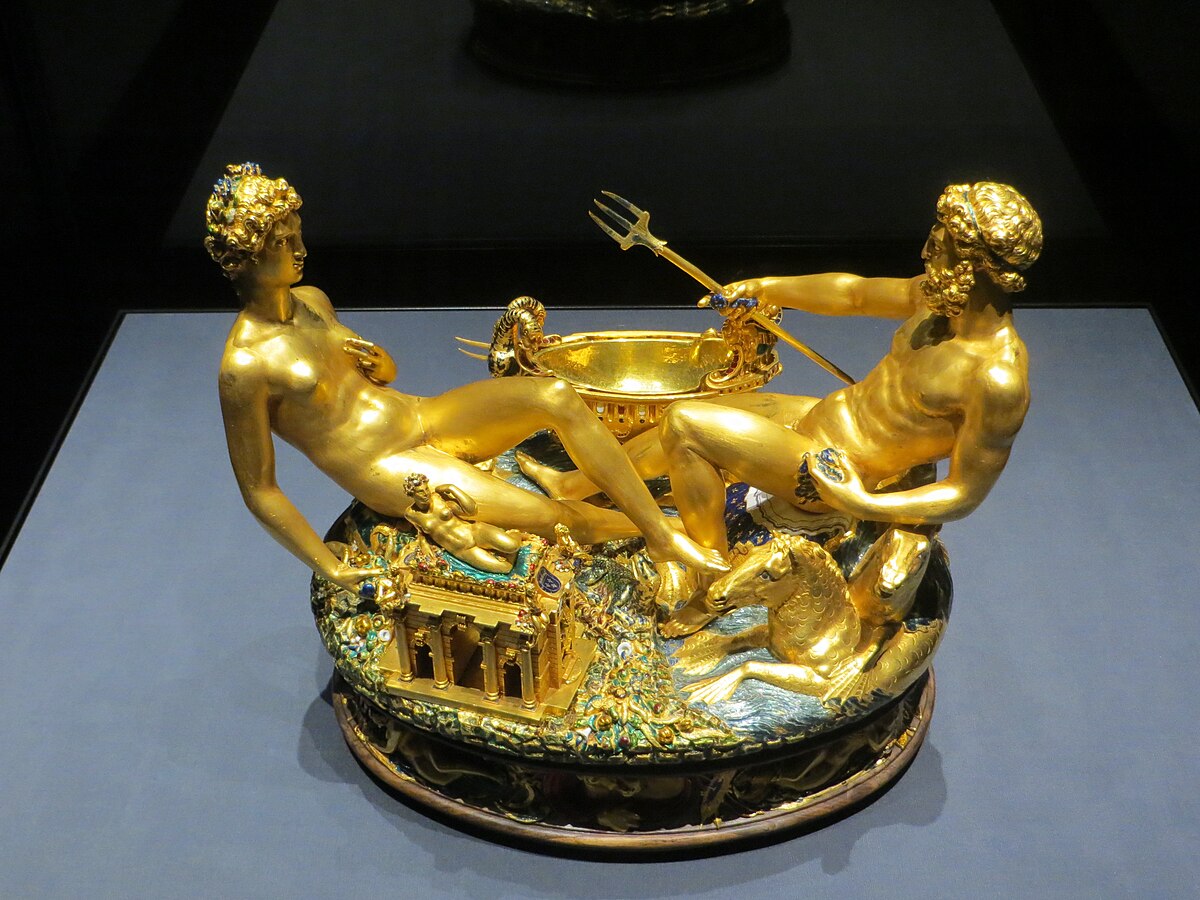
Image of Benvenuto Cellini’s Salt Cellar
The Anatomy of a Masterpiece
Crafted primarily from gold, the Salt Cellar is an astonishing feat of technical mastery. Cellini, renowned for his flamboyant personality and equally impressive skill, eschewed traditional casting methods, instead meticulously hammering the gold into its delicate, flowing form by hand. The base is elegantly fashioned from ebony, providing a striking contrast to the radiant gold, while ivory bearings allow the sculpture to gracefully roll across a banquet table – a deliberate feature designed for display and conversation. But it’s the enameling that truly elevates the piece; intricate scenes depicting figures representing the four seasons and the four winds are painstakingly applied, adding layers of visual complexity and narrative depth. The sheer scale of detail—from the meticulously rendered folds of clothing to the lifelike expressions on the faces of Neptune and Tellus – speaks volumes about Cellini’s dedication and unparalleled skill.
- Material: Gold, Ebony, Ivory, Enamel
- Dimensions: Approximately 10.5 inches (267 mm) tall, 13.1 inches (333 mm) wide
- Technique: Hand-hammered gold, intricate enamel work
A Dialogue with the Divine
The Salt Cellar’s symbolism is as captivating as its aesthetic beauty. At its heart lies a potent allegory of Terra e Mare – Earth and Sea – embodied by the figures of Neptune, god of the ocean, and Tellus, goddess of the earth. These two powerful deities are depicted in an intimate embrace, their legs intertwined, suggesting a harmonious connection between the terrestrial and aquatic realms. The sculpture is further enriched with symbolic details: a small boat carries the salt, representing the flow of commerce and sustenance; a temple dedicated to peppercorns stands alongside Tellus, signifying the pleasures of earthly life. The inclusion of animals—horses, dogs, dolphins—adds another layer of meaning, drawing upon classical iconography and reinforcing the sculpture’s connection to mythology and antiquity.
A Legacy Forged in Ambition
Cellini's autobiography, *Vita*, offers invaluable insight into the creation of this extraordinary piece. He recounts his initial reluctance to accept the commission from Cardinal Ippolito d’Este, dismissing the cardinal’s suggestions with characteristic arrogance and asserting sole credit for the design. The story is rife with anecdotes about Cellini’s daring exploits—including a dramatic escape from bandits while transporting the gold—further cementing his image as a larger-than-life figure of Renaissance Italy. The Salt Cellar, therefore, isn't just an artistic achievement; it’s a reflection of Cellini’s own complex and often contradictory personality – a testament to ambition, skill, and a profound appreciation for beauty. It remains one of the most celebrated examples of Renaissance goldsmithing, captivating viewers with its exquisite detail and enduring symbolism.
الأسئلة والأجوبة
ما مدى قوة التباين في "Salt Cellar" للفنان بينفينوتو تشيليني؟
تتميز لوحة "Salt Cellar" للفنان بينفينوتو تشيليني بتباين Gentle بين مناطق الضوء والظلال فيها.
ما الذي يجعل "Salt Cellar" للفنان بينفينوتو تشيليني خياراً مثالياً للإهداء؟
تتناغم النبرة Reflective للوحة "Salt Cellar" للفنان بينفينوتو تشيليني مع مناسبة الإهداء المقترحة: Anniversary.
إلى أي مرحلة من مسيرة بينفينوتو تشيليني المهنية تعود تاريخ 1540 لعمل "Salt Cellar"؟
بما أنها تعود إلى عام 1540، فإن لوحة "Salt Cellar" تنتمي إلى Mature Renaissance الخاص بـ بينفينوتو تشيليني.
حقائق سريعة واختبار فني
عن بينفينوتو تشيليني

بينفينوتو تشيليني
1500 - 1571, إيطاليا
السيرة الذاتية للفنان
بنوفينوتو تشيليني: عبقري عصر النهضة المتعدد المواهب
ولد بنوفينوتو تشيليني في فلورنسا عام 1500، وكان تجسيدًا حقيقيًا لروح عصر النهضة الإيطالي. لم يكن مجرد صائغ أو نحات، بل كان فنانًا شاملاً امتلك موهبة استثنائية في الرسم والتصميم والعزف على الآلات الموسيقية والكتابة أيضًا. اشتهر تشيليني بشخصيته الجريئة وطموحه الذي لا يعرف الحدود، وترك لنا إرثًا فنيًا وأدبيًا فريدًا من نوعه. يعتبر كتابه الذاتي، الذي يروي فيه تفاصيل حياته ومغامراته، عملًا أدبيًا هامًا يعكس ثقافة المجتمع في تلك الحقبة.
النشأة والتدريب الفني المبكر
ينحدر تشيليني من عائلة ذات ميول موسيقية؛ فقد كان والده موسيقيًا وصانع آلات. أظهر بنوفينوتو شغفًا بالموسيقى في بداية حياته، لكنه سرعان ما اكتشف موهبته الفطرية في الصياغة. في الخامسة عشرة من عمره، أقنع والده المتردد بالسماح له بالتدريب على يد أنطونيو دي ساندرو، المعروف باسم ماركوني. كانت هذه بداية رحلته الفنية الطويلة. لم تخلُ سنواته الأولى من التحديات؛ فقد تورط في شجار مع بعض الأصدقاء في سن السادسة عشرة، مما أدى إلى نفيه من فلورنسا وعمله لفترة في سيينا تحت إشراف الصائغ فراكاستورو.
أعمال تشيليني الرئيسية وأسلوبه الفني
تميزت أعمال بنوفينوتو تشيليني بالدقة المتناهية والابتكار والإحساس العميق بالجمال. من بين أشهر أعماله:
- وعاء الملح: يعتبر هذا التحفة الفضية، الذي تم تكليفه من قبل الملك فرانسيس الأول ملك فرنسا، عمله الأكثر شهرة على الإطلاق. يظهر في الوعاء تفاصيل معقدة وشخصيات نابضة بالحياة، ويُعرض حاليًا في متحف تاريخ الفن في فيينا.
- بيرسيوس ورأس ميدوسا: تمثال برونزي يصور بيرسيوس وهو يحمل رأس ميدوسا المقطوعة، ويعكس هذا العمل إتقان تشيليني لفن النحت وقدرته على تجسيد الحركة والعاطفة في المعدن.
- الميدالية الذهبية لـ "ليدا والبجعة": صممها تشيليني لـ غابرييلو تشيزارينو، وتظهر هذه الميدالية قدرته على المزج بين الأساطير الكلاسيكية والحرفية الرائعة.
استوحى تشيليني إلهامه من الفن الكلاسيكي وأعمال مايكل أنجلو، لكنه أضفى على أعماله لمسة خاصة تميزه عن غيره. يتميز أسلوبه بالديناميكية والواقعية والانتباه إلى التفاصيل الدقيقة.
تشيليني: جندي وموسيقي وكاتب سيرة ذاتية
لم يقتصر نشاط تشيليني على ورشته الفنية فحسب؛ فقد شارك في العديد من المعارك العسكرية، وزعم أنه لعب دورًا حاسمًا في الدفاع عن روما ضد القوات الإمبراطورية. كان أيضًا موسيقيًا موهوبًا يعزف على آلة الكورنيت والناي في البلاط البابوي. لكن ما يميزه حقًا هو سيرته الذاتية التي كتبها بنفسه.
- حياة بنوفينوتو تشيليني: يقدم هذا الكتاب الصريح والجريء رؤى قيمة حول فن وثقافة ومجتمع عصر النهضة. إنه سرد مشوق مليء بالحكايات عن الرعاة والمنافسين والمغامرات الشخصية، ويقدم منظورًا فريدًا لتلك الحقبة.
ليست سيرته الذاتية مجرد استعراض للأحداث؛ بل هي صورة ذاتية دقيقة رسمها تشيليني بعناية لإبراز مواهبه وتبرير أفعاله. على الرغم من أنها قد تكون غير موثوقة في بعض الأحيان بسبب تحيزاته الشخصية، إلا أنها تظل مصدرًا أساسيًا لفهم حياة عصر النهضة.
الإرث والأهمية التاريخية
توفي بنوفينوتو تشيليني في فلورنسا عام 1571، وترك لنا إرثًا كواحد من أهم فناني عصر المانييريزم. لا تزال مهاراته الفنية وابتكاراته وسيرته الذاتية الجذابة تلهم الفنانين وعشاق الفن حتى اليوم. يمثل تشيليني النموذج المثالي لفنان عصر النهضة – فنان متعدد المواهب، مدفوعًا بالطموح، ولا يخاف من التعبير عن فرديته. تحتفل أعماله بجمالها وحرفيتها وقوتها الدرامية، مما يؤكد مكانته كشخصية محورية في تاريخ الفن الغربي.
حقائق سريعة عن بينفينوتو تشيليني
- أعمال بارزة:
- بيرسيوس ورأس ميدوسا
- ملحية تشيليني
- الاسم الكامل: بينفينوتو تشيليني
- الجنسية: إيطالي
- الحركة الفنية: المانيرية
- تاريخ الميلاد: 1 نوفمبر 1500
- تاريخ الوفاة: 13 فبراير 1571
- فنانون مؤثرون: ['مايكل أنجلو']
- مكان الميلاد: فلورنسا، إيطاليا
استكشف الأعمال الفنية المصنفة حسب الموضوعات والأنماط والخصائص.


بينفينوتو تشيليني
Salt Cellar
() ·
بالإطار: · رُسمت يدوياً بالزيت على الكتان
الإجمالي