

المعروض: · بالإطار:
 معاينة الحجم الواقعي
 مشاركة
 مشاركة
 التفاصيل
 دليل
دليل

 تحميل الملف
 قطع مشابهة
 الأشعة السينية
 عرض شرائح
 الأسئلة والأجوبة
 الإحصائيات

E£ 14100
نسخة زيتية مرسومة يدوياً
لوحة زيتية مرسومة يدوياً على الكانفاس بالمقاس والإطار الذي تفضله، تُنفذ حسب الطلب على أيدي فنانينا. ( التبديل إلى نسخة مطبوعة الانتقال إلى الصورة الرقمية)
المقاس
·قياسي
حسب الطلب
CM
INCH
اختر من بين أحجامنا المُعدّة مسبقاً والتي تتوافق مع النسب الأصلية للعمل الفني.
جاري تحميل المقاسات...

العرض
الارتفاع
أدخل العرض والارتفاع اللذين تحتاجهما ليتناسب العمل مع إطارك أو جدارك. وبما أن هذه اللوحة مرسومة يدوياً، ففي حال اختيار مقاس بأبعاد مختلفة، يمكن للفنان رسم مساحة إضافية حول الصورة أو تقليصها قليلاً — الخيار لك. سنرسل لك نموذجاً رقمياً تجريبياً لاعتماده قبل البدء في الرسم. علماً بأن الصورة المعروضة في هذه الصفحة لا تعكس النتيجة النهائية الحقيقية، فالنموذج التجريبي هو الوحيد الذي يوضح ذلك بدقة.
 للمزيد من المعلومات
إنهاء
·
أبيض E£1

حواف ضبابية E£1

ممتد الحواف E£1

P118B E£10

P118H E£10

P118W E£10

P438Z E£10

P508JH E£12

P508YH E£12

P805H E£10

P805Z E£10

P919BZ E£10

P919G E£10

P919XJ E£10

P959ZH E£10

P968JZ E£12

W106C E£8

W218G E£10

W218JH E£8

W218Y E£10

W307PJ E£10

W316G E£10

W316PJ E£8

W316Y E£10

W398PJ E£8

W4111J E£10

W500HY E£15

W500JH E£15

W692G E£12

W849H E£8

W940BG E£15

W953PJ E£8

H24-GOLD E£30

H24-SILVER E£30

H36-GOLD E£45

H36-SILVER E£45
تُشحن في أنبوب واقٍ، لتكون جاهزة للتأطير لدى فني الإطارات الخاص بك.
للقطع التي يتجاوز طولها ١٠٥ سم، يتم شحن الإطار كمجموعة مخصصة لخبراء التأطير — اقرأ التفاصيل.
خدمات إضافية
اختياريماذا تشمل الإضافات؟
أمثلة على ما يمكن تغييره: استبدال الوجه بصورة العميل؛ إضافة حيوان أليف (على سبيل المثال، استبدال قطة بكلب)؛ تضمين رسالة مخفية في الخلفية؛ تغيير المناظر الطبيعية أو العناصر في الخلفية.
بعد الطلب، سيقوم فريق TopImpressionists.com بمراسلة العميل عبر البريد الإلكتروني للحصول على التعليمات وتزويده بمعاينة تجريبية للعمل
بعد الطلب، سيقوم فريق TopImpressionists.com بمراسلة العميل عبر البريد الإلكتروني للحصول على التعليمات وتزويده بمعاينة تجريبية للعمل
توصيل عالمي إلى خلال 3 إلى 4 أسابيع بدلاً من المدة المعتادة البالغة 5 أسابيع. (3 نوفمبر). جودة لا تهاون فيها.
ورنيش واقٍ
بطاقة التعريف
تفاصيل اللوحة البرونزية المحفورة
This elegant plaque features the artist's name and the title of the artwork, finely engraved for a timeless presentation.
It is made from bronze with a refined, elegant finish. The text is precisely laser-engraved for a sharp and permanent result. Measuring 9x2 cm, the plaque is compact yet easy to read. It's built to be durable and scratch-resistant, offering a professional, museum-quality look. Mounting is simple thanks to the included adhesive backing.
تفاصيل اللوحة الأكريليكية الشفافة
The plaque includes essential engraved details such as the artist's name, the title of the artwork, the date it was created, the type of media used-like oil on canvas or watercolor-a brief description of the piece, and a QR code that links to the complete artwork information.
It is crafted from clear acrylic, offering a sleek, modern appearance. The text is UV-engraved in black to ensure strong visual contrast. With a size of 10x15 cm, it ensures optimal readability. It comes equipped with two metal hooks for secure wall mounting. The plaque is designed to be weather-resistant, making it suitable for various environments, and it includes interactive features that work seamlessly with smartphone scanning.
تفاصيل اللوحة الأكريليكية السوداء
This elegant plaque includes engraved information such as the artist's name, the title of the artwork, the date it was created, the type of media used (like oil on canvas or watercolor), a short description of the artwork, and a QR code for quick access to more information.
The plaque itself is made from refined black acrylic with a premium finish. The text is laser-engraved in white for high contrast and readability. Its size is 10x15 cm, designed to be easy to read. It comes with two metal hooks for professional mounting. The design is sleek and fits any interior style. It is also weather-resistant and durable, with built-in digital integration for mobile compatibility.
خيار الزجاج متاح فقط للمقاسات التي تقل عن 110 سم
 خيار الزجاج متاح فقط للمقاسات التي تقل عن 110 سم
- شحن سريع ومجاني لجميع أنحاء العالم
- قماش كتان عالي الجودة
- تأمين شامل على الشحن
- ضمان استرداد الرسوم الجمركية
- ضمان مطابقة الألوان الحقيقية
- سياسة الإرجاع خلال 100 يوم (في حالات العيوب فقط)
- ضمان استرداد نقدي بنسبة 100%
- خصم عند طلب كميات


وصف القطعة المقتناة
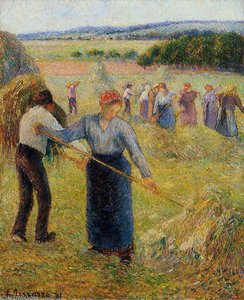
Experience Camille Pissarro’s idyllic Haymaking 1, a vibrant Impressionist scene capturing rural teamwork and the beauty of harvest time – perfect for art lovers and collectors seeking a timeless pastoral masterpiece.
السيرة الذاتية للفنان
كاميل بيسارو، رائد الانطباعية والنيو انبرسيونية، اشتهر بلوحاته الريفية والحضرية التي تجسد الحياة اليومية. أثرت أعماله في فنانين مثل فان جوخ وسيزان، وساهمت في تطوير الفن الحديث.
عن اللوحة
Camille Pissarro’s ‘Haymaking 1’: A Symphony of Rural Labor
Haymaking 1, a captivating depiction of rural life by Camille Pissarro, offers a poignant glimpse into the heart of Impressionist observation. Painted around 1892, this artwork transcends a simple representation of agricultural work; it’s an exploration of human connection, community, and the enduring rhythms of nature. The scene unfolds with remarkable clarity – a bustling farmyard bathed in the warm light of a summer afternoon. Nine figures, rendered with Pissarro's characteristic loose brushstrokes and vibrant palette, are engaged in the meticulous task of gathering hay, their movements suggesting both industry and camaraderie. The sheer abundance of golden hay, meticulously scattered across the field, immediately draws the eye, creating a visual feast that speaks to the bounty of the land.
Impressionist Technique and Color
Pissarro’s mastery lies in his ability to capture fleeting moments and atmospheric effects. Executed with the hallmark Impressionistic technique, Haymaking 1 showcases broken color applied in short, visible strokes. This method wasn't merely a stylistic choice; it was a deliberate attempt to record the way light interacts with surfaces – the shimmering reflections on the hay, the subtle gradations of tone in the sky, and the warmth radiating from the figures themselves. The artist’s use of complementary colors—the blues and oranges—intensifies the vibrancy of the scene, creating a dynamic visual experience. The loose brushwork contributes to an overall sense of movement and immediacy, as if we are witnessing this rural activity unfold before our eyes.
Historical Context: Pissarro and the Rise of Impressionism
Painted in the late 1890s, Haymaking 1 reflects Pissarro’s pivotal role in the development of Impressionism. Having initially embraced Realist principles, he gradually shifted his focus towards capturing the subjective experience of light and color. This work aligns with a period where Pissarro was increasingly interested in depicting everyday scenes of rural life – a departure from the grand historical or mythological subjects favored by earlier generations of artists. His connection to the Société des Artistes Indépendants, a group that championed independent artistic expression, further solidified his position as a key figure in challenging established artistic conventions. The painting’s subject matter—a common, unromanticized view of peasant labor—was deliberately chosen to reflect the burgeoning interest in social realism within the Impressionist movement.
Symbolism and Emotional Impact
Beyond its technical brilliance, Haymaking 1 carries a profound symbolic weight. The act of haymaking itself represents more than just harvesting; it embodies hard work, community cooperation, and the cyclical nature of life. The figures’ engaged postures and shared task evoke a sense of unity and purpose. The painting's emotional impact is one of quiet contentment and appreciation for the simple pleasures of rural existence. It’s a reminder of a time when labor was inextricably linked to sustenance and connection – values increasingly absent in modern society. This artwork offers a serene and evocative portrayal of a timeless scene, inviting viewers to contemplate the beauty and significance of everyday life.
الأسئلة والأجوبة
هل تُعدّ "Haymaking 1" للفنان كاميل بيسارو لوحةً زاهية الألوان أم داكنة؟
من حيث السطوع الملحوظ، يتميز العمل ""Haymaking 1" للفنان كاميل بيسارو" بـ bright.
ما هي الأسباب الكامنة وراء الوضع القانوني لحقوق الطبع والنشر لـ "Haymaking 1" للفنان كاميل بيسارو؟
تعتمد حالة حقوق الطبع والنشر لـ "Haymaking 1" - ملك عام - انتهت مدة حماية حقوق الطبع والنشر الخاصة به - على تاريخ وفاة الفنان في 1903.
هل العمل "Haymaking 1" ضمن الملكية العامة؟
أما بخصوص حقوق الطبع والنشر، فإن "Haymaking 1" تندرج ضمن ملك عام - انتهت مدة حماية حقوق الطبع والنشر الخاصة به.
حقائق سريعة واختبار فني
عن كاميل بيسارو

كاميل بيسارو
1830 - 1903, فرنسا
السيرة الذاتية للفنان
كاميل بيسارو: رائد الانطباعية ونافذة على الحياة اليومية
في قلب حركة الانطباعية، يبرز اسم كاميل بيسارو كشخصية محورية، ليس فقط كمؤلف فني متميز، بل كمرشد وملهم للعديد من الفنانين الذين ساروا على دربه. ولد في شارلوت أمالي بجزر سان توماس، تلك الجزيرة النائية التي كانت حينها جزءًا من الدانمارك الغربية الهندية، في العاشر من يوليو عام 1830، نشأ بيسارو في كنف عائلة يهودية برتغالية الأصل، مما أكسبه خلفية ثقافية فريدة أثرت بشكل كبير على رؤيته الفنية. لم يكن طفولته هادئة؛ فقد انتقل مع عائلته إلى فرنسا ثم عاد إلى سان توماس، حيث عمل في التجارة قبل أن يقرر الانخراط في عالم الفن، مسيرًا بذلك شغفه الذي لا ينضب.
رحلة بيسارو الفنية لم تكن مجرد تطور تقني، بل كانت رحلة استكشافية عميقة للعالم من حوله. بعد فترة تدريب أولية، تأثر بشدة بفنانين الواقعية مثل كوربيه وداوبيني، وسعى في البداية إلى تحقيق الاعتراف في صالون باريس الرسمي. لكن سرعان ما أدرك أن القيود الأكاديمية تعيق قدرته على التعبير عن رؤيته الخاصة. نقطة التحول الحاسمة كانت تبنيه لتقنية الرسم في الهواء الطلق (*plein air*)، وهي ممارسة شجعها كوربيه، والتي سمحت له بالتقاط اللحظات العابرة وتأثيرات الضوء المتغيرة بشكل مباشر من الطبيعة. هذا التحول لم يكن مجرد تغيير فني؛ بل كان انعكاسًا لفلسفة جديدة ترى الجمال في التفاصيل اليومية وفي المشاهد العادية.
من الواقعية إلى الانطباعية: تطور أسلوب بيسارو
شكلت بدايات بيسارو الفنية مزيجًا من التأثيرات الواقعية والانطباعية. كان يولي اهتمامًا كبيرًا بالتفاصيل، لكنه بدأ تدريجيًا في التحرر من القيود الأكاديمية، مستخدمًا ضربات فرشاة أكثر حرية وألوانًا أكثر إشراقًا. تأثر بشكل خاص بأعمال كلود مونيه وإدغار ديغا، اللذين شاركهما شغفه بالتقاط انطباعات بصرية عابرة. ومع ذلك، لم يقتصر بيسارو على تقليد أسلوب أي فنان آخر؛ بل طور أسلوبه الخاص الذي تميز بمزيج فريد من الدقة والحرية، حيث كان يجمع بين التفاصيل الواقعية والتعبير العاطفي.
في عام 1873، لعب بيسارو دورًا حاسمًا في تأسيس جمعية فنية جماعية، وهي مبادرة تهدف إلى توفير بديل للصالون الرسمي. هذه الخطوة لم تكن مجرد محاولة للعثور على منصة لعرض أعماله، بل كانت تعبيرًا عن إيمانه بأهمية الاستقلالية الفنية والتعاون بين الفنانين. كما أنه كان من أوائل الفنانين الذين تبنوا تقنية النقطية (*pointillism*) المستوحاة من جورج سيوارت وبول سيناك، مما يدل على انفتاحه الدائم على التجارب الفنية الجديدة.
"أبو الانطباعية": التأثير والإرث
لقد أطلق عليه الفنانون زملاؤه لقب "أبو الانطباعية"، ليس فقط لأنه كان الأكبر بينهم في السن، بل أيضًا بسبب حكمته وتزامه بالقيم الإنسانية. كان بول سيزان نفسه يصفه بأنه "أب له، رجل يستشير" و"قليلًا مثل الرب الطيب". كما كان مرشدًا لجيل جديد من الفنانين، بمن فيهم فنسان فان جوخ وبول غوغان، الذين استفادوا من توجيهاته ونصائحه. لم يقتصر تأثير بيسارو على الجانب الفني فحسب؛ بل امتد ليشمل الجانب الاجتماعي، حيث كان يصور حياة الفلاحين والعمال البسطاء بتعاطف واحترام.
تتميز لوحات بيسارو بتركيزها على المناظر الطبيعية الحضرية والقروية، وغالبًا ما تصور مشاهد من الحياة اليومية. كان يولي اهتمامًا خاصًا بتصوير تأثيرات الضوء والجو على المشهد، مما يخلق انطباعًا بالديناميكية والحركة. على الرغم من أنه لم يحظ بنفس القدر من الشهرة التي حظي بها بعض زملائه الانطباعيين، إلا أن مساهماته الفنية لا تقدر بثمن، ولا يزال فنه يلهم الملايين حول العالم.
إرث بيسارو: نافذة على عالم متغير
إن إرث كاميل بيسارو يتجاوز مجرد لوحاته الجميلة. إنه يمثل التزامًا بالحرية الفنية، وإيمانًا بقوة الملاحظة والتعاطف، ورغبة في التقاط جوهر الحياة اليومية بكل تفاصيلها. لقد كان فنانًا ملتزمًا بمبادئه، ولم يتنازل عن رؤيته الفنية أبدًا، حتى في مواجهة النقد والتجاهل. اليوم، تُعرض أعماله في أهم المتاحف حول العالم، وتستمر في إلهام وإمتاع الأجيال القادمة. إن فنه ليس مجرد سجل للعالم كما كان؛ بل هو شهادة على قوة الفن في التقاط الجمال والحقيقة والإنسانية.
- الموضوعات الرئيسية: المناظر الطبيعية، مشاهد الحياة اليومية، حياة الفلاحين والعمال
- التقنيات المستخدمة: الرسم في الهواء الطلق (*plein air*)، النقطية (*pointillism*)
- التأثيرات الفنية: كوربيه، داوبيني، مونيه، ديغا
- الفنانون المتأثرون ببيسارو: سيزان، فان جوخ، غوغان
حقائق سريعة عن كاميل بيسارو
- الاسم الكامل: كاميل بيسارو
- الجنسية: فرنسي ودنماركي
- الحركة الفنية: الانطباعية والنيو انطباعية
- الفنانون المؤثرون:
- كوروت
- غوستاف كوربيه
- الفنانون المتأثرون:
- سيزان
- فان جوخ
- غاوجين
- تاريخ الميلاد: 10 يوليو 1830
- مكان الولادة: شارلوت أماليا، سانت توماس
أعمال فنية ذات صلة





استكشف الأعمال الفنية المصنفة حسب الموضوعات والأنماط والخصائص.


كاميل بيسارو
Haymaking 1
() ·
بالإطار: · رُسمت يدوياً بالزيت على الكتان
الإجمالي