Difficult Trial: A Portrait of Scientific Observation
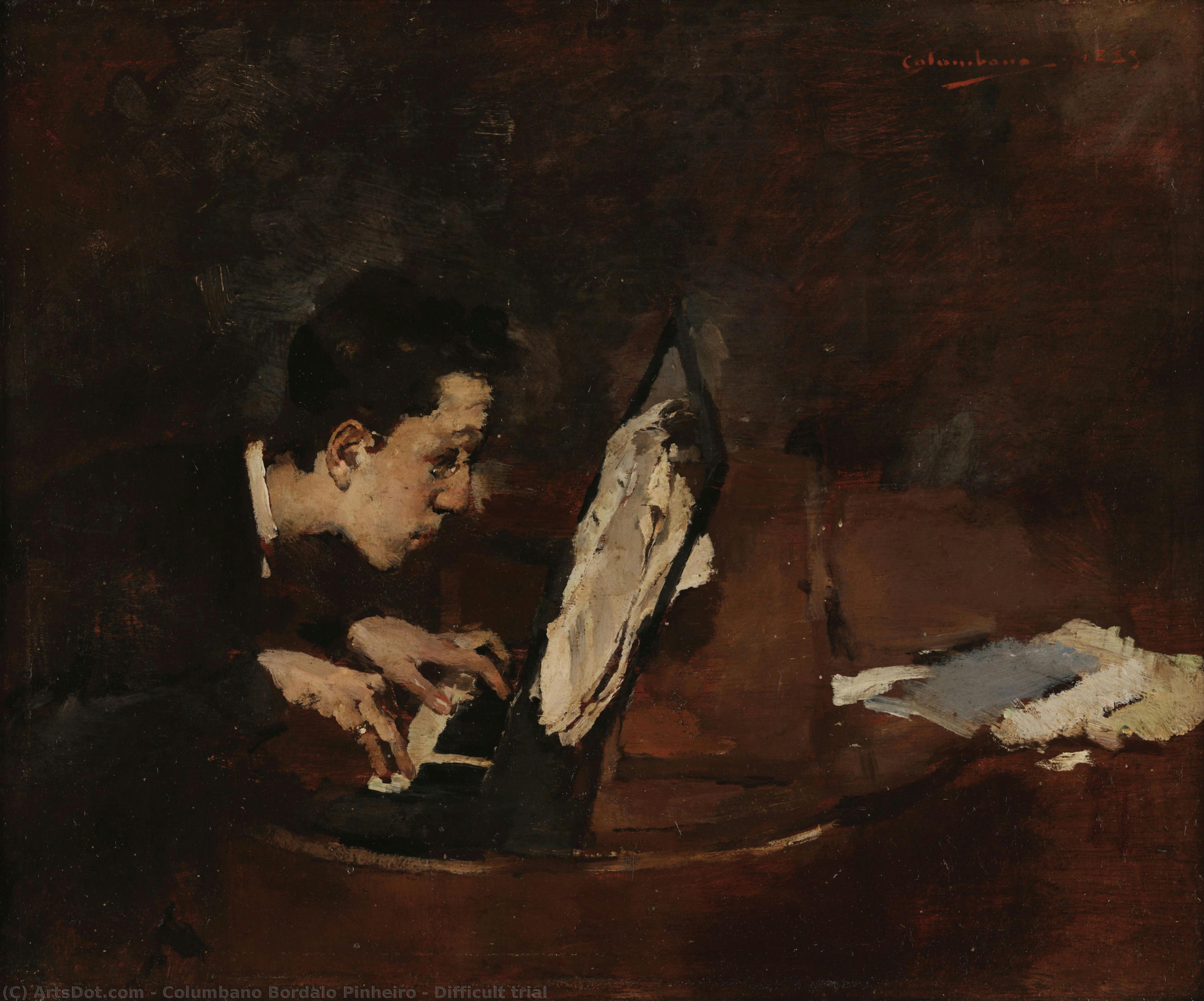
Columbano Bordalo Pinheiro’s “Difficult Trial” stands as a testament to Portugal’s artistic prowess during the late 19th century, capturing not merely an image but a profound psychological exploration. Painted in 1883, this oil on canvas masterpiece delves into themes of intellectual curiosity and contemplative introspection—a hallmark of Bordalo Pinheiro's distinctive style.
The artwork depicts Manuel Gustavo, the nephew of Bordalo Pinheiro himself, meticulously examining a dissected fish specimen under a magnifying glass. This seemingly simple scene is imbued with layers of significance, reflecting Bordalo Pinheiro’s fascination with capturing human emotion and psychological complexity within realistic depictions. The artist skillfully employs naturalism—influenced by movements like Impressionism and Naturalism—to portray Gustavo's focused gaze and the subtle nuances of his surroundings.
Style and Technique: Impasto and Realist Detail
Bordalo Pinheiro’s technique is characterized by impasto, a bold application of paint that creates a palpable textural surface. Thick brushstrokes dominate the composition, emphasizing the physicality of the subject matter and enhancing the overall visual impact. This deliberate manipulation of pigment contributes to an atmosphere of solemn contemplation and invites viewers to engage with the artwork on a tactile level.
The artist’s meticulous attention to anatomical accuracy is evident in the rendering of Gustavo's features and the specimen—a carefully dissected fish—underscoring Bordalo Pinheiro’s commitment to realism. Precise shading and subtle modeling bring forth the contours of the form, mirroring the scientific rigor of the depicted activity.
Color Palette and Composition: Earthy Tones and Focused Perspective
Dominating the color palette are earthy tones—browns, ochres, and muted reds—creating a subdued mood that complements the contemplative nature of the subject. These hues evoke a sense of melancholy and underscore the seriousness of Gustavo’s endeavor. The composition centers around the figure and his immediate environment, establishing a shallow space that draws attention to the focal point: the dissection process.
Lines are used strategically to define form and create depth, guiding the viewer's eye across the canvas. The careful placement of elements contributes to an overall sense of balance and reinforces the artwork’s emotional resonance—a quiet meditation on knowledge, observation, and perhaps a hint of existential questioning.
Symbolism and Emotional Impact: Beyond Representation
"Difficult Trial" transcends mere visual representation; it embodies Bordalo Pinheiro's belief in art as a vehicle for conveying psychological truths. The act of dissection itself symbolizes intellectual pursuit and the confrontation with mortality—themes that resonate deeply within the artwork’s contemplative spirit.
Ultimately, Bordalo Pinheiro’s masterpiece invites viewers to contemplate not only the scientific endeavor depicted but also the inner landscape of human consciousness. It remains a poignant reminder of Portugal's artistic heritage and its ability to capture the complexities of the human experience with unwavering precision and sensitivity.


 شراء نسخة مطبوعة
 مشاركة
 مشاركة
 التفاصيل

 تحميل الملف
 قطع مشابهة
 الأشعة السينية
 عرض شرائح


 عرض المزيد






































 خيار الزجاج متاح فقط للمقاسات التي تقل عن 110 سم



