A Tangled Embrace: Decoding Egon Schiele’s ‘untitled (8429)’
This powerfully emotive work by
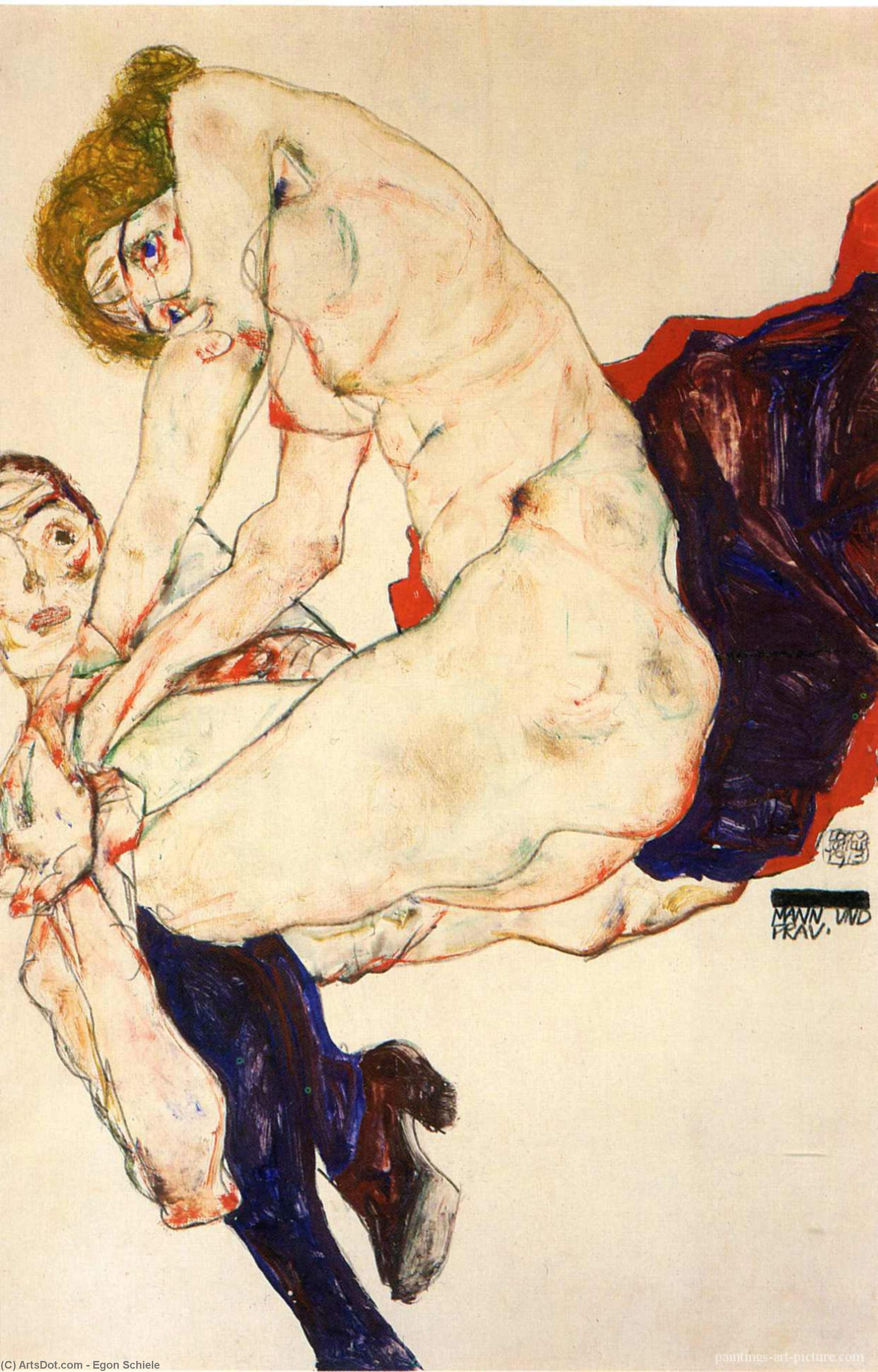
Egon Schiele, known simply as ‘untitled (8429),’ is a quintessential example of early Expressionism at its most raw and psychologically probing. Created with watercolor and gouache on paper, the piece depicts two intertwined male figures locked in a complex embrace that feels both intimate and fraught with tension. It's a work that doesn’t offer easy answers but instead invites contemplation on themes of desire, vulnerability, and the human condition.
Style & Technique: A Masterclass in Expressionist Distortion
Schiele’s style is immediately recognizable – characterized by elongated forms, angularity, and an almost unsettling honesty. ‘untitled (8429)’ exemplifies this perfectly. The figures are not rendered realistically; rather, they are
distorted to convey a heightened emotional state. The loose, visible brushstrokes—a hallmark of his technique—and the impastoed texture contribute to the work’s visceral quality. The application of watercolor and gouache lends a luminous quality, yet the layering creates areas of muddiness that mirror the psychological complexity of the scene. Notice how Schiele utilizes aggressive lines not for precise definition but to create movement and instability, amplifying the sense of unease.
Subject & Composition: A Dance of Conflict and Connection
The composition is deliberately compressed, creating a claustrophobic atmosphere that mirrors the emotional intensity of the subject matter. The figures are positioned diagonally across the canvas, further enhancing this feeling of imbalance. One figure dominates the foreground, his body contorted in what appears to be both surrender and struggle, while the other remains partially obscured, adding an element of mystery. The use of red highlights on their faces draws the viewer’s eye to their expressions – a potent symbol of passion, perhaps even pain. The nude figures themselves were a common subject for Schiele, allowing him to explore themes of sexuality and mortality with unflinching directness.
Historical Context: Vienna's Artistic Revolution
Born in 1890, Egon Schiele was a pivotal figure in the Viennese art scene during a period of significant cultural upheaval. He challenged traditional artistic conventions alongside contemporaries like Gustav Klimt and Oskar Kokoschka, pushing boundaries with his provocative subject matter and expressive style. His work emerged from the Secession movement, which rejected academic art in favor of experimentation and individual expression. Schiele’s short life (he died in 1918 during the Spanish Flu pandemic) was marked by controversy – he even faced obscenity charges for his depictions of sexuality – but his artistic legacy remains profoundly influential.
Symbolism & Emotional Impact: Unveiling Inner Turmoil
‘untitled (8429)’ is not simply a depiction of two bodies; it’s a visual representation of inner turmoil and the complexities of human relationships. The intertwined figures can be interpreted as symbolizing both connection and conflict, dependence and struggle. The deep blue-purple background adds to the sense of melancholy and isolation. The overall effect is deeply unsettling yet undeniably captivating. It's a work that resonates with viewers on a visceral level, prompting questions about desire, vulnerability, and the search for meaning in a chaotic world.
Collecting & Interior Design: A Statement Piece
A reproduction of ‘untitled (8429)’ would serve as a striking focal point in any space. Its bold colors and expressive style make it particularly well-suited to modern or contemporary interiors. The artwork’s emotional depth adds an intellectual layer, making it a conversation starter and a testament to the power of Expressionist art. Consider pairing it with minimalist furniture and neutral tones to allow the artwork's intensity to truly shine.
- Style: Expressionism
- Medium: Watercolor and Gouache on Paper
- Themes: Intimacy, Conflict, Vulnerability, Psychological Turmoil
- Color Palette: Deep Blue-Purple, Pale Flesh Tones, Red Highlights


 معاينة الحجم الحقيقي
 اشترِ لوحة مرسومة يدويًا
 مشاركة
 مشاركة
 التفاصيل

 تحميل الملف
 قطع مشابهة
 الأشعة السينية
 عرض شرائح

 عرض المزيد






































 خيار الزجاج متاح فقط للمقاسات التي تقل عن 110 سم



