A Glimpse into Delacroix’s Dramatic World: “Study for Marphisa”
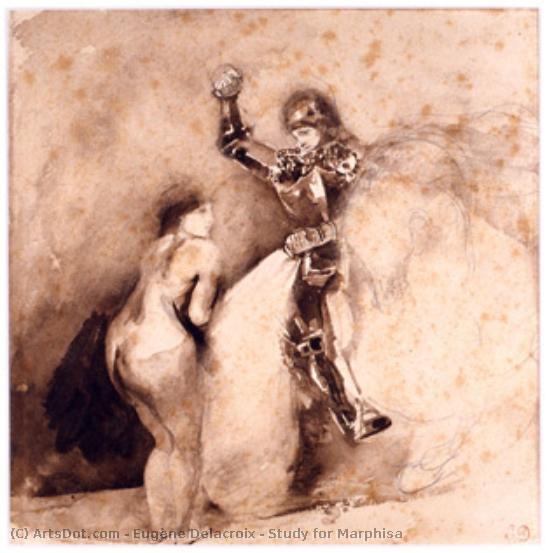
Eugène Delacroix, a name synonymous with French Romanticism, possessed an unparalleled ability to ignite the canvas with passion and movement. While celebrated for grand historical narratives like "Liberty Leading the People," his preparatory studies offer intimate glimpses into the artist’s creative process – and “Study for Marphisa,” created in 1850, is a compelling example. This work isn't merely a sketch; it’s a concentrated burst of energy, capturing a pivotal moment from Ludovico Ariosto’s epic poem *Orlando Furioso*. The scene depicts the formidable female knight Marphisa confronting her rivals, poised for battle with an almost palpable intensity.
The Romantic Spirit in Charcoal and Ink
Delacroix's artistic journey was a deliberate departure from the rigid Neoclassicism that preceded him. He sought inspiration not in the idealized forms of antiquity, but in the vibrant colors and dynamic compositions of Baroque masters like Rubens and Titian, as well as the dramatic chiaroscuro of Spanish painters such as Velázquez. “Study for Marphisa” embodies this Romantic sensibility through its expressive brushwork – visible even in this preliminary rendering – and its focus on emotional impact over precise detail. Executed with a masterful combination of brown ink and pencil, the study showcases Delacroix’s skill in capturing both form and movement. The knight, dominating the composition, is rendered with powerful lines suggesting strength and readiness, while the opposing figure conveys a sense of vulnerability and anticipation. The use of light and shadow isn't merely descriptive; it heightens the drama, drawing the viewer into the heart of the impending conflict.
Marphisa: A Warrior Queen from Ariosto’s Realm
To fully appreciate “Study for Marphisa,” understanding its literary source is crucial. Ariosto’s *Orlando Furioso* is a sprawling tapestry of chivalry, magic, and adventure. Marphisa, one of the poem's most captivating characters, is a warrior queen renowned for her skill in combat and unwavering independence. She challenges societal norms by excelling in traditionally masculine pursuits, embodying a spirit of defiance that resonated with Delacroix’s own rebellious nature. The scene depicted – though a study for a larger composition – encapsulates this essence: Marphisa's dominance is not simply physical; it represents a triumph over convention and expectation. Delacroix was fascinated by literary subjects, seeing in them opportunities to explore themes of heroism, passion, and the complexities of human nature.
A Legacy of Influence
Though a study rather than a finished painting, “Study for Marphisa” is significant not only for its intrinsic artistic merit but also for what it reveals about Delacroix’s working methods. It demonstrates his ability to distill complex narratives into their most essential elements, focusing on gesture and expression to convey emotion. This emphasis on subjective experience and dramatic intensity would profoundly influence subsequent generations of artists, paving the way for Impressionism and Symbolism. Today, owning a reproduction of this work allows one to connect with the spirit of Romanticism and appreciate the genius of an artist who dared to break from tradition and embrace the power of color, emotion, and imagination.


 Preview
 اطلب نسخة مرسومة يدوياً
 مشاركة
 مشاركة
 التفاصيل

 تحميل الملف
 قطع مشابهة
 الأشعة السينية
 عرض شرائح


 عرض المزيد






































 خيار الزجاج متاح فقط للمقاسات التي تقل عن 110 سم



