وصف القطعة الفنية
Georges Braque: A Pioneer of Cubism and Quiet Elegance
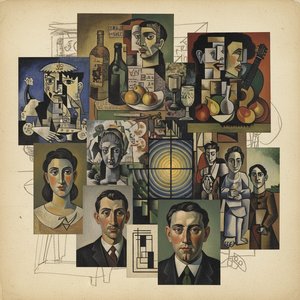
The painting “fireplace,” attributed to Georges Braque (1882-1963), presents a deceptively simple composition—a guitar resting upon a mantelpiece adorned with bowls and chairs—yet it encapsulates the profound innovations of Cubist art while radiating an understated beauty. Executed in 1921, this oil on canvas exemplifies Braque’s masterful exploration of form and space during his pivotal period alongside Pablo Picasso, marking a significant departure from Impressionistic conventions.
Style and Technique: Fragmented Reality
Braque's approach to painting aligns perfectly with the core tenets of Cubism, pioneered in collaboration with Picasso. Unlike traditional representation, where objects are depicted as viewed from a single perspective, Braque dismantles visual reality into geometric planes—cubes, cylinders, and cones—that overlap and intersect simultaneously. This technique isn’t merely stylistic; it reflects a philosophical preoccupation with capturing the multifaceted nature of perception itself. The artist achieves this effect through meticulous layering of paint, creating an illusionistic depth that defies conventional spatial reasoning. Notice how the guitar's contours are broken down into angular fragments, mirroring the fractured perspective presented in the surrounding environment. Sand was incorporated into the paint medium to enhance textural qualities and contribute to the overall visual ambiguity.
Historical Context: The Avant-Garde Spirit of Weimar Germany
The painting emerged during the vibrant artistic landscape of Weimar Germany—a period characterized by intellectual ferment and experimentation fueled by Dadaism, Surrealism, and Expressionism. Braque’s work stands as a testament to this era's desire to challenge established norms and explore new modes of visual expression. The influence of Cézanne is palpable in Braque’s use of flattened planes and simplified forms—Cézanne’s groundbreaking explorations of sculptural space profoundly impacted the younger generation of artists. Furthermore, the painting reflects broader anxieties about modernity and fragmentation prevalent during the interwar years, mirroring the psychological complexities explored by writers like Franz Kafka.
Symbolism: Still Life as Meditation
Beyond its formal innovations, “fireplace” possesses subtle symbolic resonance. The guitar itself—a musical instrument representing creativity and contemplation—is positioned centrally, suggesting an inner focus amidst the external surroundings. The bowls scattered around the mantelpiece could symbolize containment or perhaps represent fragments of memory and experience. The muted palette—primarily earthy tones—contributes to a mood of quiet introspection and serenity. Braque’s deliberate restraint in color underscores the painting's contemplative character, inviting viewers to engage in a dialogue with its visual language.
Emotional Impact: Capturing Atmosphere
Ultimately, “fireplace” succeeds in conveying an atmosphere of understated elegance and intellectual curiosity. It isn’t a dramatic or emotionally charged piece; rather, it invites contemplation—a quiet appreciation for the beauty of form and the complexities of perception. Like many Cubist paintings, this artwork prioritizes visual harmony over narrative storytelling, allowing viewers to immerse themselves in its spatial arrangement and textural nuances. Its enduring appeal lies in its ability to capture a moment of stillness within a dynamic artistic movement, cementing Braque’s legacy as one of the most influential figures in modern art.



 اطلب نسخة مرسومة يدوياً
 مشاركة
 مشاركة
 التفاصيل

 تحميل الملف
 قطع مشابهة
 الأشعة السينية
 عرض شرائح
 عرض المزيد






































 خيار الزجاج متاح فقط للمقاسات التي تقل عن 110 سم