The Channel at Gravelines, Evening: A Symphony of Light and Precision
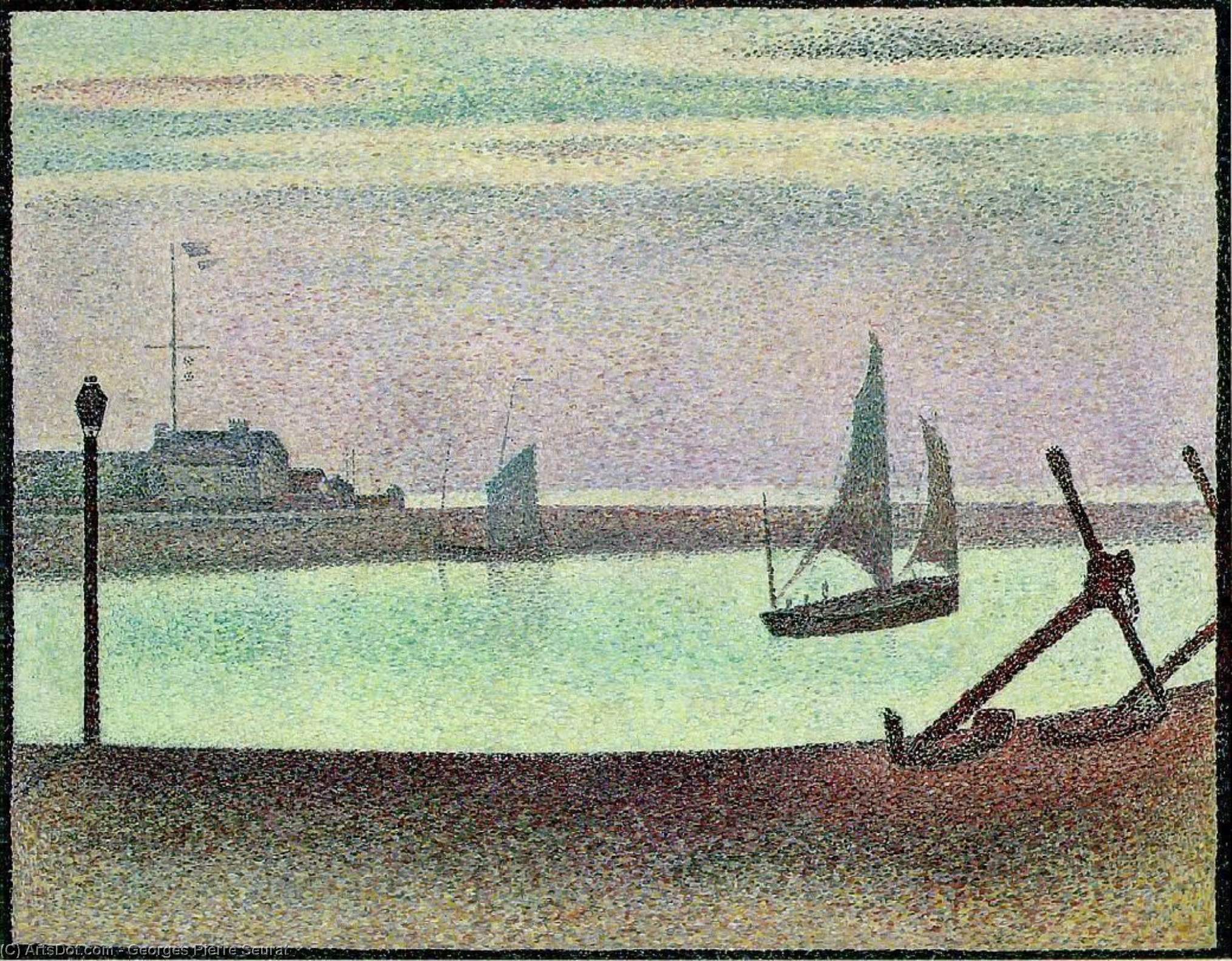
Georges Pierre Seurat’s “The Channel at Gravelines, Evening” (1890) isn't merely a depiction of a harbor; it’s an immersive experience, a meticulously constructed meditation on light, color, and the quiet beauty of the French coast. Housed within the prestigious Museum of Modern Art in New York, this painting stands as a cornerstone of Post-Impressionism, showcasing Seurat’s revolutionary approach to artmaking – a technique he dubbed Pointillism.
The scene unfolds with remarkable clarity: a tranquil harbor bathed in the warm glow of an evening sun. Several boats, rendered with astonishing precision, float upon the water's surface, their reflections shimmering like liquid light. Two sailboats dominate the foreground, their white sails catching the last rays of day, while a single boat ventures closer to the center, adding depth and scale to the composition. A solitary lighthouse, positioned on the left, casts a subtle beam, guiding the viewer’s eye into the heart of the painting – a testament to Seurat's mastery of perspective and spatial relationships.
The Genius of Pointillism
What truly distinguishes “The Channel at Gravelines, Evening” is Seurat’s groundbreaking application of Pointillism. Rather than blending colors directly on the canvas, he employed thousands of tiny dots of pure color – meticulously placed side-by-side – that, when viewed from a distance, create an illusion of blended hues. This technique, born from scientific observation and a desire to capture the optical effects of light with unparalleled accuracy, is what gives the painting its luminous quality and remarkable vibrancy. Notice how the reflections on the water aren't simply painted; they are built up layer upon layer of tiny dots, creating an almost tangible shimmer.
Seurat’s methodical approach demanded immense patience and concentration. Each dot was placed with deliberate intention, contributing to a larger whole that transcends mere representation. This painstaking process reflects his belief in art as a scientific endeavor – a way to understand and reproduce the complexities of light and color through rigorous observation and precise execution.
A Moment Frozen in Time
Beyond its technical brilliance, “The Channel at Gravelines, Evening” evokes a profound sense of peace and contemplation. The stillness of the harbor, the muted colors, and the solitary figure standing near the right edge contribute to an atmosphere of quiet reflection. Seurat wasn’t simply painting a scene; he was capturing a mood – the serenity of twilight, the beauty of the natural world, and perhaps even a hint of melancholy.
The painting's historical context is equally significant. Emerging in the late 19th century, Post-Impressionism represented a reaction against the fleeting impressions of Impressionism. Artists like Seurat sought to impose order and structure onto their work, exploring themes of emotion, symbolism, and subjective experience. “The Channel at Gravelines, Evening” exemplifies this shift, demonstrating Seurat’s commitment to creating works that were both intellectually stimulating and emotionally resonant.
Bringing the Masterpiece Home
TopImpressionists.com offers meticulously crafted hand-painted reproductions of “The Channel at Gravelines, Evening,” allowing you to experience the beauty and brilliance of Seurat's masterpiece in your own space. Our skilled artisans replicate every detail with exceptional accuracy, capturing the luminous quality and intricate texture of the original painting.
Whether for a grand salon or a cozy study, a reproduction of this iconic artwork will undoubtedly become a focal point – a testament to artistic genius and a source of enduring inspiration. Explore our collection today: https://TopImpressionists.com


 شراء نسخة مطبوعة
 مشاركة
 مشاركة
 التفاصيل

 تحميل الملف
 قطع مشابهة
 الأشعة السينية
 عرض شرائح


 عرض المزيد






































 خيار الزجاج متاح فقط للمقاسات التي تقل عن 110 سم



