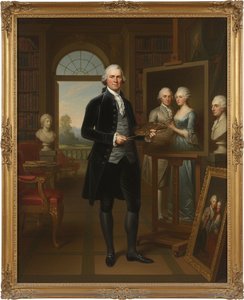
Georgian Man: A Portrait of Caucasus Spirit
Grigory Grigorievich Gagarin’s “Georgian Man,” completed in 1855, stands as a remarkable testament to the artistic fervor of its time and a poignant glimpse into the cultural landscape of Georgia during Mikhail Vorontsov’s reign. More than just a depiction of an individual, this painting embodies the spirit of the Caucasus—a region brimming with tradition, resilience, and captivating beauty.
Gagarin, born in Saint Petersburg to a noble Rurikid family, possessed a singular talent for capturing human emotion through meticulous observation and skillful brushwork. Influenced by Karl Briullov’s teachings, he honed his craft, dedicating himself to portraying the essence of his subjects with sensitivity and precision. His artistic journey coincided with an era marked by literary luminaries like Alexander Pushkin and Mikhail Lermontov, fostering collaborations that enriched Russian art.
- Subject Matter: The painting portrays a Caucasian gentleman dressed in traditional Georgian attire—a blue coat adorned with gold trim—standing on what appears to be sandy soil. This deliberate choice of setting underscores the importance of geographical context within Gagarin’s artistic vision.
- Style & Technique: Executed in oil paint on canvas, “Georgian Man” exemplifies Romanticism's preoccupation with emotion and grandeur. Gagarin employed a muted palette—primarily neutrals—to convey serenity and dignity, prioritizing tonal harmony over vibrant color.
The artist’s meticulous attention to detail is evident in the rendering of facial features and clothing textures. Gagarin skillfully captured the man's gaze, conveying an aura of quiet contemplation and inner strength. The posture exudes confidence without arrogance—a characteristic that speaks volumes about Georgian culture during Vorontsov’s rule.
Historical Context: Created during Mikhail Vorontsov’s governorship, “Georgian Man” reflects the burgeoning interest in documenting Caucasian peoples and traditions. Gagarin's work aligns with a broader movement to celebrate regional identities and artistic innovation. The painting serves as an invaluable record of Georgian society at the mid-nineteenth century.
Symbolism & Emotional Impact: Beyond its formal qualities, “Georgian Man” resonates with deeper symbolic meanings. The gentleman’s attire symbolizes honor and nobility—values deeply ingrained in Georgian heritage. Gagarin's masterful composition evokes feelings of peace, contemplation, and admiration for the Caucasus’s timeless charm. It invites viewers to contemplate the beauty of simplicity and the enduring power of tradition.
Provenance: The painting resides within the Art Palace of Georgia—Museum of Cultural History in Tbilisi—a repository of Georgian artistic treasures. Its inclusion in this prestigious collection underscores its significance as a masterpiece of Romantic art and a symbol of Georgian cultural identity.



 شراء نسخة مطبوعة
 مشاركة
 مشاركة
 التفاصيل

 تحميل الملف
 قطع مشابهة
 الأشعة السينية
 عرض شرائح


 عرض المزيد






































 خيار الزجاج متاح فقط للمقاسات التي تقل عن 110 سم