A Final Bloom of Symbolism: Gustav Klimt’s ‘Adam and Eve’
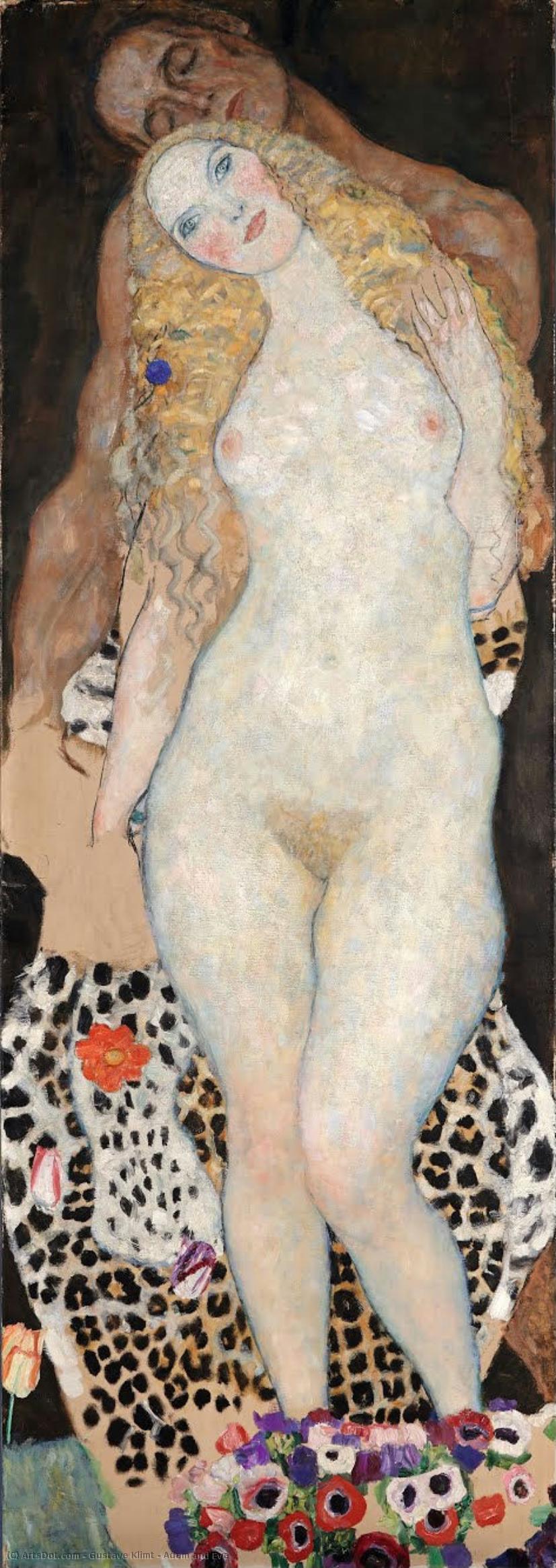
Gustav Klimt’s unfinished “Adam and Eve,” completed shortly before his untimely death in 1918, stands as a poignant testament to the artist's unwavering dedication to exploring profound themes within the framework of Art Nouveau. Unlike many of Klimt’s contemporaries who embraced biblical narratives, he approached this subject with an uncommon focus—not on the dramatic Fall from Grace itself, but rather on Eve’s enduring role as the embodiment of maternal life and regeneration.
- Subject Matter: The painting depicts Adam and Eve, figures central to Christian mythology, positioned in close proximity, symbolizing intimacy and connection.
- Style & Technique: Klimt's distinctive style—characterized by opulent ornamentation and intricate geometric patterns—is powerfully evident here. He employed the revolutionary technique of gold leaf application, a hallmark of his “Golden Phase,” elevating the artwork to an almost ethereal level of beauty and grandeur.
Klimt’s artistic vision transcends mere representation; he seeks to capture something timeless—the primal essence of femininity and fertility. The depiction of Eve is strikingly unconventional for its time, eschewing idealized beauty in favor of a voluptuous figure draped in flowing robes adorned with vibrant floral motifs. These blossoms – specifically anemones – serve as potent symbols of rebirth and springtime, underscoring Klimt’s preoccupation with the cyclical nature of existence.
- Symbolism: The leopard skin behind Eve represents Eros—the Greek god of desire—a forceful presence that contrasts sharply with the delicate softness of Eve's flesh. This juxtaposition highlights the tension between instinctual passion and spiritual contemplation, a recurring motif in Klimt’s oeuvre.
Klimt meticulously crafted the painting’s tonal palette, prioritizing the luminous glow emanating from Eva’s body. The radiant warmth of her skin is deliberately juxtaposed against Adam's cooler complexion, creating a visual dialogue that emphasizes their contrasting roles within the narrative. This masterful use of color contributes significantly to the artwork’s emotional impact—a feeling of serene contemplation mingled with sensual allure.
“Adam and Eve” remains an unforgettable masterpiece, capturing Klimt’s artistic genius at its zenith. Its unfinished state only amplifies its mystique, inviting viewers to contemplate the artist's final creative impulse and the enduring power of symbolism in conveying universal human experiences. Explore a stunning reproduction today on TopImpressionists.com.


 معاينة الحجم الحقيقي
 اشترِ لوحة مرسومة يدويًا
 مشاركة
 مشاركة
 التفاصيل

 تحميل الملف
 قطع مشابهة
 الأشعة السينية
 عرض شرائح


 عرض المزيد






































 خيار الزجاج متاح فقط للمقاسات التي تقل عن 110 سم