A Portrait of Grace Amidst Floral Flourish
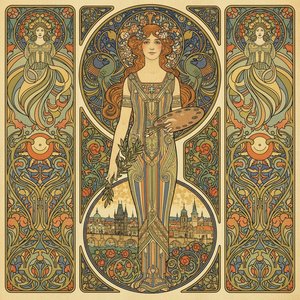
Gustav Klimt’s “Ballerina” transcends mere representation; it embodies a profound exploration of femininity, artistry, and the ephemeral nature of beauty. Completed in 1916-17 during Klimt's celebrated “Golden Phase,” this monumental canvas captures a ballerina poised with captivating poise—a figure simultaneously vulnerable and resolute—within an opulent tapestry of blossoms that speaks volumes about Art Nouveau’s fascination with organic forms and decorative splendor.
- Composition & Perspective: The vertical orientation emphasizes the dancer's stature, anchoring her within a flattened perspective characteristic of Klimt’s style. This deliberate simplification prioritizes visual impact over realistic spatial depth, aligning perfectly with Art Nouveau’s rejection of academic conventions and its embrace of decorative abstraction.
- Color Palette & Texture: Klimt employs an extraordinarily rich color palette dominated by warm hues—gold, ochre, crimson—interwoven with subtle shades of lavender and teal. Layered glazes and impasto technique create a luminous surface brimming with textural variation, mirroring the tactile richness of the floral backdrop and conveying a palpable sense of warmth and vibrancy.
The Language of Flowers: Symbolism in Klimt’s Floral Tapestry
More than just ornamentation, the swirling arrangement of roses, lilies, and other blossoms serves as a conduit for symbolic meaning. Traditionally associated with love, purity, and rebirth, these flowers encapsulate themes central to Art Nouveau's spiritual ethos—a yearning for transcendence and an appreciation of nature’s transformative power. Klimt skillfully utilizes floral motifs to heighten the painting’s emotional resonance, suggesting that beauty itself is fleeting yet eternally significant.
Technique & Artistic Influences: Mastering Decorative Impressionism
Klimt's masterful technique—primarily oil paint applied in multiple glazes and textured impasto—represents a pivotal moment in artistic history. He seamlessly blends elements of Symbolism with Byzantine influences, mirroring the grandeur and spiritual contemplation found in Orthodox iconography. This fusion results in an aesthetic that prioritizes decorative impressionism: capturing fleeting moments of light and color while simultaneously constructing intricate patterns and textures that engage the viewer’s senses on a visceral level.
A Legacy of Sensuality & Artistic Vision
"Ballerina" stands as a testament to Klimt's unparalleled ability to fuse artistic innovation with emotional depth. Its enduring appeal lies in its evocative portrayal of feminine grace and beauty—a celebration of artistry that continues to inspire collectors and interior designers alike. The painting’s luminous surface, combined with its symbolic richness, invites contemplation on themes of life, death, and the transformative power of art itself.



 Preview
 اطلب نسخة مرسومة يدوياً
 مشاركة
 مشاركة
 التفاصيل

 تحميل الملف
 قطع مشابهة
 الأشعة السينية
 عرض شرائح
 عرض المزيد






































 خيار الزجاج متاح فقط للمقاسات التي تقل عن 110 سم