وصف القطعة الفنية
A Glimpse into Klimt’s Forest Reverie: “Fir Forest I”
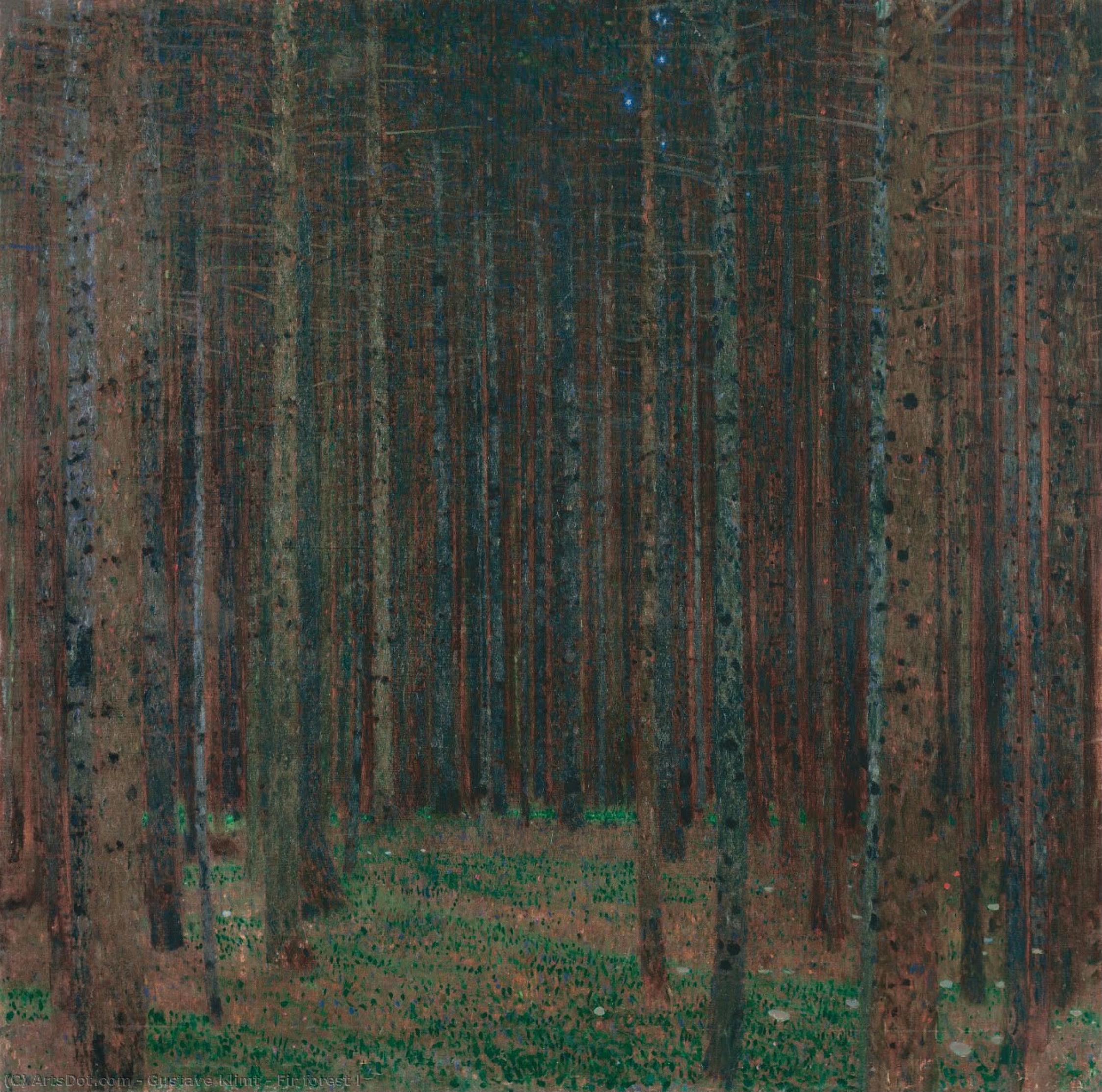
Gustav Klimt's “Fir Forest I,” painted around 1901, offers a captivating departure from the opulent portraits and shimmering surfaces for which he is most celebrated. This landscape, rendered in oil on canvas with dimensions of 90 x 90 cm, reveals a more introspective side of the artist, inviting viewers into a tranquil yet subtly complex woodland scene. While Klimt’s name immediately conjures images of gold leaf and decorative extravagance, “Fir Forest I” demonstrates his versatility and profound connection to nature, showcasing a delicate balance between observation and symbolic expression. The painting isn't merely a depiction of trees; it is an evocation of atmosphere, a mood piece steeped in the burgeoning Symbolist aesthetic that defined Vienna at the turn of the century.
The Secession’s Embrace of Nature
To understand “Fir Forest I,” one must consider Klimt’s position within the Vienna Secession movement. Founded in 1897 by Klimt and a group of like-minded artists, the Secession rejected the conservative artistic establishment and sought to forge a new path—one that embraced modernity, symbolism, and individual expression. While initially focused on decorative arts and architecture, the Secessionists increasingly turned their attention to landscape painting as a means of exploring themes of spirituality, emotion, and the relationship between humanity and nature. Klimt’s foray into forest scenes during this period wasn't isolated; it reflected a broader artistic trend within the Secession, a yearning for authenticity and a rejection of academic conventions. His earlier work often involved decorative murals and architectural paintings – skills honed at the Kunstgewerbeschule – but with the Secession came freedom to explore personal vision. This painting feels like that freedom realized, a quiet rebellion against expectation.
Technique and Symbolism Woven into the Woods
Klimt’s technique in “Fir Forest I” is characteristically nuanced. He employs a layered approach to paint application, building up texture and depth through subtle variations in color and brushwork. The trees themselves aren't rendered with meticulous detail; instead, they are suggested through washes of green and brown, creating an impressionistic effect that emphasizes the overall atmosphere rather than precise botanical accuracy. Hints of wildflowers peek through the foliage, adding delicate touches of color and suggesting a hidden vitality within the forest’s depths. The composition is deliberately flattened, drawing attention to the surface of the canvas and echoing the decorative qualities found in his more famous works. While not overtly symbolic, the forest itself can be interpreted as representing the subconscious mind—a place of mystery, introspection, and untamed emotion. The density of the trees might symbolize challenges or obstacles, while the glimpses of light filtering through the canopy suggest hope and renewal.
An Emotional Resonance for Modern Interiors
“Fir Forest I” possesses a unique emotional resonance that makes it particularly appealing to contemporary audiences. Its subdued palette and tranquil atmosphere create a sense of calm and serenity, making it an ideal addition to modern interiors seeking a touch of natural beauty and artistic sophistication. Unlike Klimt’s more flamboyant pieces, this landscape offers a subtle elegance—a quiet statement piece that invites contemplation rather than demanding attention. A high-quality reproduction of “Fir Forest I” allows art lovers to experience the artist's vision firsthand, bringing a sense of peace and harmony into their homes or offices. It is a testament to Klimt’s enduring legacy – his ability to capture not just what he saw, but how it *felt* to be immersed in the natural world.


 معاينة الحجم الحقيقي
 اشترِ لوحة مرسومة يدويًا
 مشاركة
 مشاركة
 التفاصيل

 تحميل الملف
 قطع مشابهة
 الأشعة السينية
 عرض شرائح

 عرض المزيد






































 خيار الزجاج متاح فقط للمقاسات التي تقل عن 110 سم