A Hazy Reverie: Unveiling Klimt’s Untitled Portrait
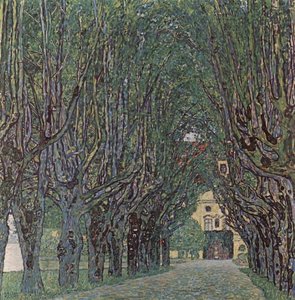
Within the captivating realm of Gustav Klimt's oeuvre lies an untitled portrait – designated “7103” – that whispers with the delicate allure of a dream. This is not a work shouting for attention, but rather one drawing you into its embrace through a haze of muted blues and browns, a testament to Klimt’s mastery of atmosphere and emotional resonance. The painting centers on a woman, her figure occupying most of the canvas, creating an intimate connection with the viewer. She isn't presented as a distant icon, but as someone almost within reach, caught in a moment of quiet contemplation.
Echoes of Art Nouveau and Klimt’s Golden Touch
Though lacking the overt gold leaf that defines much of Klimt’s celebrated “golden phase,” this portrait is undeniably steeped in the spirit of Art Nouveau. The flowing lines, though implied rather than sharply defined, evoke a sense of organic grace, mirroring the natural world and its inherent beauty. Klimt's influence from Japanese art is subtly present in the flattened perspective and decorative sensibility. He wasn’t merely replicating styles; he was synthesizing them into something uniquely his own – a visual language that spoke to the anxieties and desires of fin-de-siècle Vienna. The woman’s dress, a soft shade of blue, contributes to this ethereal quality, suggesting fragility and perhaps a touch of melancholy. It's a color often associated with introspection and the intangible realm of emotions.
A Masterclass in Technique: Layered Glazes and Atmospheric Depth
The technical brilliance of “untitled (7103)” lies in Klimt’s meticulous layering of thin glazes of oil paint. This painstaking process builds up color and texture gradually, creating a surface that seems to shimmer with an inner light. The brushwork is loose and expressive, prioritizing mood over precise representation. Details are softly rendered, allowing the viewer's eye to wander and complete the image, fostering a sense of personal connection. There’s a deliberate lack of strong shadows, which further enhances the hazy atmosphere, enveloping the subject in an almost dreamlike state. This isn’t about capturing photographic realism; it’s about conveying a feeling, an impression – a fleeting moment suspended in time.
Symbolism and Emotional Impact: A Window into the Soul
The symbolism within this portrait is subtle yet profound. The woman's direct, yet slightly distant gaze invites contemplation, prompting us to wonder about her inner world. Is she lost in thought? Is she aware of our presence? Klimt often explored themes of femininity, desire, and mortality in his work, and these undercurrents are present here as well. While the painting doesn’t offer definitive answers, it encourages a dialogue between the artwork and the viewer. The overall effect is one of quiet elegance and understated power – a testament to Klimt's ability to capture not just a likeness, but the very essence of human emotion.



 معاينة الحجم الحقيقي
 التحويل إلى لوحة مرسومة يدوياً
 مشاركة
 مشاركة
 التفاصيل

 تحميل الملف
 قطع مشابهة
 الأشعة السينية
 عرض شرائح
 عرض المزيد






































 خيار الزجاج متاح فقط للمقاسات التي تقل عن 110 سم