A Moment of Artistic Introspection
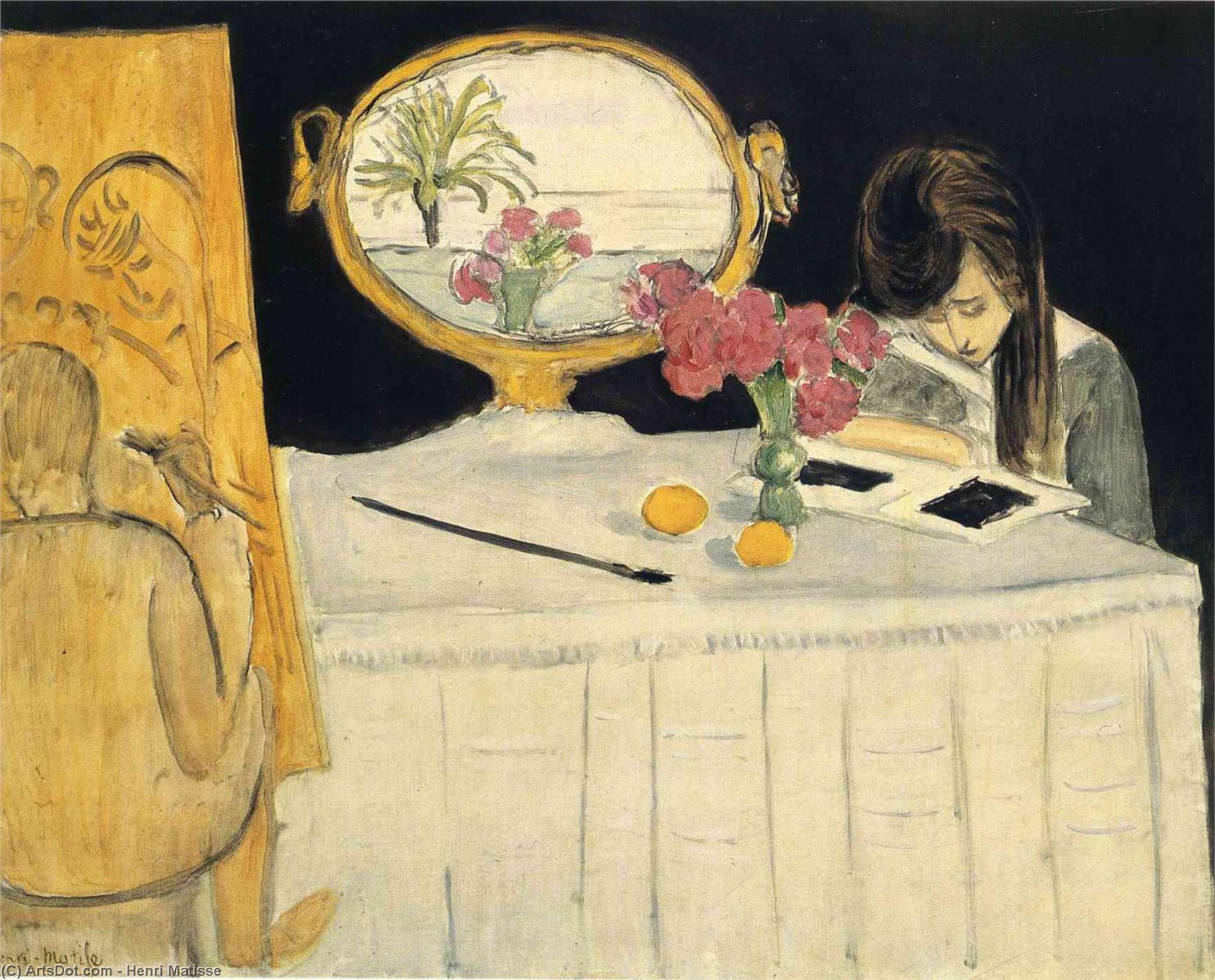
This captivating work by Henri Matisse presents a compelling scene of domesticity intertwined with artistic creation. A woman is depicted seated at a table, deeply engrossed in her drawing or painting – a private moment rendered with the artist’s signature flair for color and form. The piece invites us into the intimate world of an artist at work, contemplating both the external landscape and her own inner vision.
Stylistic Affinities & Artistic Lineage
While definitively attributable to Matisse's oeuvre, this untitled work showcases characteristics aligning with his Post-Impressionist period. The loose, expressive brushstrokes are a hallmark of this style, prioritizing the emotional impact and visual sensation over strict representational accuracy.
Unlike earlier academic works, here we see a liberation from precise detail, echoing influences from artists like Chardin and Watteau – masters Matisse admired for their ability to imbue everyday scenes with profound meaning. However, it’s also a stepping stone towards the bolder color palettes and simplified forms that would define his later Fauvist and decorative periods.
Technique & Compositional Harmony
Matisse masterfully employs oil or acrylic paint on canvas (based on texture analysis) to create a tactile and visually rich surface. The composition is thoughtfully divided into foreground, midground, and background. Strong horizontal lines establish the stability of the table, while diagonal elements – notably in the easel’s structure and the woman's posture – introduce dynamic energy. The use of light is soft and diffused, gently modeling forms and creating a sense of quiet contemplation. The flattened perspective draws the viewer closer to the scene, enhancing its intimacy.
Symbolism & Narrative Layers
The inclusion of a mirror reflecting a coastal landscape adds a layer of symbolic depth. Mirrors frequently appear in art as metaphors for self-reflection and duality. Here, it suggests not only an external view but also the artist’s internal world – her thoughts, emotions, and creative process. The objects surrounding the woman—flowers, fruit, artistic tools—are not merely props; they contribute to a narrative of observation, inspiration, and the beauty found in everyday life.
The still life elements themselves become subjects of contemplation, mirroring the artist’s focus on capturing essence rather than mere appearance.
Emotional Resonance & Historical Context
This work evokes a melancholic yet thoughtful mood. It's a quiet meditation on creativity, observation, and the human condition. Created during a period when Matisse was transitioning away from traditional academic styles (late 19th/early 20th century), it represents a pivotal moment in his artistic development – a time of experimentation and self-discovery. The painting offers a glimpse into the artist’s process and invites viewers to connect with the universal themes of introspection, inspiration, and the pursuit of beauty.
Considerations for Collectors & Designers
- Aesthetic Appeal: The work's harmonious color palette and expressive brushwork make it a visually engaging piece suitable for various interior styles.
- Conversation Starter: Its intriguing subject matter and symbolic depth are sure to spark conversation among guests.
- Versatility: The painting’s relatively subdued tones allow it to complement a wide range of color schemes and furnishings.
- Investment Potential: As an example of Matisse's evolving style, this piece holds significant artistic value and potential for appreciation.


 معاينة الحجم الحقيقي
 التحويل إلى لوحة مرسومة يدوياً
 مشاركة
 مشاركة
 التفاصيل

 تحميل الملف
 قطع مشابهة
 الأشعة السينية
 عرض شرائح
 عرض المزيد






































 خيار الزجاج متاح فقط للمقاسات التي تقل عن 110 سم



