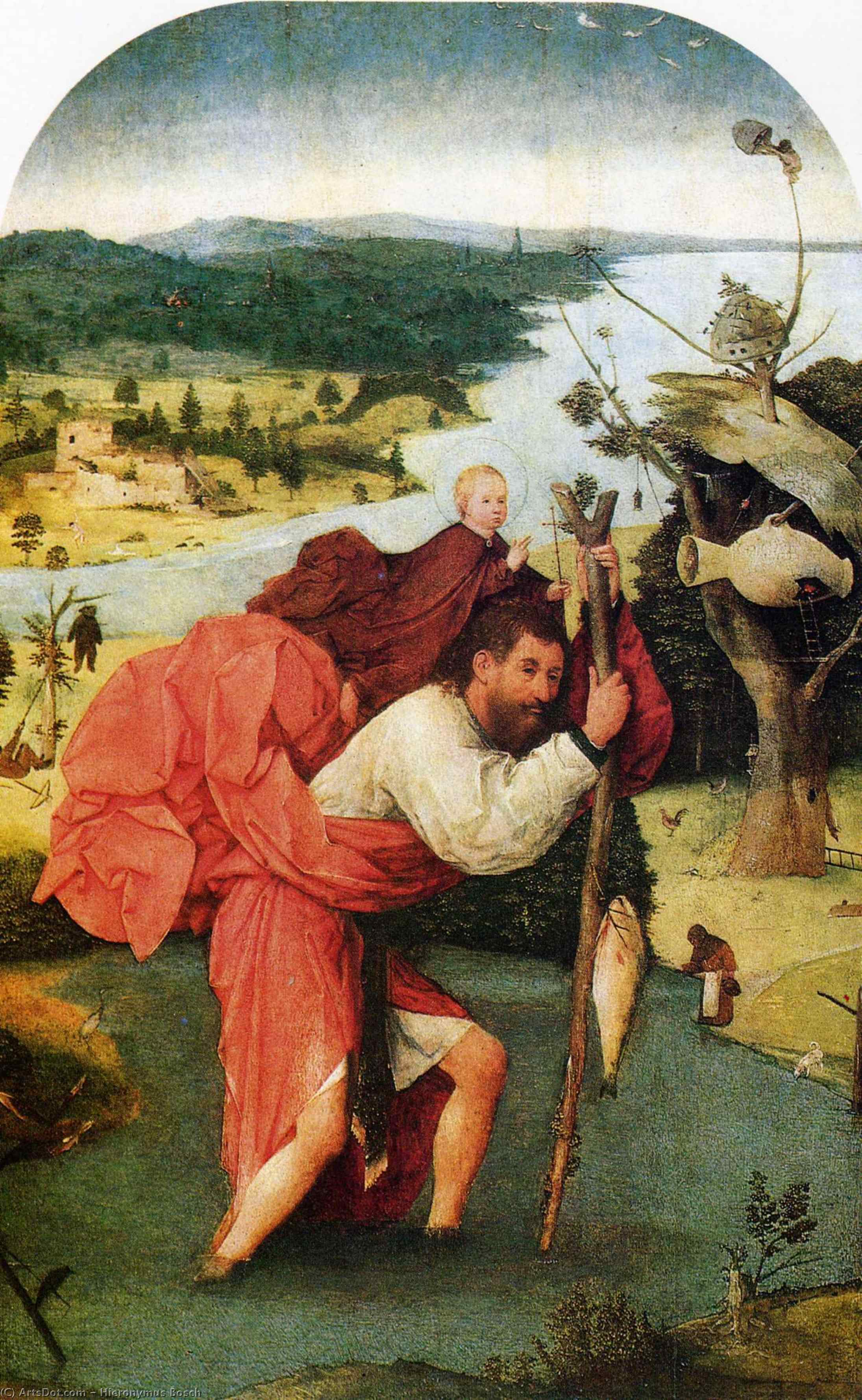
Saint Christopher Carrying the Christ Child – A Vision of Faith and Suffering
Hieronymus Bosch’s “Saint Christopher Carrying the Christ Child” stands as a haunting testament to the anxieties of late medieval Europe, rendered in his signature style—a meticulously detailed depiction brimming with unsettling symbolism that continues to fascinate scholars and artists alike. Painted sometime between 1490 and 1516 during Bosch's prolific artistic output, this monumental artwork transcends mere religious iconography; it delves into profound psychological explorations of morality, temptation, and the human condition.
- Subject Matter: The painting portrays Saint Christopher, venerated as a martyr who carried Jesus across the Jordan River, embodying selfless devotion and unwavering faith. Alongside him is the infant Jesus, symbolizing divine innocence and vulnerability – a juxtaposition that immediately establishes a tension between earthly duty and spiritual purity.
- Style & Technique: Bosch’s distinctive style—characterized by fantastical imagery, grotesque figures, and meticulous realism—is evident throughout the composition. The artist employs hatching and cross-hatching techniques to create depth and texture, meticulously rendering every element of the scene with astonishing precision. This painstaking attention to detail contributes to the unsettling atmosphere of the artwork.
- Historical Context: Bosch’s work emerged during a period marked by religious upheaval and societal anxieties surrounding papal authority and demonic influence. The painting reflects the pervasive preoccupation with sin, judgment, and the eternal afterlife prevalent in the intellectual climate of his time—a reflection of the broader artistic trends of the Northern Renaissance.
Symbolism: Layers of Meaning Beyond Appearances
Bosch’s genius lies not merely in his technical prowess but also in his masterful use of symbolism. The three birds circling above represent various aspects of human nature—one perched on a skull signifies mortality, another embodies temptation and deceit, while the third symbolizes divine grace. These avian figures are strategically positioned to dominate the visual field, emphasizing the omnipresent influence of spiritual forces.
- The Boat: The humble boat traversing the river serves as a metaphor for humanity’s journey through life—a perilous voyage fraught with obstacles and uncertainties. Its weathered appearance underscores the hardships endured by pilgrims seeking salvation.
- Detailed Figures: Bosch meticulously portrays each individual in the scene, imbuing them with psychological complexity. The figures are rendered with exaggerated proportions and expressions, conveying emotions of fear, compassion, and piety—reflecting the artist’s fascination with human psychology and his ability to capture inner turmoil.
Emotional Impact: A Disturbingly Beautiful Revelation
"Saint Christopher Carrying the Christ Child" compels viewers to confront uncomfortable truths about human morality and spiritual aspiration. Bosch's unsettling depiction evokes a visceral reaction—a blend of fascination, apprehension, and profound contemplation. The artwork’s beauty resides precisely in its disturbing quality, prompting reflection on themes of suffering, redemption, and the eternal struggle between good and evil.
This extraordinary piece continues to inspire artists and scholars alike, cementing Bosch's place as one of the most influential figures in European art history. Its enduring power stems from Bosch’s ability to distill complex theological concepts into unforgettable visual imagery—a testament to his unparalleled artistic vision.


 Preview
 اطلب نسخة مرسومة يدوياً
 مشاركة
 مشاركة
 التفاصيل

 تحميل الملف
 قطع مشابهة
 الأشعة السينية
 عرض شرائح
 عرض المزيد






































 خيار الزجاج متاح فقط للمقاسات التي تقل عن 110 سم



