

المعروض: · بالإطار:
 معاينة الحجم الواقعي
 مشاركة
 مشاركة
 التفاصيل
 دليل
دليل

 تحميل الملف
 قطع مشابهة
 الأشعة السينية
 عرض شرائح
 الأسئلة والأجوبة
 الإحصائيات

E£ 14070
نسخة زيتية مرسومة يدوياً
لوحة زيتية مرسومة يدوياً على الكانفاس بالمقاس والإطار الذي تفضله، تُنفذ حسب الطلب على أيدي فنانينا. ( التبديل إلى نسخة مطبوعة الانتقال إلى الصورة الرقمية)
المقاس
·قياسي
حسب الطلب
CM
INCH
اختر من بين أحجامنا المُعدّة مسبقاً والتي تتوافق مع النسب الأصلية للعمل الفني.
جاري تحميل المقاسات...

العرض
الارتفاع
أدخل العرض والارتفاع اللذين تحتاجهما ليتناسب العمل مع إطارك أو جدارك. وبما أن هذه اللوحة مرسومة يدوياً، ففي حال اختيار مقاس بأبعاد مختلفة، يمكن للفنان رسم مساحة إضافية حول الصورة أو تقليصها قليلاً — الخيار لك. سنرسل لك نموذجاً رقمياً تجريبياً لاعتماده قبل البدء في الرسم. علماً بأن الصورة المعروضة في هذه الصفحة لا تعكس النتيجة النهائية الحقيقية، فالنموذج التجريبي هو الوحيد الذي يوضح ذلك بدقة.
 للمزيد من المعلومات
إنهاء
·
أبيض E£1

حواف ضبابية E£1

ممتد الحواف E£1

P118B E£10

P118H E£10

P118W E£10

P438Z E£10

P508JH E£12

P508YH E£12

P805H E£10

P805Z E£10

P919BZ E£10

P919G E£10

P919XJ E£10

P959ZH E£10

P968JZ E£12

W106C E£8

W218G E£10

W218JH E£8

W218Y E£10

W307PJ E£10

W316G E£10

W316PJ E£8

W316Y E£10

W398PJ E£8

W4111J E£10

W500HY E£15

W500JH E£15

W692G E£12

W849H E£8

W940BG E£15

W953PJ E£8

H24-GOLD E£30

H24-SILVER E£30

H36-GOLD E£45

H36-SILVER E£45
تُشحن في أنبوب واقٍ، لتكون جاهزة للتأطير لدى فني الإطارات الخاص بك.
للقطع التي يتجاوز طولها ١٠٥ سم، يتم شحن الإطار كمجموعة مخصصة لخبراء التأطير — اقرأ التفاصيل.
خدمات إضافية
اختياريماذا تشمل الإضافات؟
أمثلة على ما يمكن تغييره: استبدال الوجه بصورة العميل؛ إضافة حيوان أليف (على سبيل المثال، استبدال قطة بكلب)؛ تضمين رسالة مخفية في الخلفية؛ تغيير المناظر الطبيعية أو العناصر في الخلفية.
بعد الطلب، سيقوم فريق TopImpressionists.com بمراسلة العميل عبر البريد الإلكتروني للحصول على التعليمات وتزويده بمعاينة تجريبية للعمل
بعد الطلب، سيقوم فريق TopImpressionists.com بمراسلة العميل عبر البريد الإلكتروني للحصول على التعليمات وتزويده بمعاينة تجريبية للعمل
توصيل عالمي إلى خلال 3 إلى 4 أسابيع بدلاً من المدة المعتادة البالغة 5 أسابيع. (5 نوفمبر). جودة لا تهاون فيها.
ورنيش واقٍ
بطاقة التعريف
تفاصيل اللوحة البرونزية المحفورة
This elegant plaque features the artist's name and the title of the artwork, finely engraved for a timeless presentation.
It is made from bronze with a refined, elegant finish. The text is precisely laser-engraved for a sharp and permanent result. Measuring 9x2 cm, the plaque is compact yet easy to read. It's built to be durable and scratch-resistant, offering a professional, museum-quality look. Mounting is simple thanks to the included adhesive backing.
تفاصيل اللوحة الأكريليكية الشفافة
The plaque includes essential engraved details such as the artist's name, the title of the artwork, the date it was created, the type of media used-like oil on canvas or watercolor-a brief description of the piece, and a QR code that links to the complete artwork information.
It is crafted from clear acrylic, offering a sleek, modern appearance. The text is UV-engraved in black to ensure strong visual contrast. With a size of 10x15 cm, it ensures optimal readability. It comes equipped with two metal hooks for secure wall mounting. The plaque is designed to be weather-resistant, making it suitable for various environments, and it includes interactive features that work seamlessly with smartphone scanning.
تفاصيل اللوحة الأكريليكية السوداء
This elegant plaque includes engraved information such as the artist's name, the title of the artwork, the date it was created, the type of media used (like oil on canvas or watercolor), a short description of the artwork, and a QR code for quick access to more information.
The plaque itself is made from refined black acrylic with a premium finish. The text is laser-engraved in white for high contrast and readability. Its size is 10x15 cm, designed to be easy to read. It comes with two metal hooks for professional mounting. The design is sleek and fits any interior style. It is also weather-resistant and durable, with built-in digital integration for mobile compatibility.
خيار الزجاج متاح فقط للمقاسات التي تقل عن 110 سم
 خيار الزجاج متاح فقط للمقاسات التي تقل عن 110 سم
- شحن سريع ومجاني لجميع أنحاء العالم
- قماش كتان عالي الجودة
- تأمين شامل على الشحن
- ضمان استرداد الرسوم الجمركية
- ضمان مطابقة الألوان الحقيقية
- سياسة الإرجاع خلال 100 يوم (في حالات العيوب فقط)
- ضمان استرداد نقدي بنسبة 100%
- خصم عند طلب كميات


وصف القطعة المقتناة
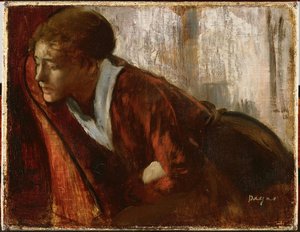
استكشف "حزن" لـ إدغار دغا، لوحة بورتريه مؤثرة تجسد التأمل والعمق العاطفي. تحفة فنية من عام 1874، محفوظة في مجموعة فيليبس، تعرض أسلوبه المميز وعمقه النفسي.
السيرة الذاتية للفنان
إدغار ديغا: فنان فرنسي ثوري اشتهر بلوحاته الساحرة لراقصات الباليه ومشاهده الباريسية وتقنياته المبتكرة - سيد حقيقي للفن الحديث!
عن اللوحة
The Enigmatic Depths of “Melancholy” by Edgar Degas
Edgar Degas, a name synonymous with Impressionism yet profoundly resistant to easy categorization, offers us in "Melancholy" (1874) a work that transcends simple portraiture. Housed within the esteemed Phillips Collection, this painting isn’t merely a depiction of a woman; it's an invitation into the quiet contemplation of the human psyche—a testament to Degas’s extraordinary ability to capture not just appearances but the very essence of emotion. The piece immediately draws the eye with its carefully orchestrated composition: a woman, partially veiled by a curtain, positioned within a space defined by rich, layered colors and subtle gestures. It's a scene pregnant with unspoken narratives, inviting viewers to become active participants in deciphering her inner world.
Degas’s artistic vision is rooted in his meticulous observation of the world around him, a characteristic that aligns perfectly with his self-proclaimed status as a realist. He wasn’t interested in grand historical scenes or idealized beauty; instead, he sought to portray the everyday lives of ordinary people—and here, particularly, the complexities of female experience. The painting's palette is masterfully controlled – the dominant red of the woman’s clothing and furnishings creates a vibrant focal point, expertly balanced against the cooler blues and greens that permeate the background. This interplay of color isn’t merely decorative; it subtly reinforces the mood of introspection and perhaps even sadness that permeates the scene.
Symbolism Woven into the Fabric of the Image
The most striking element of “Melancholy” is undoubtedly the woman herself, her face partially obscured by the curtain. This deliberate concealment isn’t simply a stylistic choice; it functions as a potent metaphor for the barriers we erect between ourselves and our own emotions. The curtain becomes a visual representation of the ‘veil’ separating the external world from the internal landscape—a space where thoughts, feelings, and memories reside in quiet contemplation. Her downward gaze, tilted slightly to the left, is crucial. It speaks volumes about her state of mind: she's not looking outward, but inward, lost in a private reverie.
Beyond this central image, subtle details contribute to the painting’s layered symbolism. The arrangement of furniture—a sofa, a fireplace—suggests a domestic setting, yet it feels strangely sterile and devoid of warmth. This contributes to the overall sense of isolation and melancholy. Even the lighting, with its dramatic interplay of light and shadow, reinforces this mood, casting long shadows that seem to deepen the woman’s solitude.
A Masterpiece within the Context of Symbolism
“Melancholy” is a pivotal work in Degas's oeuvre, firmly situated within the broader context of Symbolist painting. Emerging in the late 19th century, Symbolism sought to explore the realm of subjective experience—the hidden depths of human consciousness and the power of emotions. Artists like Edvard Munch and James Ensor were deeply influenced by this movement’s emphasis on capturing inner states rather than simply representing external reality. Degas, while resisting the label of “Impressionist,” shared many affinities with Symbolists in his interest in portraying psychological complexity and emotional nuance.
The painting's creation coincided with a period of significant social and cultural change—a time when traditional values were being questioned and new forms of artistic expression were emerging. Degas’s willingness to delve into the darker aspects of human experience, as evidenced by “Melancholy,” reflects this broader shift in sensibility. It’s a work that speaks not only to the artist's personal vision but also to the anxieties and uncertainties of his era.
A Legacy Enduring Through Reproduction
“Melancholy” remains a profoundly moving artwork, captivating viewers with its evocative atmosphere and subtle symbolism. Its influence can be seen in countless subsequent works of art—from Expressionist paintings that sought to convey intense emotional states to contemporary artists who continue to explore the complexities of human psychology. For those seeking to experience Degas’s genius firsthand, TopImpressionists offers meticulously crafted hand-painted reproductions of this iconic masterpiece. These high-quality reproductions capture not only the painting's visual beauty but also its emotional depth, allowing you to bring this timeless work into your own home or office.
Beyond “Melancholy,” exploring Degas’s other works—such as “Dancers at the Barre” and “Ballet Rehearsal on the Set”—provides a deeper understanding of his artistic range and his fascination with movement, light, and human interaction. For further insight into Impressionism and Symbolism, we encourage you to visit “Discover the Musée Des Beaux-Arts Tourcoing, France” or consult resources like Wikipedia’s entry on Symbolist Painting.
الأسئلة والأجوبة
ما هي الاستخدامات الموصى بها لنسخة مطبوعة من "حزن" للفنان هيليار جيرمين إدغار ديفا؟
يُنصح باستخدام نسخة مطبوعة من "حزن" لغرض قطعة مركزية بارزة.
ما مدى سطوع "حزن" للفنان هيليار جيرمين إدغار ديفا؟
تبلغ درجة سطوع "حزن" للفنان هيليار جيرمين إدغار ديفا ما يعادل داكن.
ما هي لوحة الألوان المستخدمة في "حزن" للفنان هيليار جيرمين إدغار ديفا؟
تتميز ألوان "حزن" بلوحة ألوان من نوع ألوان ترابية، وهو تصنيف يبرز عائلات الألوان المهيمنة في العمل.
حقائق سريعة واختبار فني
عن هيليار جيرمين إدغار ديفا

هيليار جيرمين إدغار ديفا
1834 - 1917, فرنسا
السيرة الذاتية للفنان
هilaire جيرمين إدغار دغا: رائد الفن الحديث
كان هilaire جيرمين إدغار دغا، الذي ولد في باريس عام 1834، فنانًا فرنسيًا يتميز بتناقضات جمة. على الرغم من تصنيفه غالبًا مع الإمبراطورية الفرنسية، إلا أنه رفض هذا التسمية، واعتبر نفسه واقعيًا بدلاً من ذلك، وهذا الالتزام ينبع من مراقبته الدقيقة للعالم المحيط به وتزوده بشغف غير متزعرف لتقديمه بصدق لاذع. كان طفوله ميسورًا بالمال، حيث كان والده بنكًا، وأمه من عائلة كريولية في نيو أويلانز، مما أكسبه الوصول إلى التعليم والتكوين الفني، على الرغم من أنه غالبًا ما كان يكره القيود الأكاديمية. بدأ مسيرته الأكاديمية في مدرسة ليسييه لو روي، لكن تعليمه الحقيقي بدأ عندما بدأ بنسخ الأعمال في اللوفر، مما عزز مهاراته وأشعل شغفه بالرسم الكلاسيكي على الدوام. ومع ذلك، لم تكن مساره حافلة بالتزام صارم بالتقاليد؛ بل كانت محطمة باستمرار للتساؤل وإعادة تقييم المعايير الفنية، وكان يتمتع بروح استقلالية ستحدد مسيرته بأكملها.النشأة والتعليم المبكرة
وُلد هilaire جيرمين إدغار دغا في باريس جنوبًا عن منطقة مونمارتر، وتوفي عام 1917، تاركًا وراءه مجموعة من الأعمال الفنية تستمر في جذب الجمهور وإلهامهم حتى يومنا هذا. كان أسلوبه الفني ثوريًا ومتميزًا، حيث تحدى التقاليد الأكاديمية وأسس الأساس لمجموعة من الفنانين لاحقين سعوا إلى التحرر من المعايير التقليدية واستكشاف طرق جديدة لتمثيل العالم المحيط بهم. لقد كان دغا رائدًا في مجال الرسم الكلاسيكي، حيث أظهر براعة استثنائية في الخط والتشكيل، وتجاوز حدود الأساليب الفنية السائدة في عصره. لم يكن يهدف إلى تحقيق الجمال السطحي؛ بل سعى إلى الكشف عن الحقيقة تحت السطح، وهو ما يميز فنه ويساهم في تحديد مكانته التاريخية كواحد من أهم الفنانين الذين أثروا في مسار الفن لعدة قرون قادمة. كان دغا قد بدأ تعليمه الأكاديمي في مدرسة ليسييه لو روي، لكن شغفه بالرسم الكلاسيكي بدأ يتجسد عندما بدأ بنسخ الأعمال الكلاسيكية في اللوفر، مما عزز مهاراته وأشعل شغفه بالرسم الكلاسيكي على الدوام. كان يرى أن الفن يجب أن يكون أكثر من مجرد تجميل للعين؛ بل يجب أن يعكس حقيقة العالم ويقدم رؤية جديدة للعالم المحيط به، وهو ما أثبت أنه قادر على تحقيقه ببراعة وتفوق فني لا مثيل لهما.الرسم الكلاسيكي والواقعية
على الرغم من أن العديد من الفنانين الإمبراطورية الفرنسية كانوا يركزون على تأثير الضوء الخارجي، إلا أن دغا كان يعمل بشكل أساسي في استوديوه، ويقوم بتكوين المشاهد من الملاحظة والذاكرة بدقة وعناية فائقة، وكان يهدف إلى تقديم صورة حقيقية للعالم المحيط به دون تجميل أو إضفاء طابع زائف عليه. لم يكن دغا مهتمًا بالبحث عن الجمال السطحي؛ بل كان يسعى إلى الكشف عن الحقيقة تحت السطح، وهو ما أثبت أنه قادر على تحقيقه ببراعة وتفوق فني لا مثيل لهما، ويتميز هذا الأسلوب بتجاوز الحدود التقليدية للرسم في عصره، حيث استلهم الإلهام من التقاليد الفنية الكلاسيكية والواقعية، و كان يرى أن الفن يجب أن يكون أكثر من مجرد تجميل للعين؛ بل يجب أن يعكس حقيقة العالم ويقدم رؤية جديدة للعالم المحيط به، وهو ما أثبت أنه قادر على تحقيقه ببراعة وتفوق فني لا مثيل لهما. كان دغا قد بدأ تعليمه الأكاديمي في مدرسة ليسييه لو روي، لكن شغفه بالرسم الكلاسيكي بدأ يتجسد عندما بدأ بنسخ الأعمال الكلاسيكية في اللوفر، مما عزز مهاراته وأشعل شغفه بالرسم الكلاسيكي على الدوام. كان يرى أن الفن يجب أن يكون أكثر من مجرد تجميل للعين؛ بل يجب أن يعكس حقيقة العالم ويقدم رؤية جديدة للعالم المحيط به، وهو ما أثبت أنه قادر على تحقيقه ببراعة وتفوق فني لا مثيل لهما. كان دغا قد بدأ تعليمه الأكاديمي في مدرسة ليسييه لو روي، لكن شغفه بالرسم الكلاسيكي بدأ يتجسد عندما بدأ بنسخ الأعمال الكلاسيكية في اللوفر، مما عزز مهاراته وأشعل شغفه بالرسم الكلاسيكي على الدوام. كان يرى أن الفن يجب أن يكون أكثر من مجرد تجميل للعين؛ بل يجب أن يعكس حقيقة العالم ويقدم رؤية جديدة للعالم المحيط به، وهو ما أثبت أنه قادر على تحقيقه ببراعة وتفوق فني لا مثيل لهما. كان دغا قد بدأ تعليمه الأكاديمي في مدرسة ليسييه لو روي، لكن شغفه بالرسم الكلاسيكي بدأ يتجسد عندما بدأ بنسخ الأعمال الكلاسيكية في اللوفر، مما عزز مهاراته وأشعل شغفه بالرسم الكلاسيكي على الدوام. كان يرى أن الفن يجب أن يكون أكثر من مجرد تجميل للعين؛ بل يجب أن يعكس حقيقة العالم ويقدم رؤية جديدة للعالم المحيط به، وهو ما أثبت أنه قادر على تحقيقه ببراعة وتفوق فني لا مثيل لهما. كان دغا قد بدأ تعليمه الأكاديمي في مدرسة ليسييه لو روي، لكن شغفه بالرسم الكلاسيكي بدأ يتجسد عندما بدأ بنسخ الأعمال الكلاسيكية في اللوفر، مما عزز مهاراته وأشعل شغفه بالرسم الكلاسيكي على الدوام. كان يرى أن الفن يجب أن يكون أكثر من مجرد تجميل للعين؛ بل يجب أن يعكس حقيقة العالم ويقدم رؤية جديدة للعالم المحيط به، وهو ما أثبت أنه قادر على تحقيقه ببراعة وتفوق فني لا مثيل لهما. كان دغا قد بدأ تعليمه الأكاديمي في مدرسة ليسييه لو روي، لكن شغفه بالرسم الكلاسيكي بدأ يتجسد عندما بدأ بنسخ الأعمال الكلاسيكية في اللوفر، مما عزز مهاراته وأشعل شغفه بالرسم الكلاسيكي على الدوام. كان يرى أن الفن يجب أن يكون أكثر من مجرد تجميل للعين؛ بل يجب أن يعكس حقيقة العالم ويقدم رؤية جديدة للعالم المحيط به، وهو ما أثبت أنه قادر على تحقيقه ببراعة وتفوق فني لا مثيل لهما. كان دغا قد بدأ تعليمه الأكاديمي في مدرسة ليسييه لو روي، لكن شغفه بالرسم الكلاسيكي بدأ يتجسد عندما بدأ بنسخ الأعمال الكلاسيكية في اللوفر، مما عزز مهاراته وأشعل شغفه بالرسم الكلاسيكي على الدوام. كان يرى أن الفن يجب أن يكون أكثر من مجرد تجميل للعين؛ بل يجب أن يعكس حقيقة العالم ويقدم رؤية جديدة للعالم المحيط به، وهو ما أثبت أنه قادر على تحقيقه ببراعة وتفوق فني لا مثيل لهما. كان دغا قد بدأ تعليمه الأكاديمي في مدرسة ليسييه لو روي، لكن شغفه بالرسم الكلاسيكي بدأ يتجسد عندما بدأ بنسخ الأعمال الكلاسيكية في اللوفر، مما عزز مهاراته وأشعل شغفه بالرسم الكلاسيكي على الدوام. كان يرى أن الفن يجب أن يكون أكثر من مجرد تجميل للعين؛ بل يجب أن يعكس حقيقة العالم ويقدم رؤية جديدة للعالم المحيط به، وهو ما أثبت أنه قادر على تحقيقه ببراعة وتفوق فني لا مثيل لهما. كان دغا قد بدأ تعليمه الأكاديمي في مدرسة ليسييه لو روي، لكن شغفه بالرسم الكلاسيكي بدأ يتجسد عندما بدأ بنسخ الأعمال الكلاسيكية في اللوفر، مما عزز مهاراته وأشعل شغفه بالرسم الكلاسيكي على الدوام. كان يرى أن الفن يجب أن يكون أكثر من مجرد تجميل للعين؛ بل يجب أن يعكس حقيقة العالم ويقدم رؤية جديدة للعالم المحيط به، وهو ما أثبت أنه قادر على تحقيقه ببراعة وتفوق فني لاحقائق سريعة عن هيليار جيرمين إدغار ديفا
- Artistic Movement Or Style: إمبراسنيون، رياليون
- Artists Or Movements Influenced By This Artist:
- بيكاثو
- ماتيس
- Artists Who Influenced This Artist:
- جان أغسطس دومينيق إنجرس
- غوستاف كوربيه
- كاميل بيسارو
- Date Of Birth: 1834
- Date Of Death: 1917
- Full Name: Hilaire Germain Edgar De Gas
- Nationality: فرنسي
- Notable Artworks:
- الراقصة والتنبورين
- صف الدancers
- دوجاس في سترة خضراء
- المجمع
- نساء تلوين شعرهن
- Place Of Birth: باريس، فرنسا
أعمال فنية ذات صلة



استكشف الأعمال الفنية المصنفة حسب الموضوعات والأنماط والخصائص.


هيليار جيرمين إدغار ديفا
حزن
() ·
بالإطار: · رُسمت يدوياً بالزيت على الكتان
الإجمالي