Maurice Marinot: Pioneer of Fauvist Painting and Innovative Glass Art
Maurice Marinot (born March 20, 1882, Troyes, France; died June 1960, Troyes) stands as a singular figure in the artistic landscape of the early 20th century—a painter who simultaneously championed the bold expressive fervor of Fauvism and achieved remarkable breakthroughs in glassmaking. His life’s trajectory was marked by both artistic struggle and profound dedication to his craft, resulting in a legacy that continues to inspire admiration for its audacious vision and technical mastery.
Early Life and Artistic Formation
Born into a bonnet maker's family, Marinot’s academic pursuits proved challenging, yet he persevered with the encouragement of his parents, securing admission to the École des Beaux-Arts in Paris in 1901 under the tutelage of Fernand Cormon. However, Cormon’s stringent standards ultimately rejected Marinot’s submissions, prompting him to abandon formal training and return to Troyes shortly thereafter—a decision that would profoundly shape his artistic path. This formative period instilled within him a rebellious spirit and an unwavering conviction in pursuing artistic expression independently.
The Fauvist Breakthrough
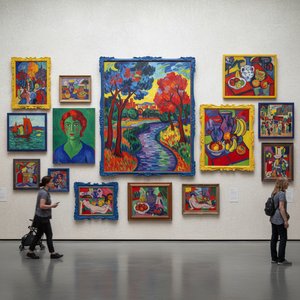
Marinot's artistic breakthrough arrived during the fervent embrace of Fauvism, a movement characterized by unrestrained color palettes and rejection of traditional representational conventions. Influenced by artists like Henri Matisse and André Derain, Marinot’s canvases exploded with vibrant hues—deep reds, intense blues, luminous yellows—applied without regard for naturalistic accuracy. His paintings captured the emotional essence of his subjects rather than striving for photographic realism, embodying the Fauvist ethos of prioritizing feeling over observation. “The Bather,” completed in 1930 exemplifies this stylistic approach, showcasing a nude figure bathed in warm sunlight against a stylized landscape—a testament to Marinot’s ability to convey profound emotion through color and form.
A Passion for Glassmaking
Despite his initial reluctance toward formal artistic training, Marinot discovered an irresistible fascination with glassblowing during a visit to the Viard brothers' workshop in Bar-sur-Seine in 1911. Recognizing the potential for artistic dialogue between painting and sculpture, he embarked on a transformative journey into this craft—a pursuit that would redefine his artistic identity. The Viard brothers generously bestowed upon him a bench and essential tools, accelerating his learning process and fostering an instinctive understanding of glass manipulation techniques. He quickly mastered the art of shaping molten glass into breathtaking forms, incorporating intricate geometric patterns and bold color combinations—a practice he likened to painting on a three-dimensional surface.
Innovation in Glass Art
Marinot’s contribution to glassmaking extended far beyond mere replication; he pioneered innovative approaches that challenged conventional norms and elevated glass artistry to new heights. Rejecting enameling as a decorative technique, he experimented with techniques like metal leaf application and the incorporation of bubbles—embracing serendipitous elements that added textural complexity and visual intrigue to his creations. His meticulous attention to detail and unwavering commitment to pushing artistic boundaries earned him widespread acclaim from critics who hailed him as “a long time since an innovation of such great importance has come to enrich the art of glass” (Leon Rosenthal, Gazette des Beaux-Arts, 1913). From that year onward, he ceased exhibiting his paintings, focusing entirely on perfecting his craft and realizing his artistic vision.
Legacy and Recognition
The devastation wrought by the Allied bombing of Troyes in 1944 tragically erased over 2,500 of Marinot’s paintings—a devastating loss for the art world. However, his sister's extensive collection survived unscathed, safeguarding a significant portion of his artistic output. Furthermore, Pierre and Denise Levy bequeathed a monumental donation to the Musée d’Art Moderne de Troyes in 1976, ensuring that Marinot’s legacy would endure—specifically, a remarkable assemblage of glass artworks alongside paintings. Florence Marinot, his daughter, similarly gifted pieces of art to Rennes Museum of Art, cementing his enduring influence on subsequent generations of artists. A collection of twenty glass pieces by Marinot, including vases and goblets created between 1926-27, was presented to the National Gallery of Ireland in 1970—a testament to his international renown and artistic significance.
- Scholes, Robert. “Marinot, Maurice (1882–1960)”. *The Modernist Journals Project*. Brown and Tulsa Universities. Retrieved 5 June 2015.



 معاينة الحجم الحقيقي
 اشترِ لوحة مرسومة يدويًا
 مشاركة
 مشاركة
 التفاصيل

 تحميل الملف
 قطع مشابهة
 الأشعة السينية
 عرض شرائح


 عرض المزيد






































 خيار الزجاج متاح فقط للمقاسات التي تقل عن 110 سم