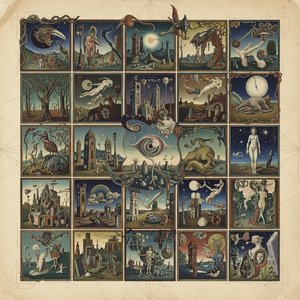
Long Live Love
Max Ernst’s Long Live Love (1954) stands as a testament to Surrealist exploration—a haunting landscape imbued with unsettling juxtapositions and echoing the profound psychological currents of its time. Currently residing within The Berardo Collection Museum in Lisbon, Portugal, this painting transcends mere visual representation, inviting contemplation on themes of desire, vulnerability, and the elusive nature of connection.
Born in Brühl, Germany, in 1891, Max Ernst emerged as a pivotal figure in Dada and Surrealism—movements that vehemently rejected rational thought and artistic conventions. His groundbreaking approach to painting involved innovative techniques like frottage (rubbing) and grattage (scraping), methods he skillfully employed to generate dreamlike images that challenged established aesthetic norms.
The Berardo Collection Museum, established in 1987 by Portuguese businessman Joe Berardo, houses an impressive assemblage of artworks spanning the 20th and 21st centuries. Dedicated to modern and contemporary art, it showcases diverse artistic movements—Abstract Expressionism, Pop Art, Minimalism, Conceptual Art—offering visitors a panoramic view of artistic evolution.
“Long Live Love” presents a surreal panorama populated by distorted figures and unexpected combinations that provoke a palpable sense of unease. Ernst’s masterful use of color—ranging from muted earthy tones to vibrant splashes—creates textural depth and contributes to the painting's emotive resonance. The artist’s meticulous attention to detail—evident in the rendering of foliage, rocks, and distant mountains—further enhances the artwork’s immersive quality.
A crucial element of Ernst’s artistic vision is his incorporation of collage techniques. Throughout his career, he seamlessly blended found objects—newspaper clippings, photographs—into his canvases, generating a unique visual language that merged reality with fantasy. This deliberate layering of materials underscores Ernst's belief in the transformative power of art and its capacity to disrupt conventional perceptions.
Furthermore, “Long Live Love” embodies the spirit of Surrealism’s preoccupation with subconscious imagery and psychological symbolism. The depiction of two figures—presumably male and female—engaged in an intimate embrace—suggests a contemplation on love's complexities and vulnerabilities. The bird motifs adorning the canvas serve as emblems of freedom and aspiration, mirroring Ernst’s own artistic quest for liberation from societal constraints.
For those seeking to delve deeper into Max Ernst’s oeuvre and Surrealist art history, TopImpressionists offers a comprehensive collection of artworks and scholarly resources—ideal for connoisseurs and enthusiasts alike. Discover the captivating world of Surrealism through meticulously crafted reproductions that capture the essence of this influential artistic movement.



 Preview
 اطلب نسخة مرسومة يدوياً
 مشاركة
 مشاركة
 التفاصيل

 تحميل الملف
 قطع مشابهة
 الأشعة السينية
 عرض شرائح

 عرض المزيد






































 خيار الزجاج متاح فقط للمقاسات التي تقل عن 110 سم