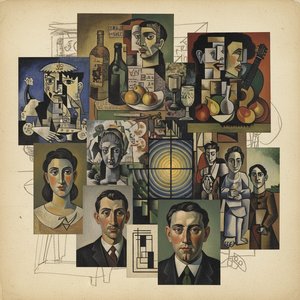
A Visionary Fragment – Decoding Picasso’s ‘Bather Opening a Cabin’
Pablo Picasso’s “Bather Opening a Cabin,” completed in 1928, stands as a cornerstone of Surrealist art and a testament to the artist's relentless pursuit of innovative visual language. More than just a depiction of a woman at the seaside, it embodies Picasso’s radical reimagining of perspective and representation—a deliberate rejection of academic conventions that signaled a decisive break from artistic tradition.
Stylistic Innovation: Cubism Revisited
Though firmly rooted in Surrealist aesthetics, “Bather” retains echoes of Picasso's pioneering Cubist explorations. The painting abandons traditional illusionistic space, opting instead for flattened planes and geometric forms that overlap and intersect—a technique honed during his groundbreaking work with Georges Braque. This stylistic choice isn’t merely decorative; it reflects Picasso’s intellectual preoccupation with dismantling established visual hierarchies and presenting multiple viewpoints simultaneously.
Technique & Material: Rough Strokes, Bold Color
Picasso employed a distinctive painting technique characterized by thick, impasto brushstrokes—a deliberate textural element that contributes to the artwork's palpable presence. The palette is dominated by striking hues of turquoise and orange, applied with uncompromising boldness against a muted blue sky backdrop. These colors aren’t chosen arbitrarily; they serve as visual anchors, guiding the viewer’s eye across the composition and amplifying its dreamlike atmosphere.
Historical Context: Surrealism's Embrace of Paradox
“Bather Opening a Cabin” emerged during the height of Surrealist fervor—a movement fueled by psychoanalytic theories championed by Sigmund Freud. Surrealists sought to liberate art from rational constraints, tapping into the subconscious mind and exploring irrational juxtapositions. Picasso’s artwork exemplifies this ethos through its fragmented imagery and unsettling stillness—a deliberate provocation designed to unsettle viewers and challenge their perceptions of reality.
Symbolism & Emotional Resonance: The Key to Interpretation
The inclusion of a key—positioned prominently on the beach—adds another layer of symbolic significance. Keys traditionally represent access, unlocking secrets and opening doors to hidden realms. In Picasso’s context, it suggests an invitation to delve beneath the surface appearance of the scene, prompting contemplation about themes of desire, vulnerability, and perhaps even the elusive nature of communication. The overall impression is one of quiet contemplation punctuated by moments of jarring visual disruption—a reflection of Picasso's profound engagement with the complexities of human experience.
A Legacy of Artistic Transformation
"Bather Opening a Cabin" remains an enduring emblem of Picasso’s artistic genius, demonstrating his unwavering commitment to experimentation and his ability to transform familiar subjects into symbols of intellectual and emotional depth. Its handmade reproduction offers a captivating glimpse into the world of Surrealist art and invites viewers to appreciate the transformative power of visual imagination.



 معاينة الحجم الحقيقي
 التحويل إلى لوحة مرسومة يدوياً
 مشاركة
 مشاركة
 التفاصيل

 تحميل الملف
 قطع مشابهة
 الأشعة السينية
 عرض شرائح
 عرض المزيد






































 خيار الزجاج متاح فقط للمقاسات التي تقل عن 110 سم