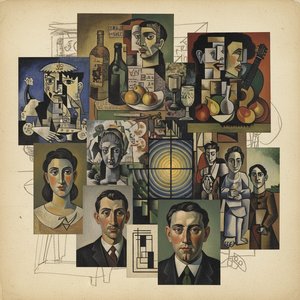
Pablo Picasso's Exploration of Innocence and Geometric Precision
Pablo Ruiz Picasso, born in Málaga, Spain, in 1881, stands as one of the most transformative figures in modern art. His relentless pursuit of artistic innovation—characterized by experimentation with form, perspective, and emotion—established him as a pioneer of Cubism and profoundly influenced generations of artists to come. From his formative years under his father’s tutelage to his groundbreaking collaborations with fellow Surrealists like André Breton, Picasso's life was an embodiment of intellectual curiosity and artistic daring. This unwavering dedication propelled him to create masterpieces that continue to captivate audiences worldwide.
A Portrait Steeped in Naive Art Principles
“Claude with a Ball,” painted in 1948, exemplifies Picasso’s masterful assimilation of Naive Art or Primitivism—a movement he himself championed. Unlike the polished realism prevalent in academic circles, this artwork embraces bold colors and simplified geometric shapes, mirroring the aesthetic sensibilities of untrained artists who draw inspiration from their immediate surroundings. The deliberate reduction of detail serves not to diminish the subject's presence but rather to heighten its emotional impact, inviting viewers to contemplate universal themes of childhood and contemplation. Picasso’s technique skillfully blends frontal and profile views of the boy’s face—a hallmark of his stylistic approach—creating a dynamic visual representation that defies conventional conventions.
Decoding Geometric Forms and Color Palette
The painting's composition is dominated by striking geometric forms: cubes, spheres, and cylinders—elements characteristic of Picasso’s Cubist explorations during this period. These shapes aren’t merely decorative; they actively contribute to the artwork’s conceptual depth, disrupting traditional notions of spatial representation and prompting viewers to reconsider their perception of reality. Simultaneously, Picasso employs a restrained color palette—primarily blues and whites—accentuated by subtle shades of yellow—creating an atmosphere of serenity and introspection. The deliberate use of color reinforces the painting's symbolic significance, conveying ideas of purity and innocence.
Picasso’s Legacy: Shaping Modern Art
Pablo Picasso’s influence extends far beyond “Claude with a Ball,” resonating throughout the artistic landscape of the 20th century. His pioneering work in Cubism irrevocably altered the course of painting, inspiring artists to challenge established aesthetic standards and embrace innovative approaches to visual expression. Furthermore, his unwavering commitment to exploring human emotion—evident in canvases like “Guernica” and “Les Demoiselles d’Avignon”—established him as a champion of artistic freedom and psychological insight. Picasso's legacy continues to inspire creativity and provoke contemplation, cementing his place as an enduring icon of modern art history.
Further Exploration: Picasso’s Artistic Universe
To delve deeper into Picasso’s artistic vision, consider examining his other notable works: “Bather with Beach Ball,” “The Ironer,” “Reading The Letter,” “Le Gourmet,” and “The Death of Casagemas.” Each piece offers a unique glimpse into Picasso's evolving stylistic concerns and thematic interests—a testament to his boundless creativity and intellectual rigor. For more information on Pablo Picasso and his enduring impact on art, visit
https://TopImpressionists.com. To explore the broader context of Naive Art or Primitivism, consult
The Naïve Art (Primitivism) Art Movement on TopImpressionists.



 معاينة الحجم الحقيقي
 التحويل للنسخة المطبوعة
 مشاركة
 مشاركة
 التفاصيل

 تحميل الملف
 قطع مشابهة
 الأشعة السينية
 عرض شرائح


 عرض المزيد






































 خيار الزجاج متاح فقط للمقاسات التي تقل عن 110 سم