A Moment Frozen in Time: Picasso’s “El Almuerzo Sobre La Hierba”
Pablo Picasso's "El Almuerzo Sobre La Hierba" ("Lunch on Grass"), painted in 1932, isn’t merely a depiction of a simple meal; it’s a profound exploration of human connection and the quiet beauty found within everyday life—a characteristic hallmark of Picasso’s mature style. This unassuming canvas holds immense significance within his oeuvre and offers a fascinating glimpse into the artist's evolving artistic vision during a pivotal period in his career.
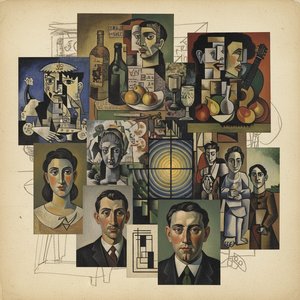
- Subject Matter: The painting portrays three figures seated around a table outdoors, bathed in dappled sunlight. A woman dominates the composition, while two men flank her, creating an intimate tableau that captures a moment of shared companionship.
- Style & Technique: “El Almuerzo Sobre La Hierba” exemplifies Picasso’s embrace of Cubism's analytical phase. Unlike his earlier Surrealist explorations, this work prioritizes geometric simplification and fragmentation—a deliberate rejection of traditional representational conventions. Picasso employs a muted palette dominated by earthy tones – browns, greens, and ochres – enhancing the painting’s understated elegance.
Historical Context: The Shadow of War & Artistic Experimentation
Painted in 1932, “El Almuerzo Sobre La Hierba” arrived during a turbulent time for Europe—the looming threat of fascism and the escalating tensions leading up to World War II. Picasso himself was grappling with personal anxieties and reflecting on themes of loss and mortality following the tragic death of his son André Gilles. This melancholic backdrop undoubtedly influenced Picasso’s artistic choices, prompting him to distill emotion into form rather than striving for literal accuracy. The painting serves as a counterpoint to the grand narratives of history, focusing instead on the human experience—a subtle yet powerful statement about resilience and finding solace in simple pleasures.
Symbolism & Compositional Layers
Beyond its visual simplicity, “El Almuerzo Sobre La Hierba” is laden with symbolic resonance. The table itself represents stability and nourishment – both physical and emotional – while the figures embody human relationships and vulnerability. Picasso’s masterful use of perspective—particularly the flattened planes characteristic of Cubism—creates a sense of detachment from reality, inviting viewers to contemplate the essence of existence rather than merely observing it. Even the inclusion of objects like the bowl, cup, spoon, and book contribute to the painting's layered meaning, suggesting contemplation and perhaps even intellectual engagement alongside companionship.
Emotional Impact & Legacy
“El Almuerzo Sobre La Hierba” transcends its subject matter to evoke a palpable feeling of warmth and intimacy. Picasso’s deliberate restraint in color and brushwork underscores the painting's emotional depth, conveying a quiet dignity that speaks volumes about human connection. It stands as a testament to Picasso’s ability to transform ordinary scenes into profound meditations on life, loss, and remembrance—a masterpiece that continues to captivate audiences today and solidify Picasso’s position as one of the most influential artists of the 20th century. Its enduring appeal lies in its ability to capture a fleeting moment of human experience with remarkable sensitivity and artistic innovation.



 معاينة الحجم الحقيقي
 التحويل إلى لوحة مرسومة يدوياً
 مشاركة
 مشاركة
 التفاصيل

 تحميل الملف
 قطع مشابهة
 الأشعة السينية
 عرض شرائح
 عرض المزيد






































 خيار الزجاج متاح فقط للمقاسات التي تقل عن 110 سم