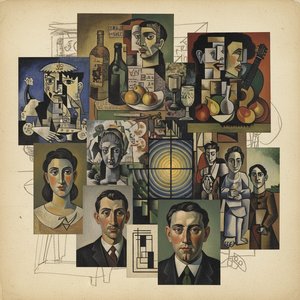
Pablo Picasso’s Vibrant Expressionist Vision
“Harlequin with Guitar,” painted in 1918 by Pablo Picasso, stands as a cornerstone of his artistic evolution and embodies the spirit of Expressionism. More than just a depiction of a performer, it's a masterful distillation of emotion and form—a testament to Picasso’s relentless experimentation and his profound engagement with theatrical traditions.
The Inspiration: Commedia dell’Arte & Harlequin
Picasso drew heavily from the Italian commedia dell’arte, specifically the character of Harlequin – a mischievous clown known for his acrobatic movements and colorful costume. This figure served as an ideal subject for Picasso's exploration of dynamism and visual vibrancy. The artist sought to capture not merely what he saw but how he *felt*, translating theatrical energy onto canvas with remarkable precision.
Expressionist Style: Bold Color & Distorted Form
The painting’s stylistic hallmarks are unmistakably Expressionist. Picasso abandons naturalistic representation in favor of bold, saturated hues—primarily reds and yellows—that pulsate with life. These colors aren't merely decorative; they convey intense emotion and contribute to the overall sense of excitement. Simultaneously, Picasso employs distorted forms and exaggerated proportions, disrupting conventional perspective to heighten visual impact and communicate psychological states.
Cubist Influence & Geometric Precision
Despite its expressive qualities, “Harlequin with Guitar” retains traces of Cubism’s influence—particularly the Crystal Cubism period. Picasso utilizes large overlapping planes that flatten space, mirroring the fragmented viewpoints characteristic of Cubist compositions. This technique emphasizes surface activity and challenges viewers to reconsider traditional notions of representation, aligning seamlessly with Picasso's pioneering role in shaping modern art.
Symbolic Resonance & Emotional Impact
"Harlequin with Guitar" transcends mere visual spectacle; it resonates with deeper symbolic meanings. The guitar itself represents musical expression and creativity—a deliberate choice by Picasso to imbue the artwork with an aura of joy and spontaneity. Furthermore, Harlequin’s posture exudes confidence and playful defiance, reflecting a broader humanist impulse to celebrate human experience and embrace unconventional perspectives. Ultimately, this painting captivates viewers with its energetic composition and conveys a palpable sense of exhilaration—a timeless masterpiece that continues to inspire admiration for Picasso's artistic genius.



 معاينة الحجم الحقيقي
 اشترِ لوحة مرسومة يدويًا
 مشاركة
 مشاركة
 التفاصيل

 تحميل الملف
 قطع مشابهة
 الأشعة السينية
 عرض شرائح


 عرض المزيد






































 خيار الزجاج متاح فقط للمقاسات التي تقل عن 110 سم