وصف القطعة الفنية
A Portrait of Resilience: Decoding Picasso’s Marie-Thérèse Acodada
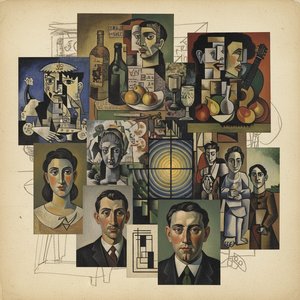
Pablo Picasso's *Marie-Thérèse Acodada*, painted circa 1903, stands as a pivotal moment in the artist’s burgeoning cubist exploration—a canvas brimming with fractured perspectives and imbued with an unsettling beauty that continues to fascinate art historians and collectors alike. More than just a depiction of a woman's face, it represents a profound meditation on identity, memory, and the complexities inherent within human experience. The painting captures Marie Thérèse Acodada, Picasso’s muse and lover at the time, in a strikingly unconventional pose—seated with her hand resting delicately upon her chin, gazing outwards into an ambiguous space. This seemingly simple composition belies a masterful manipulation of artistic conventions.
The Cubist Breakthrough: Fragmentation and Observation
Picasso's embrace of cubism wasn’t merely stylistic choice; it was a radical reimagining of how artists could represent reality. Departing from the traditional illusionistic techniques favored by Renaissance masters, Picasso shattered visual space into geometric planes—a technique directly influenced by Cézanne’s explorations of form and volume. Observe closely how the woman's face is dissected into interlocking cubes and cones, mirroring the artist’s desire to capture not just what is seen but also what is felt. The fragmented contours emphasize the multiplicity of viewpoints inherent in perception, suggesting that reality itself is never singular but rather constructed from multiple perspectives simultaneously. This deliberate distortion serves as a powerful commentary on the subjective experience of seeing—a cornerstone of Picasso's artistic philosophy.
Color and Emotion: A Palette of Quiet Intensity
Despite the geometric rigor of its structure, *Marie-Thérèse Acodada* is far from devoid of emotional resonance. Picasso employs a restrained yet impactful color palette dominated by shades of blue, green, and purple—colors traditionally associated with melancholy and introspection. These hues subtly underscore the sitter’s contemplative gaze and contribute to the painting's overall atmosphere of quiet contemplation. The artist skillfully utilizes tonal variations within each color plane, creating depth and luminosity that transcends mere visual representation. This careful consideration of color isn’t accidental; Picasso understood its capacity to convey psychological states—a crucial element in communicating his artistic vision.
Symbolism Within Fragmentation: Hints of Inner Turmoil
Beyond the formal innovations of cubism lies a subtle layer of symbolism woven into the fabric of *Marie-Thérèse Acodada*. The woman’s hand resting on her chin is a gesture laden with significance—often interpreted as representing thoughtfulness, deliberation, and perhaps even suppressed emotion. Furthermore, the ambiguous gaze directs outwards, suggesting an awareness of something beyond the immediate visual field—a preoccupation with memory, dreams, or unresolved anxieties. Picasso's genius lies in his ability to convey profound ideas through deceptively simple imagery, prompting viewers to engage actively in interpreting the artwork’s hidden meanings.
A Legacy of Innovation: Why Acodada Matters Today
*Marie-Thérèse Acodada* remains a testament to Picasso’s unwavering commitment to artistic experimentation and his pioneering role in shaping modern art history. Its enduring appeal stems from its ability to capture the essence of human vulnerability—a theme that resonates powerfully across cultures and generations. Reproductions crafted with meticulous attention to detail offer an opportunity to appreciate Picasso's groundbreaking technique and to contemplate the profound questions he posed about perception, identity, and the complexities of inner life. It’s a painting that invites us to linger upon its surface, discovering new layers of meaning with each viewing—a timeless masterpiece deserving of continued admiration.



 معاينة الحجم الحقيقي
 اشترِ لوحة مرسومة يدويًا
 مشاركة
 مشاركة
 التفاصيل

 تحميل الملف
 قطع مشابهة
 الأشعة السينية
 عرض شرائح
 عرض المزيد






































 خيار الزجاج متاح فقط للمقاسات التي تقل عن 110 سم