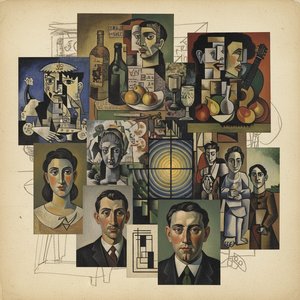
A Cubist Symphony of Connection
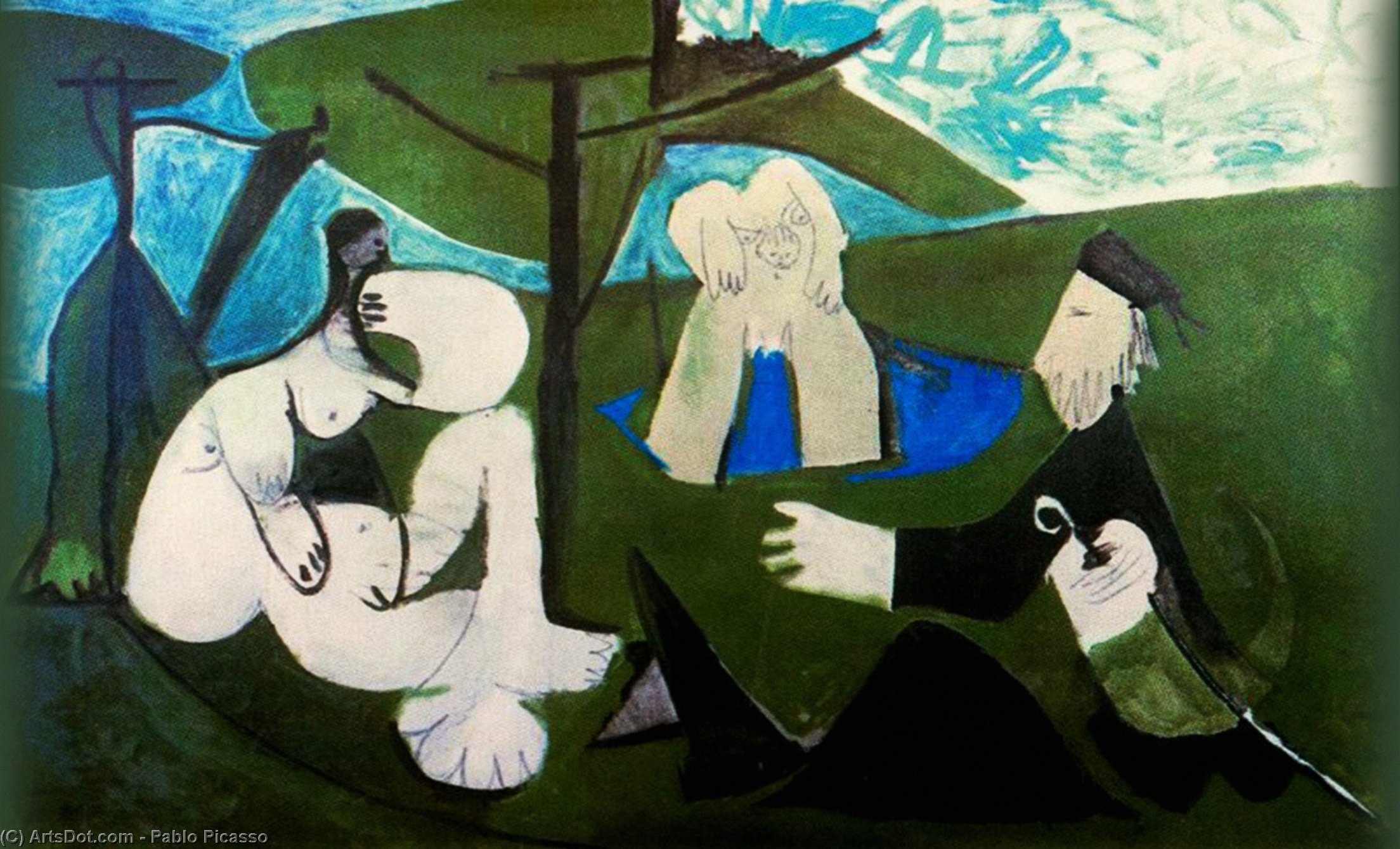
In the vast and transformative oeuvre of Pablo Picasso, few works capture the delicate tension between fragmentation and intimacy quite like Picnic 1. Completed in 1956 during his prolific Parisian period, this masterpiece serves as a profound meditation on human relationships, viewed through the revolutionary lens of Cubism. Rather than offering a mere snapshot of an outdoor gathering, Picasso invites the viewer into a complex psychological landscape where the boundaries between individuals and their environment begin to dissolve. The painting presents a group of figures nestled within lush greenery, yet they are not rendered with the easy clarity of traditional realism. Instead, Picasso employs the core tenets of his signature style—multiple perspectives and geometric dissection—to suggest that truly perceiving another human being is an intricate, multifaceted endeavor.
The visual language of Picnic 1 is one of deliberate, rhythmic complexity. As the eye wanders across the canvas, it encounters a world broken into interlocking planes and angular shapes. The torso of one figure might be perceived as a series of sturdy cubes, while limbs are fragmented into sharp, energetic geometries that overlap with the surrounding foliage. This technique of simultaneous representation does more than just showcase technical prowess; it acts as a powerful symbol for the subjective nature of experience. By fracturing the human form, Picasso mirrors the difficulty of grasping the full essence of an individual from the outside, suggesting that we are all composed of disparate, often disconnected, perspectives and moments.
Technique, Color, and Atmospheric Depth
The physical execution of the piece reveals Picasso’s mastery over the medium of oil on canvas. Through a meticulous layering process, the artist built up texture and luminosity, creating a surface that feels both tactile and ethereal. While the palette is dominated by more muted, earthy tones—deep greens and tranquil blues—there are sudden, vibrant punctuations of red and light that breathe life into the composition. This careful balance of color prevents the fragmentation from feeling cold or clinical; instead, it imbue the scene with a palpable atmosphere of quiet contemplation. The brushwork, though controlled within the geometric structure, retains a certain fluidity that captures the movement of light filtering through leaves and the subtle gestures of the figures as they interact.
For the discerning collector or interior designer, Picnic 1 offers an unparalleled opportunity to introduce a piece of art history into a contemporary space. The painting’s ability to command attention through its structural complexity while maintaining an emotional warmth makes it a versatile centerpiece. Whether placed in a minimalist modern gallery or a richly textured classical study, the work acts as a conversation starter, prompting reflections on perception, memory, and the enduring beauty of human connection. Owning a high-quality reproduction of this work allows one to inhabit the same intellectual and emotional space that Picasso inhabited, bringing the revolutionary spirit of 20th-century Cubism into the heart of the home.


 معاينة الحجم الحقيقي
 اشترِ نسخة مطبوعة
 مشاركة
 مشاركة
 التفاصيل

 تحميل الملف
 قطع مشابهة
 الأشعة السينية
 عرض شرائح

 عرض المزيد






































 خيار الزجاج متاح فقط للمقاسات التي تقل عن 110 سم