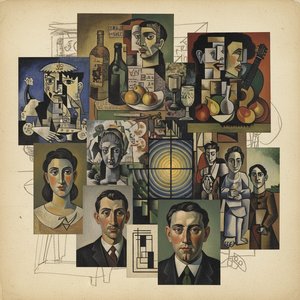
A Study in Fruitful Stillness: Picasso’s Exploration of Form and Color
Pablo Picasso's “Still Life,” painted circa 1931, stands as a testament to the artist’s masterful command of Cubist principles while simultaneously conveying a profound sense of quiet contemplation. This deceptively simple composition—a tabletop adorned with apples, oranges, bananas, vases, and a potted plant draped beneath a crimson cloth—is far more than just an arrangement of objects; it's a deliberate investigation into the nature of perception and representation itself. Picasso’s approach aligns closely with the burgeoning Naive Art movement of his time, yet distinguishes itself through the subtle complexities inherent in its geometric dissection.
- Style: Cubism – Picasso’s signature style is evident in the fractured planes that define each element within the scene. Rather than striving for realistic depiction, he dismantles objects into their constituent parts and reconstructs them simultaneously from multiple viewpoints. This technique challenges traditional artistic conventions and prioritizes conceptual exploration over visual accuracy.
- Technique: Picasso employed oil paint on canvas with meticulous attention to detail. The artist utilized a layering process—building up thin glazes of color upon thicker undercoats—to achieve remarkable tonal depth and luminosity. Notice the careful manipulation of light, creating shadows that accentuate the contours of each fruit and vase, contributing significantly to the overall visual impact.
- Historical Context: Painted during Picasso’s Surrealist phase, “Still Life” reflects a fascination with dreamlike imagery and subconscious associations. However, it retains the structural rigor characteristic of his earlier Cubist works, demonstrating an unwavering commitment to formal experimentation. The painting emerged from a period marked by artistic upheaval and intellectual debate, mirroring the broader cultural anxieties of the time.
Symbolism: Beyond its purely aesthetic qualities, “Still Life” carries symbolic weight. The fruit itself—apples representing knowledge and temptation, oranges symbolizing optimism and vitality—suggests a meditation on themes of life and decay. The crimson cloth serves as a bold visual anchor, injecting warmth and passion into the cool palette dominated by muted greens and browns. These elements intertwine to evoke a mood of serene introspection, inviting viewers to contemplate the beauty inherent in everyday objects.
Emotional Impact: Picasso’s masterful use of color and form transcends mere representation; it aims to elicit an emotional response from the audience. The subdued hues create a sense of stillness and tranquility, fostering contemplation about the passage of time and the fragility of existence. Simultaneously, the geometric precision conveys a feeling of intellectual engagement—a deliberate challenge to conventional artistic norms. “Still Life” remains a powerful reminder that art can communicate profound ideas through deceptively simple visual language.
- Further Exploration: Consider examining Picasso’s broader oeuvre alongside this piece. Observe how similar stylistic choices appear in other works, revealing the artist's consistent pursuit of innovative formal strategies.
- Interior Design Inspiration: The muted color palette and geometric composition of “Still Life” can serve as a valuable source of inspiration for contemporary interior designers seeking to create spaces characterized by understated elegance and intellectual curiosity.



 Preview
 Switch to hand made Painting
 مشاركة
 مشاركة
 التفاصيل

 تحميل الملف
 قطع مشابهة
 الأشعة السينية
 عرض شرائح
 عرض المزيد






































 خيار الزجاج متاح فقط للمقاسات التي تقل عن 110 سم