وصف القطعة الفنية
A Symphony of Flight and Tranquility: Exploring Picasso’s “The Pigeons”
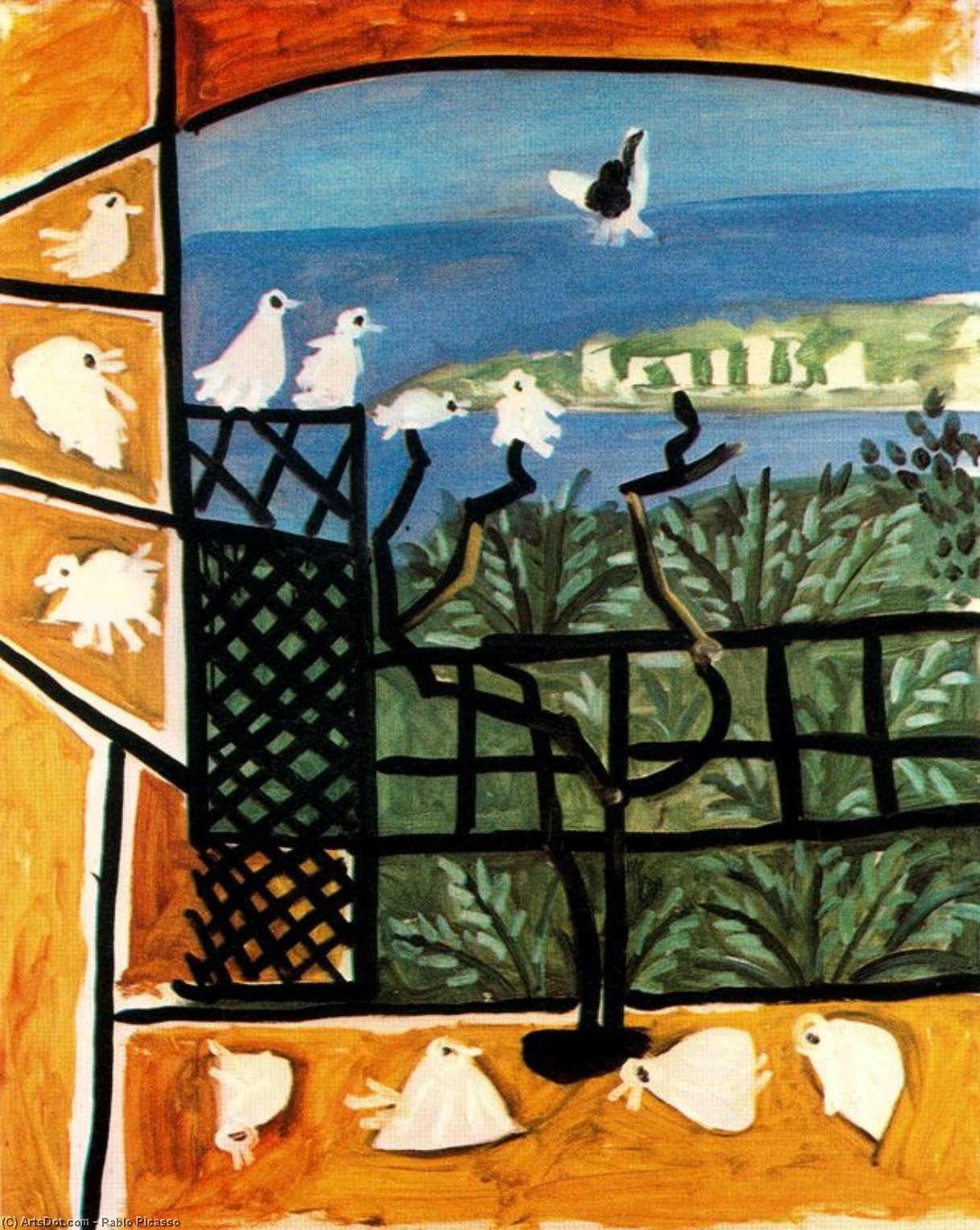
Pablo Picasso's "The Pigeons," painted sometime between 1946 and 1947, stands as a deceptively simple yet profoundly resonant testament to the artist’s enduring fascination with observation and expressive abstraction. Captured during his prolific period in Antibes, France – a location that fostered collaboration with Henri Matisse and fueled an explosion of color and experimentation – this canvas embodies Picasso's signature style: Cubism filtered through a lens of lyrical Impressionism. It’s not merely a depiction of birds; it’s an embodiment of mood, memory, and the artist’s ongoing dialogue with artistic tradition.
The Visual Language of Fragmentation
At first glance, “The Pigeons” presents a seemingly straightforward scene – pigeons perched on a fence overlooking the Mediterranean Sea. However, Picasso dismantles this conventional representation through Cubist principles. Geometric forms dominate, fracturing the bird's body and plumage into interlocking planes that defy naturalistic perspective. These fragmented shapes aren’t jarring; rather, they create an illusion of movement and depth, mirroring the fluttering wings of the birds above. The sea itself is rendered as undulating bands of color—primarily blues and greens—further emphasizing the dynamism of the composition. Notice how Picasso utilizes overlapping planes to suggest multiple viewpoints simultaneously, inviting the viewer to actively participate in reconstructing the image.
Color Palette and Emotional Resonance
Picasso’s masterful use of color contributes significantly to the painting's emotional impact. Dominated by cool blues and greens—colors associated with serenity and contemplation—the palette subtly underscores the tranquil atmosphere of Antibes. Yet, bursts of warmer hues—primarily ochre and yellow—punctuate the scene, hinting at underlying energy and vitality. These contrasting colors aren’t merely decorative; they convey a sense of melancholy and nostalgia, reflecting Picasso's personal experiences during this period. The artist himself described it as “a picture of the sea and pigeons,” emphasizing his intention to capture not just what he saw but also how he felt.
Historical Context: Antibes and Matisse’s Influence
“The Pigeons” emerged from Picasso’s collaboration with Henri Matisse, a pivotal moment in both artists' careers. They established a studio together in Antibes, fostering an environment of artistic exchange and inspiring each other to push boundaries. This period witnessed Picasso experimenting with bold color palettes and simplified forms—a deliberate departure from his earlier Surrealist explorations—influenced by Matisse’s expressive use of pigment and decorative patterns. The painting reflects the broader artistic currents of the time, aligning with the burgeoning interest in abstraction and the desire to move beyond representational art towards conveying emotion and atmosphere.
Symbolism Beyond Representation
While seemingly devoid of overt narrative content, “The Pigeons” resonates with symbolic significance. Birds have long been associated with freedom, aspiration, and spiritual transcendence—themes that align perfectly with Picasso’s artistic vision. The pigeons themselves could be interpreted as emblems of resilience and adaptability, mirroring the artist's own unwavering determination to persevere despite personal hardships. Furthermore, the sea serves as a backdrop for contemplation and renewal, symbolizing the cyclical nature of life and the enduring beauty of the natural world. Ultimately, Picasso invites us to contemplate not just what is seen but also what is felt—a profound gesture that elevates “The Pigeons” beyond mere visual depiction into a powerful expression of artistic emotion.


 معاينة الحجم الحقيقي
 اشترِ لوحة مرسومة يدويًا
 مشاركة
 مشاركة
 التفاصيل

 تحميل الملف
 قطع مشابهة
 الأشعة السينية
 عرض شرائح
 عرض المزيد






































 خيار الزجاج متاح فقط للمقاسات التي تقل عن 110 سم