Still Life with Flowers and Fruit
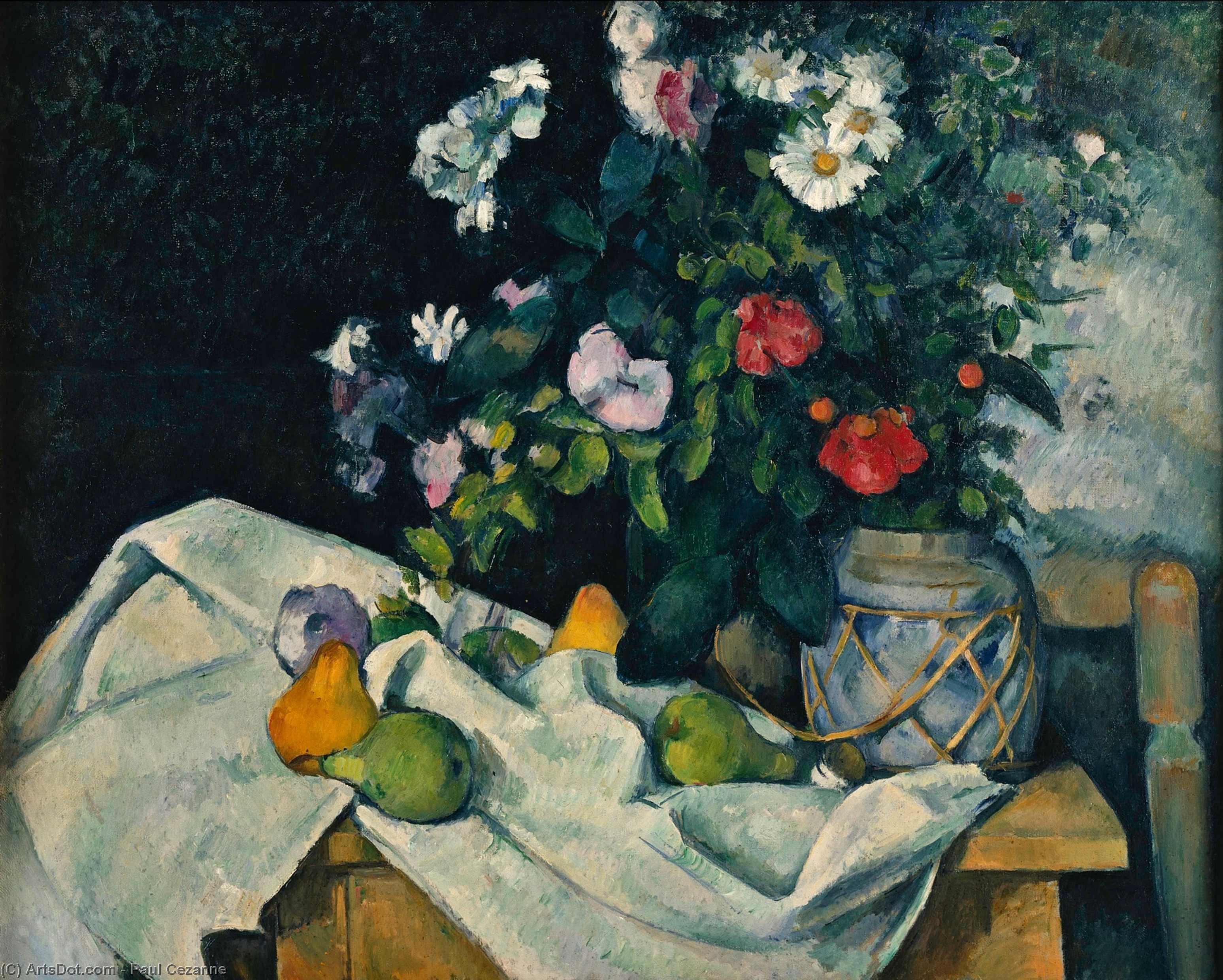
Paul Cézanne’s “Still Life with Flowers and Fruit,” painted in 1890, stands as a cornerstone of Post-Impressionism—a movement that decisively distanced itself from Impressionist preoccupation with fleeting light and color, propelling artists toward explorations of form and structure. This oil on canvas masterpiece resides within the Courtauld Gallery in London, offering visitors an unparalleled opportunity to immerse themselves in Cézanne’s revolutionary vision.
The Painting's Composition
At first glance, the scene presents a deceptively simple arrangement: a vase positioned centrally upon a wooden table, encircled by an assortment of fruits—apples and oranges—and blossoms—primarily daisies, carnations, and poppies—creating a harmonious balance between organic shapes and geometric planes. Cézanne’s distinctive brushstrokes are immediately apparent; they aren't concerned with meticulously capturing the nuances of light but rather with conveying the underlying essence of each element. The artist deliberately fragmented forms, rejecting traditional perspective to emphasize the solidity and materiality of objects. Notice how the apples—scattered strategically around the vase—appear to roll slightly on the surface of the table, mirroring the movement inherent in Cézanne’s approach.
Post-Impressionism Art Movement
The impetus for this stylistic shift stemmed from a collective dissatisfaction with Impressionism's limitations. Artists like Cézanne, Vincent van Gogh, and Paul Gauguin sought to express emotion and psychological depth—themes largely absent from Impressionist canvases—through bold color palettes and expressive brushwork. They weren’t striving for optical realism but rather for conveying an inner truth, a feeling of presence that transcends mere visual representation. This movement solidified between 1886 and 1905, marking a pivotal moment in the history of modern art.
Cézanne's Influence
Paul Cézanne’s impact on subsequent artistic movements is undeniable. His pioneering use of geometric simplification—particularly evident in his exploration of pyramidal structures—directly foreshadowed Cubism, spearheaded by Henri Matisse and Pablo Picasso. Cézanne’s insistence on depicting objects as they *exist* rather than how they appear to the eye fundamentally challenged artistic conventions and paved the way for radical innovations in visual language. He is often hailed as “the father of us all,” a testament to his enduring legacy as an innovator and visionary artist.
Proto-Cubism
The Proto-Cubist period, spanning from 1906 to 1910, witnessed artists experimenting with fractured planes and multiple viewpoints—techniques that would ultimately coalesce into the fully realized Cubist aesthetic. Cézanne’s influence can be seen in these early explorations of geometric abstraction, demonstrating his profound contribution to the genesis of modern art's transformative trajectory. Artists like Picasso and Braque were captivated by Cézanne’s approach to form and color, recognizing its significance as a precursor to their groundbreaking style.
Relevant Works
*
Vincent Van Gogh: Pine Trees in Front of the Wall of the Asylum – Explore Van Gogh’s emotive landscapes and masterful brushwork.
*
Vincent Van Gogh: Wheat Field with Cypresses – Immerse yourself in the grandeur of nature as depicted by Van Gogh’s iconic cypress trees.
*
Vincent Van Gogh: L'Arlesienne, Madame Joseph-Michel Ginoux – Experience the vibrant colors and psychological intensity of Van Gogh’s portraiture.
*
Paul Cézanne: Still Life with Flowers and Fruit – Admire Cézanne’s masterful depiction of form and color in this seminal Post-Impressionist masterpiece.
*
Paul Cézanne – Discover more about Cézanne's life, artistic development, and enduring influence on modern art.
## Artist Information
*
Paul Cézanne on Wikipedia – Delve deeper into Cézanne’s biography and artistic achievements through this comprehensive resource.
*
Proto-Cubism on Wikipedia – Understand the intellectual context surrounding Proto-Cubism and its connection to Cézanne's groundbreaking innovations.
## Conclusion
“Still Life with Flowers and Fruit” embodies Cézanne’s unwavering commitment to capturing the essence of reality—a pursuit that fundamentally reshaped artistic conventions and secured his place as a progenitor of modern art. Its enduring appeal lies in its ability to convey both visual beauty and profound psychological insight, inviting viewers to contemplate the complexities of perception and representation.


 شراء نسخة مطبوعة
 مشاركة
 مشاركة
 التفاصيل

 تحميل الملف
 قطع مشابهة
 الأشعة السينية
 عرض شرائح


 عرض المزيد






































 خيار الزجاج متاح فقط للمقاسات التي تقل عن 110 سم



